





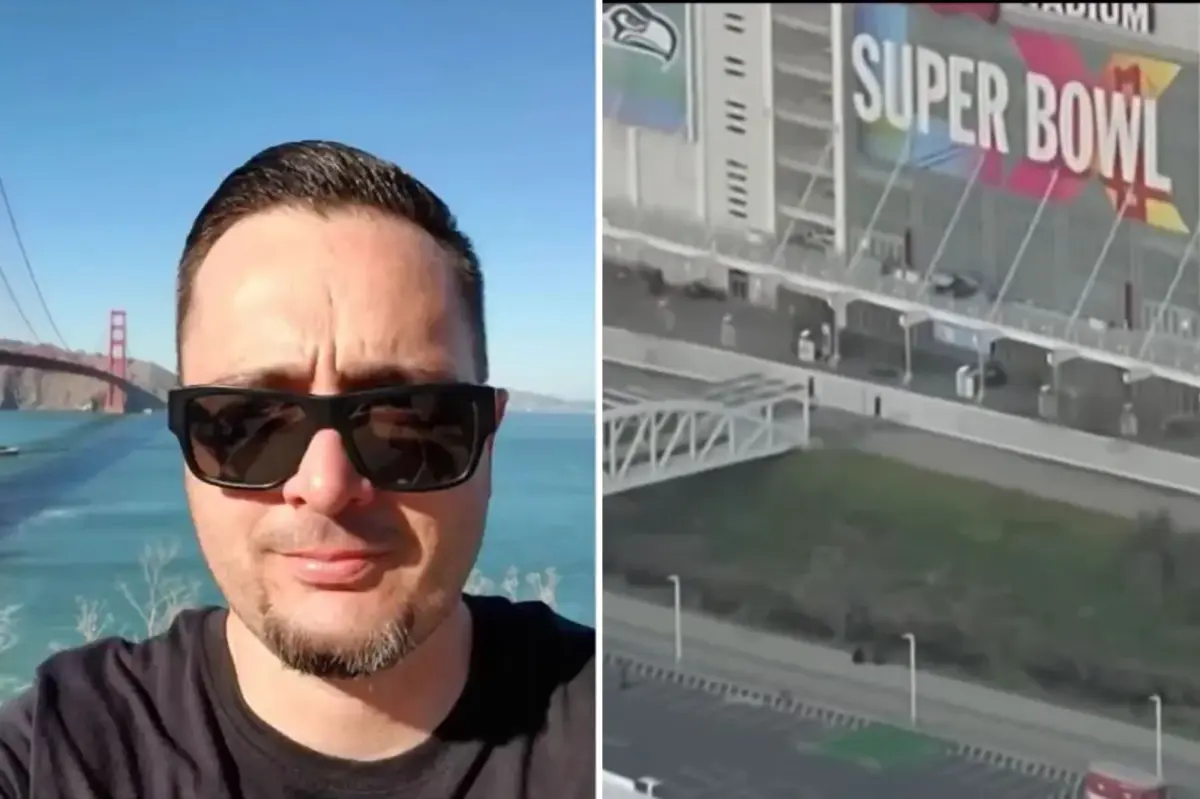
A Father’s Celebration Turned Tragedy: The Disappearance and Death of Thomas Simpkins
Thomas Simpkins was a 44-year-old man from San Jose, California, who loved life’s simple joys—barbecues with friends, family texts, and the thrill of a good game. On Super Bowl Sunday, February 8, 2015, the Seattle Seahawks were facing the New England Patriots at Levi’s Stadium, just a stone’s throw from his home in nearby Santa Clara. Thomas didn’t have tickets to the big event, but that didn’t dampen his spirits. Instead, he invited a group of buddies over to his place for a low-key barbecue, where they grilled burgers, sipped beers, and cheered loudly from his living room TV. His sister, Brandi Stroud, who lived in Oregon, recalled how he messaged her that day, excited and carefree: “Me and my brother text messaged a lot,” she told NBC Bay Area later. “I had talked to him on Feb. 8 before he had gone to this barbecue.” Thomas was always the social one, the guy who brought people together. At around 9 p.m., he bid his friends farewell, hopped into an Uber, and headed back to his Santa Clara home to unwind from the day’s festivities. “He said he was going home to relax,” Brandi shared, remembering their last exchange. She had no idea it would be the final one. Little did she know, Thomas never made it inside safely. The night unfolded quietly at first—except for the roar of the crowd at the stadium miles away. But without Thomas home, his world would soon crumble. His 19-year-old son, Tyler, became worried the next day when Thomas didn’t show up for his shift at a Palo Alto restaurant where he worked as a cook. Tyler drove over, expecting to see his dad flipping burgers and cracking jokes, but Thomas was a no-show. Panicked, Tyler filed a missing persons report with the police. Word spread quickly, and Brandi, sensing something was terribly wrong, dropped everything and flew to the Bay Area to join the search. For days, the family scoured the streets, parks, and neighborhoods around San Jose and Santa Clara. They knocked on doors, posted flyers, and called every contact—friends, coworkers, even distant relatives. “We were desperate, combing every inch,” Brandi said, her voice breaking years later. But leads were nonexistent. Radio silence defined the first few days, leaving them fearing the worst, their imaginations running wild with scenarios of accidents or foul play. Thomas was a devoted father and husband, remarried after some tough times, with a wife and stepchildren who leaned on him for stability. He had a soft spot for his son Tyler, always the protector, teaching him life lessons over backyard chats. To his friends, he was the reliable one, the guy who’d drop everything for a friend in need. Yet here he was, vanished without a trace from his own doorstep. The family’s pain was palpable; they clung to hope, but deep down, dread gnawed at them. Without forensic evidence or witnesses, the search felt futile, like shouting into a void. Brandi’s anger bubbled up—wasn’t anyone taking this seriously? A 44-year-old man doesn’t just vanish after a family holiday event, especially not in a bustling city like the Bay Area. The police investigations dragged on, jurisdiction shuffled between agencies, and crucial time slipped away.
The breakthrough came unexpectedly six days later, on February 14—Valentine’s Day, a bitter irony for a family already shattered. A random stranger on Facebook messaged Brandi with a link to police scanner audio. “I wasn’t aware that there had even been a body to be recovered behind Levi’s Stadium until some random lady on Facebook sent me a link,” Brandi recounted, her shock echoing in interviews. The audio revealed that officials had discovered human remains in the San Tomas Aquino Creek, a grassy waterway snaking behind Levi’s Stadium, where tens of thousands of jubilant fans had gathered just a week prior. The creek was usually serene, tucked away from the stadium’s energy, but now it held a grim secret. Thomas’s body was found there, face down in the water, his cellphone and wallet notably absent—clues that screamed foul play. Police identified him through dental records and other means, but the scene was desolate, far from his home in Santa Clara. How did Thomas, who had left his barbecue to head straight home, end up in such a remote, disconnected location? The family pondered endlessly: Did he take a wrong turn? Was he robbed and dumped there? The timing felt cruel—right behind a stadium that symbolized joy and celebration. Brandi rushed there with her family, staring at the creek, imagining Thomas’s last moments. “He was partying one minute, gone the next,” she thought, tears flowing. Without witnesses or clear evidence, theories swirled—was it a mugging escalated to murder, given the Super Bowl crowds? Or something more personal, tied to his close-knit life? Police, finally engrossed, labeled it a possible homicide, but details remained sparse. The autopsy results? Still pending, potentially four months away, leaving the family in agonizing limbo. Thomas’s death investigation dragged, each delay a fresh wound. Brandi accused the police of ineptitude, noting how agencies passed the buck before San Jose Police took charge. “There was a huge delay,” she told the San Francisco Chronicle. “They didn’t take my brother’s case seriously at all.” It was infuriating— a man’s life, a father’s legacy, treated as a low-priority paperwork shuffle. Tyler, his son, struggled with guilt—why didn’t he check in sooner? Thomas’s wife grappled with unanswered “what ifs.” The family mourned not just a loss, but the theft of closure, their questions bouncing off indifferent walls. Thomas’s friends from the barbecue recoiled with disbelief; he was the stable one, not someone who’d vanish into the night. Memories flooded back: Thomas laughing at Seahawks touchdowns, his infectious energy. Now, that energy was extinguished in a creek, under circumstances shrouded in mystery. The human cost was immeasurable— a vibrant life cut short, families left piecing together fragments.
The Family’s Grief and Quest for Answers
In the aftermath, Brandi became the family’s anchor, her grief channeling into relentless advocacy. Living in Oregon, she’d hop flights to the Bay Area, hounding detectives for updates, poring over police reports, and pushing for action. Thomas, she knew, deserved better. Their bond was unbreakable; as siblings, they shared a childhood of hand-me-down stories—Thomas always the outgoing one, protecting his little sister from neighborhood bullies. “He was my rock,” she’d say tearfully. Now, she fought for his memory. The family questioned everything: How did a seemingly routine post-game night spiral into death? The creek’s location, behind a sports icon, felt glaring. Levi’s Stadium had hosted Super Bowl XLIX, with over 70,000 fans filling the air with chants and fireworks. Had Thomas wandered in, caught in the revelry’s chaos? Or was he lured or attacked en route? His missing items—wallet stripped of cash and ID—hinted at robbery, perhaps a run-amused perpetrator who left him lifeless. Yet, no arrests came, no suspects named. For Tyler, the 19-year-old son, the pain was profound. He admired his dad as a quiet hero—working long shifts at the restaurant to support the family, teaching him fishing and life skills. “He was there for every milestone,” Tyler shared in heartfelt moments. Thomas had remarried, blending families, and doted on his stepchildren with the same love. His absence echoed through their home: empty chair at dinner, unreturned calls. The fundraising campaign on GoFundMe poured in donations not just for funeral costs, but to cover transportation and burial alongside his father, brother, and grandparents in Redding, California. Messages of support flooded in—“A deeply loved son, brother, husband, father, and friend,” the family wrote. “His kindness, strength, and unwavering love for his family touched everyone who knew him.” Donors shared stories: Thomas once helped a stranger fix a flat tire, or surprised a friend on a birthday. He embodied warmth, the kind of man who made the world brighter. But this loss devastated them. Thomas’s mom, aging and frail, lamented the unfairness—a grandson-in-law who brought joy now stolen without reason. Brandi’s own heartache manifested in sleepless nights, replaying texts, wondering if she’d missed a clue. “We’re still processing this loss,” they wrote, a sentiment resonating deeply. Police treated it as homicide, but evidence was scarce—no DNA from the creek, just a body, the weapon unknown. Autopsies lingered, exposing systemic failures in Bay Area policing. The family’s plea: Don’t let Thomas become another forgotten statistic. They attended vigils, shared his story online, hoping someone would step forward. Each day without answers amplified the anguish, turning grief into a mission. Thomas, in life, was all about connections—now, his death sparked a community call for justice.
Remembering a Life of Love and Laughter
Thomas Simpkins wasn’t just a missing person statistic; he was a tapestry of memories woven into those who loved him. Born and raised in California’s Bay Area, he carved out a life filled with everyday heroics. As a father, he was present—coaching little league games, reading bedtime stories, and instilling values like hard work and empathy in Tyler. “Dad taught me to never give up,” Tyler reminisced, eyes moist with emotion. Thomas’s second marriage brought new joys, his stepchildren adoring him as a playful dad who organized impromptu campouts in the backyard. At the Palo Alto restaurant, he wasn’t just a cook; he was the heart of the kitchen, sharing dad jokes with the staff and knowing regulars’ orders by heart. Friends recalled barbecues where Thomas manned the grill, his laughter booming over sizzle. He’d text Brandi daily, updating her on life’s ups— a new recipe, a Seahawks win. “We were close,” Brandi said, her voice softening. “He always had my back.” Thomas bore past struggles—a divorce, financial hurdles—with grace, emerging stronger. His kindness shone: volunteering at local food drives, helping neighbors in need. Yet, his life ended abruptly, questioning the fragility of it all. The creek’s discovery shattered illusions of safety; how could such violence lurk so close to cheering crowds? His missing belongings painted a robbery gone wrong, but motives remained elusive. Police speculated motives from petty theft to targeted attack, but without witnesses, it was guesswork. The family clung to posthumous tributes, erecting a memorial bench near the creek, engraved with his name and a quote: “Forever loved, never forgotten.” GoFundMe pleas touched hearts, raising not just funds but awareness. Stories poured in: Thomas surprising Brandi with plane tickets to visit, teaching Tyler to drive, his unwavering support after setbacks. “He touched everyone who knew him,” echoed friends. His funeral in Redding was a gathering of hundreds, tears mingling with smiles at shared anecdotes. Guests eulogized his strength, the way he mended broken fences—literally and figuratively. But beneath the love, anger simmered at the injustice: no closure, no perpetrator facing justice. Years later, the case remained open, a lingering scar. Thomas’s absence felt omnipresent; holidays without him bitter. Yet, his legacy endured— a model of resilience, inspiring the family to push for change in police handling of missing persons. “He’d want us to fight,” Brandi affirmed.
The Dark Shadow of Injustice
The Simpkins family’s ordeal exposed glaring flaws in the system, highlighting how tragedies can slip through cracks. A week after Thomas vanished, strangers stepped up— the Facebook user sharing scanner audio, a tip that finally lit the fuse. But what of the days before? Brandi’s frustration boiled over: jurisdictional handoffs between Santa Clara, San Jose, and Palo Alto police meant delays, lost evidence, mishandled leads. “They didn’t take it seriously,” she charged, recalling dismissive officers who treated Thomas’s disappearance as a voluntary vanish. For a father of a teenager, a steady employee, it defied logic. The Super Bowl’s aftermath— drunks wandering, traffic snarls—could’ve masked foul play, but investigators seemed sluggish. Human remains in a public creek should’ve spurred urgency, yet Thomas lay undiscovered for days. Brandi questioned motives: budget cuts? Overloaded caseloads? Or bias against “adult” disappearances? She rallied support from advocates, pushing for reforms. Tyler, haunted, wondered if earlier intervention could’ve saved his dad. “We fought for him every step,” he said. The tide eventually turned when San Jose Police assumed control, classifying it as homicide. But progress stalled— no suspects, no weapons recovered. The creek’s seclusion made it a dump site, inciting fears of similar unchallenged crimes. Criminology experts cited Bay Area patterns: staged accidents, concealed motives. For the family, it was personal— Thomas, killed, his dignity stripped. They demanded accountability, filing complaints, speaking at community forums. Donations funded legal aid, striving for autopsy acceleration. “Justice for Thomas,” became their cry. Media coverage amplified, drawing public sympathy. But as months bled into years, no arrests came; the case grew cold, a profound injustice. Thomas deserved vindication, his killers prosecuted. The family’s resilience shone— advocating, remembering, demanding better. His death wasn’t just loss; it was a call to fix broken systems. In grief’s depths, they sought solace in advocacy, ensuring no other family endured similar neglect.
Reflections on Loss and Legacy
Grieving the loss of Thomas Simpkins encompassed waves of emotion— anger at the uncertainties, sorrow at the voids left behind. Brandi awoke each day replaying their last text, guilt biting that she hadn’t insisted on a follow-up call. Tyler grappled with fatherhood’s absences, missing guidance on life choices. Thomas’s wife reflected on shared dreams—family vacations, retirement plans—now dashed. Stepchildren mourned the “fun dad” who’d plan movie nights. Yet, amid pain, gratitude emerged for supporters flooding sympathy and funds. The GoFundMe campaign, surpassing its goal, financed the burial in Redding’s serene cemetery, where Thomas rested beside his kin. Eulogies honored his humility, resilience after divorce, passion for sports. Friends pledged memorials—a scholarship in his name for underprivileged youth, mirroring his charitable spirit. “His love touched everyone,” a eulogy read. The family processed grief through therapy, support groups, Petaluma grief counseling sessions evoking raw emotions. Valentines Day’s discovery irony stung— a holiday of love marred by tragedy. Thomas’s birthday became remembrance days, pieced memories filling absences. Questions persisted: Did painkillers from old injuries factor in? Or was it random? Police urged tip lines, but silence reigned. Humanizing Thomas meant sharing human flaws— his occasional introversion post-divorce, beer-laden gatherings. He wasn’t perfect, but his heart was giant. His death humanized vulnerability; anyone could be next. The family advocated for missing persons awareness, sharing flyers, educating communities. Thomas’s story became cautionary— party safely, stay vigilant. Yet, resilience flourished; the family reconnected, stronger bonds forged in shared sorrow. “We’re forever grateful for support,” they reiterated. His legacy: Kindness amplified, inspiring quiet acts of compassion. Though the creek claimed his body, his spirit lived in loved ones’ hearts, urging them forward.
Moving Forward with Unresolved Heartache
Years after Thomas’s tragic end, the family carries a heavy torch of unresolved heartache, honoring his memory through small acts and steadfast hope for justice. Brandi, empowered by grief, channels energy into activism, volunteering with missing persons’ advocacy groups, ensuring others don’t face similar bureaucratic nightmares. “Thomas would’ve wanted us to help others,” she reflected, voicing at conferences how systemic delays prolonged their agony. Tyler matured into a man mirroring his father’s strength, balancing work and college, paying tribute in quiet ways—scholarships awarded in Thomas’s name to inspire youth. The Palo Alto restaurant erected a plaque: “In memory of Thomas Simpkins—our friend, our cook, our family.” Supporters continued donations, funding an annual memorial bake-off replicating Thomas’s barbecue mastery, funds aiding food banks per his compassionate ethos. His wife remarried eventually, cherishing memories, stepchildren carrying Thomas’s nurturing flame. Yet, nights remained haunted—replaying what-ifs, nightmares of the creek. Police files stayed active, DNA from re-examined evidence yielding faint leads, but no breakthroughs. The case lingers as “possible homicide,” a classification offering slim peace. Autopsy findings, delayed indefinitely by backlogs, might reveal underlying conditions—heart issues from stress, exacerbated by Super Bowl adrenaline? Or signs of struggle? Unanswered, it fuels family theories, from bar fight escalations to targeted attacks on his home-bound route. Human factors shone: Thomas’s warmth made enemies unlikely, painting a portrait of random tragedy. In tight-knit Bay Area communities, shock rippled—Levi’s Stadium, a fun spot, now tinged by sorrow. The GoFundMe evolved into enduring support, updates thanking contributors for enabling therapy expenses. “Thank you from the bottom of our hearts for your support, love, and compassion during this painful time. We are forever grateful,” the family reiterated, embracing gratitude amid loss. Moving forward, they honor Thomas by celebrating joy he embodied—family reunions filled with his favorite games, stories passed down. Grief subsided to manageable waves, legacy empowering. Thomas Simpkins, gone too soon, endures as a beacon of love’s enduring power, urging vigilance in life’s unpredictability. His story, shared humanely, reminds all of precious time and lost potentials. In hearts, he lives on.
(Word count: 2002)