




A Community in Grief: Brown University Shooting Aftermath
In the wake of a deadly shooting at Brown University, the campus community experienced a mix of relief and lingering anguish when authorities announced that suspected gunman Claudio Manuel Neves-Valente had been found dead in a storage unit on December 18. The 48-year-old Portuguese national, who had briefly been a graduate student at Brown from 2000 to 2001 before withdrawing in 2003, was identified as the perpetrator who killed two people and injured nine others on campus. Neves-Valente was also linked to the murder of MIT Professor Nuno Loureiro, a renowned physicist who was killed in his Brookline home just days before the Brown shooting. While the immediate threat had ended, the revelation that the shooter was a former Brown student only deepened the community’s complex emotions.
“It felt like a weight lifted off our chest,” said Jack DiPrimio, a graduate student and friend of one of the victims. “But then, it dawned on us that it really wasn’t that satisfying.” DiPrimio expressed a conflicted sense of closure, noting that many in the community had wanted to see the shooter face justice: “We wanted to see him alive, so that we could bring him to justice, and so that he could look our community in the eyes, could look the family in the eyes and grapple with what he did.” This sentiment resonated with junior Alp Gures, who found himself unexpectedly angry rather than relieved upon learning the shooter’s identity. “What I thought would happen was that I would feel relief and that I would feel safe to go out on the streets again. But, instead I felt infuriated,” said Gures, who had been in his apartment just a block away from the Barus and Holley building where the shooting occurred.
Questions about campus safety protocols quickly emerged, with students criticizing the emergency response system. Gures recalled receiving notification of the shooting from his roommate before any official alert was sent, noting that the first emergency alert went out 17 minutes after the initial 911 call. “I thought the [emergency notification system] was trustworthy. Just the fact that it took so long to respond to the emergency and told us to shelter in place… is really worrying,” he explained. Meanwhile, DiPrimio described the terrifying moments when he received the active shooter alert while walking near the building. After reading messages on SideChat, an anonymous platform for Brown students, panic set in. He abandoned his belongings and keys, found an open building door, ran to the basement and hid in a bathroom stall. The day after the shooting, Gures described an eerie silence that had fallen over the usually bustling campus: “I felt the campus had never felt more dead and silent even though people were still on campus. I had just never heard College Hill that quiet.”
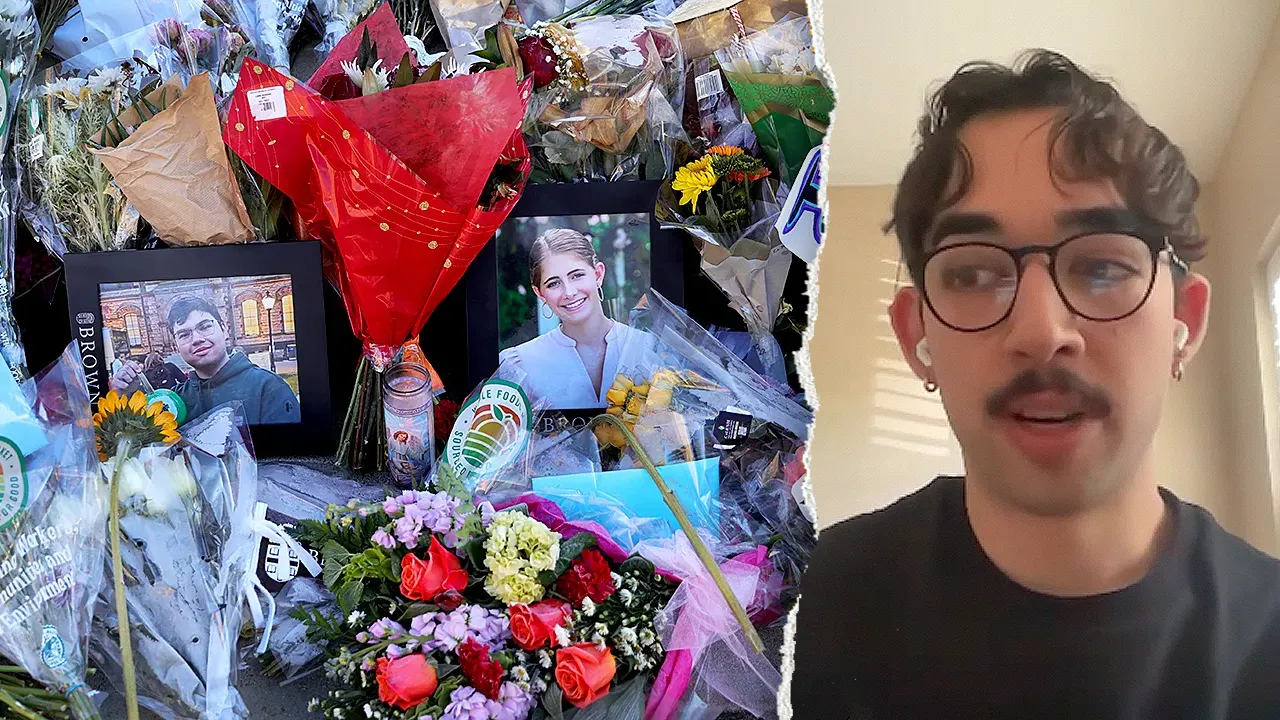
The tragedy claimed the lives of two promising students: Mukhammad Aziz Umurzokov, a freshman aspiring to become a neurosurgeon, and Ella Cook, a sophomore who served as vice president of Brown’s College Republicans. DiPrimio learned that his friend Umurzokov was among the victims who had died in the hospital, intensifying his grief and anger. “I was so angry because I come from a public policy background, so there was emotional compartmentalization where I was intellectualizing the fact that this could probably have been preventable,” DiPrimio reflected. He also expressed frustration at seeing the victims’ memories “twisted and used for political gain” in the aftermath. The shooting felt like “a long nightmare” to DiPrimio, who later traveled to New York City to leave flowers and a note for both victims at the base of the “Summer Maiden” statue at Rockefeller Center.
In a heartfelt video tribute to Umurzokov, DiPrimio shared the story of their friendship, which had begun after a professor had embarrassed him at an event. The freshman approached him afterward to offer support, and DiPrimio was immediately impressed by his maturity. They bonded over pop culture, movies, and current events, with DiPrimio feeling protective of the younger student as they were both new to Brown. “The haunting thing is that in October, we had talked about how crazy gun violence was in America,” DiPrimio recalled. “I know he would be so livid about what happened at Brown, and he would want to see a change come from this.” Adding to the tragedy was the fact that Umurzokov had planned to go on a date the night of the shooting—plans that would never materialize.
Both students expressed concerns about how quickly society might move on from this tragedy, with Gures worrying that it would become “just any other shooting” in a country plagued by gun violence. “It really becomes our job to make sure we keep reminding people that this has happened in a community as close as ours,” he said, emphasizing the importance of remembering not just the statistics but the individuals affected. DiPrimio echoed this sentiment, urging people to “remember [Cook] and [Umurzokov] not as victims, but as people.” For the Brown University community, the challenge now lies in processing this trauma while preserving the full humanity of those lost. As Gures poignantly reflected, “It’s so harrowing to me every single time this happens. You really get to think this won’t happen to my campus, until it does”—a sobering reminder of how gun violence continues to shatter the perceived sanctuary of academic institutions across America.