


A Moment of Humanity Amid Immigration Tensions
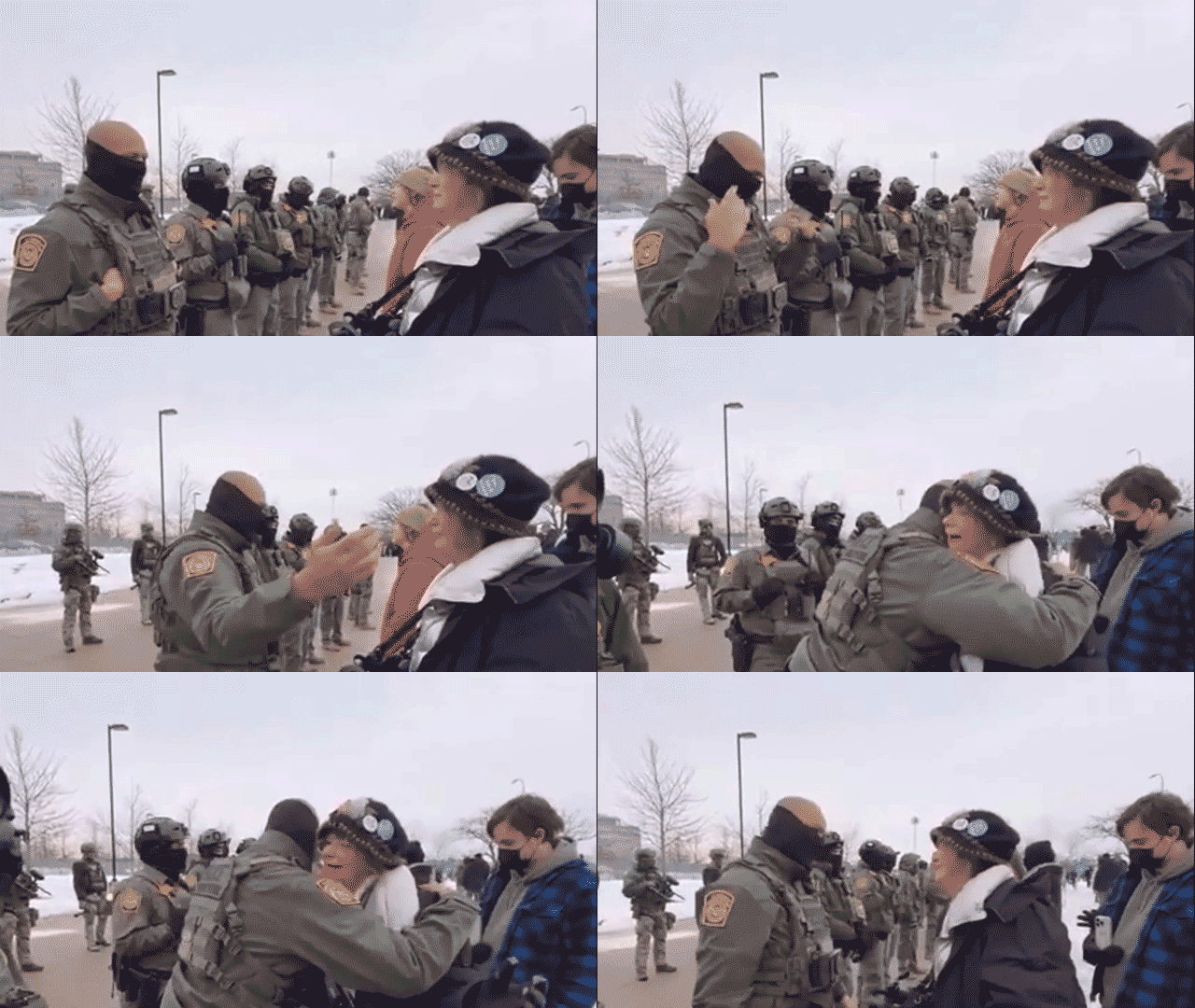
In a striking display of human connection during heightened immigration tensions, a Border Patrol agent and a protester shared an unexpected hug in Minnesota, momentarily bridging the deep divide over immigration enforcement policies. The interaction, captured on video, revealed a rare glimpse of personal connection between those on opposing sides of one of America’s most contentious issues. As the agent stood in full tactical gear facing a woman equipped with a bullhorn and gas mask, their conversation quickly moved past political differences to find common ground in their shared military service. “You signed up to become a soldier, right,” the agent asked, explaining his own transition from Air Force service to Border Patrol. The woman responded with military humor, joking that if he had been a Marine, she “would have brought some crayons” – a lighthearted jab that broke the tension and prompted laughter from both parties.
What followed was remarkable in the current climate of polarization. “I love you,” the agent said warmly. “I want to hug you.” After a moment of hesitation and checking with fellow agents, he stepped forward from the formation line, and the two embraced while smiling – a powerful visual counterpoint to the confrontational images that typically dominate coverage of immigration enforcement protests. “We have a heart, you know what I mean,” the agent said afterward, humanizing the uniform that many protesters view with suspicion or hostility. Their exchange continued with gentle teasing, the protester inviting him to “take off all that shit and come over here” and offering “a safe house,” while the agent politely declined, mentioning his upcoming retirement and desire to maintain his benefits.
Their conversation eventually touched on more sensitive territory when the woman raised concerns about racial profiling. In response, the agent, who appeared to be a person of color himself, held out his uncovered hands to silently make his point. The protester, who was white, then challenged the entire line of agents about their immigrant heritage, urging them to contact their mothers and grandmothers to apologize for their work. This exchange underscored the complex intersections of race, immigration, and law enforcement that lie at the heart of the national debate, while also showing how individual humanity can sometimes transcend these divisions, even briefly.
This moment of connection happened against the backdrop of escalating tensions nationwide following the death of Renee Nicole Good, a 37-year-old mother of three who was fatally shot by an ICE agent during an immigration operation just one day earlier. According to Department of Homeland Security officials, the agent acted in “self-defense” when Good allegedly attempted to drive into him, though many Democratic politicians have characterized the incident as “murder.” The shooting, captured on video, ignited protests across the country, further intensifying the already heated discourse around immigration enforcement. The Minnesota interaction between agent and protester represents a stark contrast to the violence and anger that has marked many such encounters in recent weeks.
The conversation also highlighted the internal divisions within immigration enforcement itself, with the protester specifically urging the Border Patrol agent not to support ICE operations. “You don’t have to do this,” she insisted. “And if you do want to stay in Border Patrol, for God’s sake, quit protecting ICE.” This distinction drawn between different enforcement agencies reflects the nuanced critique many activists make, targeting specific policies and practices rather than all immigration enforcement broadly. Such distinctions rarely make headlines but represent important subtleties in the immigration debate that can get lost in the more polarized public discourse.
Ultimately, this brief human connection serves as a reminder of what often gets overlooked in political battles – the shared humanity of people on all sides of contentious issues. While the hug didn’t resolve any policy disagreements or change either person’s position, it momentarily pierced the dehumanizing rhetoric that can dominate immigration debates. As Americans continue grappling with complex questions about borders, enforcement and human rights, such moments of personal connection across divides offer a glimpse of what might be possible beyond the current cycle of confrontation. They suggest that even in times of intense polarization, our common humanity remains accessible when we pause to recognize the person behind the opposing viewpoint or uniform.