






The Grand Tapestry of Faith Unveiled at St. Patrick’s
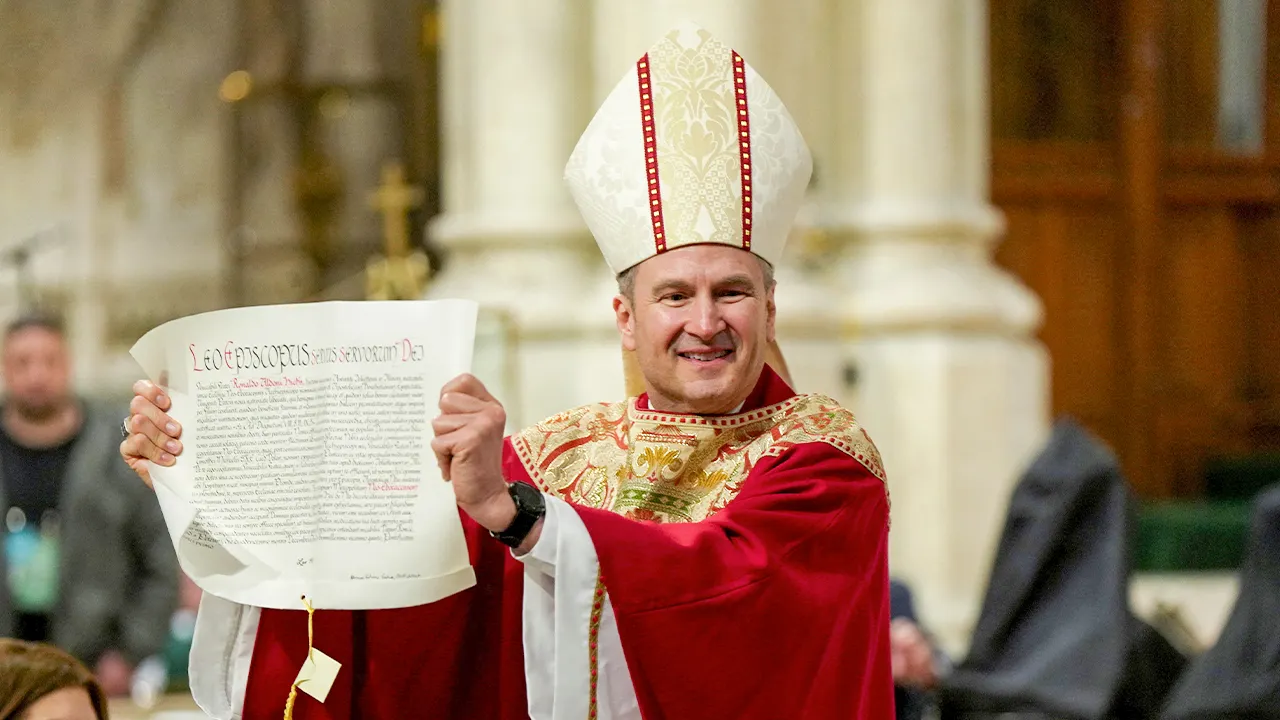
In the heart of New York City, where skyscrapers touch the heavens and the hustle of the streets echoes like a modern hymn, something profoundly timeless unfolded on a crisp Friday morning. St. Patrick’s Cathedral, that iconic emerald gemstone of Gothic architecture, played host to the formal installation of Archbishop Ronald Hicks, a moment that felt like the gentle turning of a page in a beloved family history book. As people from all walks of life gathered, mingling with the scent of incense and the murmur of anticipation, it was easy to imagine the weight of history pressing down yet uplifting those in attendance. Ronald Hicks wasn’t just stepping into a role; he was embracing a legacy, much like a grandson inheriting a cherished family farm. Known for his warm demeanor and infectious enthusiasm, Hicks had been prepared for this spotlight after years of quiet service in the Diocese of Joliet, Illinois. Walking into such a prestigious office, following the esteemed Cardinal Timothy Dolan, Hicks carried the hopes of a community yearning for renewal. The cathedral, with its stained-glass windows telling stories of saints and struggles, seemed to hum with life that day, as if the very stones remembered the prayers whispered within its walls over the centuries. Hicks, a man who’d traded the Midwestern fields for the urban challenge, couldn’t help but exude a boyish joy at the city’s pulse. “I happen to like New York. I happen to love this town,” he declared, channeling Sinatra’s iconic tune, turning a formal event into a relatable heartfelt confession. It was a reminder that faith isn’t just doctrinal; it’s personal, infused with the love of places and people. His simple yet profound words—”I love Jesus. I love the Church. And I love people”—struck a chord, painting Archbishop Hicks not as an aloof figure on a pedestal, but as someone you’d share a cup of coffee with, discussing life’s ups and downs. Born in the Archdiocese of Chicago, Hicks had grown up surrounded by the rich tapestry of immigrant stories, which would later shape his ministry. Ordained as a priest in 1994, he devoted years to building bridges in communities often overlooked, like the orphans he tended through his work with Nuestros Pequeños Hermanos in Latin America. This charity work wasn’t just a job; it was a calling that etched deep empathy into his soul, teaching him the value of extending a hand to those in need. His fluency in Spanish became more than a linguistic skill—it symbolized a bridge over cultural divides, enabling him to connect with Hispanic populations in ways that enriched both him and the Church. As the installation progressed, with Hicks now firmly at the helm of the Archdiocese of New York, one couldn’t help but feel a renewal stirring, like spring after a long winter. The ceremony wasn’t just a ritual; it was a communal embrace, drawing in the faithful and the curious alike, reminding everyone that faith walks hand-in-hand with humanity. In this grand cathedral, under the watchful gaze of faith’s history, Ronald Hicks wasn’t merely assuming a title; he was stepping into a vibrant conversation with the city’s soul, ready to listen, guide, and love in equal measure.
A Journey Woven with Compassion and Quiet Strength
Delving into the life of Archbishop Ronald Hicks reveals a man whose path to leadership was paved not with ambition but with authentic service and an unwavering commitment to compassion. From his early days in Chicago, where he first felt the call to priesthood, Hicks embodied a gentleness that drew people in like a comforting embrace. Ordained on a sunny May day in 1994, amidst the joys and trials of everyday parishioners, he plunged into the ministry with a zest that never wavered. It wasn’t long before he found himself leading Nuestros Pequeños Hermanos, a charity dedicated to caring for orphans across Latin America. Imagine the sheer grit required to navigate orphanages in tropical heat, tending to children who’ve known little but hardship—it’s the kind of work that forges character in the fires of empathy. There, among the laughter of kids playing soccer on dusty fields and the quiet tears of those bidding farewell to families, Hicks discovered the profound beauty of human resilience. His experiences weren’t confined to sermons; they were lived out in the trenches, where faith met flesh-and-blood need. This deep immersion in charity work sharpened his view of the Church not as an institution isolated from the world, but as a living extension of Christ’s hands. Fluency in Spanish, which he cultivated through these adventures, opened doors to immigrant hearts, allowing him to build trust in communities that often felt marginalized. For Hicks, ministry was never theoretical—it was about seeing the divine in the faces of everyday people, from factory workers in New York to farmers in Illinois. His tenure as Bishop of Joliet since 2020 further honed this perspective, where he navigated the complexities of modern diocesan life with a steady hand and a listening ear. People who knew him spoke of his ability to blend wisdom with warmth, turning potential conflicts into opportunities for growth. As he transitioned to archdiocesan leader, Hicks carried these stories like treasured heirlooms, ready to weave them into the New York narrative. He wasn’t a stranger to challenge; fluency in the language of the heart prepared him for the city’s vibrant mosaic. In reflecting on his journey, one sees a bishop who prioritized people over protocols, whose love for Jesus wasn’t abstract but expressed through acts of charity that touched the downtrodden. This humanized legacy isn’t just biographical; it’s a testament to how personal faith can inspire collective renewal, making Hicks a relatable shepherd for a flock seeking genuine connection.
The Ritual of Renewal: Knocking on Cathedral Doors
The installation ceremony at St. Patrick’s Cathedral was a symphony of tradition and emotion, a vivid reminder that even in an age of digital sermons and virtual gatherings, the sacred rituals of the Church hold a timeless power to unite us. It began just as ancient customs dictate, with the new archbishop, Ronald Hicks, standing at the formidable bronze doors, hammer in hand, embodying humility and anticipation. Picture the scene: Hicks, dressed in the ornate vestments that signified his elevated role, raised the metal hammer and knocked thrice, each strike echoing through the historic nave like a heartbeat. On the other side, waiting to greet him, was Cardinal Timothy Dolan, whose face bore a mix of pride and poignant farewell. This wasn’t mere formality; it was a symbolic gesture of seeking entry into the Church’s eternal fold, a nod to the knocks on the doors of heaven itself. As the doors creaked open, greeted by Dolan’s welcoming embrace, the air filled with a palpable sense of continuation, a relay of faith from one shepherd to the next. Three processions followed, each a procession of honor and community: first, the honored guests, including dignitaries whose lives intertwined with the city’s spiritual fabric; then, the leadership of the congregation, representing the faithful who sustained the archdiocese daily; and finally, a gathering of bishops, their dignified robes a testament to centuries of ecclesiastical tradition. For those in attendance, it was an immersive experience, stirring memories of weddings, funerals, and the quiet moments of contemplation that define personal faith journeys. Hicks’ installation on Dolan’s 75th birthday added a layer of heartfelt coincidence, as if the Church were winking at the beauty of life’s symmetries. Leading the liturgy partially in Spanish was Hicks’ thoughtful gesture, acknowledging the diverse immigrant roots that pulsed through New York. It wasn’t just inclusive; it was transformative, turning the ceremony into a multilingual chorus of gratitude. For newcomers to such events, it felt like stepping into a living storybook, where every chant and gesture carried the weight of generations. In this ritual, one witnessed the Church’s capacity to honor both tradition and inclusivity, making the moment feel accessible and alive. Hicks emerged not just as a leader but as a conduit for communal joy, his presence a bridge between the sacred and the everyday.
A Vision of Mission: Embracing the World Beyond the Pews
At the heart of Archbishop Ronald Hicks’ tenure was a vision that reframed the Church’s purpose, one that spoke to the restless spirit of modern believers seeking meaning beyond routine rituals. No longer content with insular practices, Hicks envisioned a missionary Church, fueled by a fiery passion for outreach that transcended comfortable boundaries. In his installation homily, he articulated this with the eloquence of a storyteller, painting a picture of faith that dances in the streets rather than gathering dust in meeting halls. “This is a call to be a missionary Church, not a country club,” he proclaimed, his words resonating like a call to action from a loving parent urging their child to explore the world. He wasn’t critiquing past efforts harshly; instead, he extended an invitation, a gentle hand pulling people toward renewal. The Church, Hicks insisted, exists to serve all people, igniting with faith, hope, and charity in Christ’s name. This wasn’t lofty rhetoric; it was a personal manifesto drawn from his years of hands-on service among the underserved. Charities for orphans, immigrant communities—these weren’t footnotes in his life but foundational chapters that shaped his belief that faith thrives in action. For many in the pews, Hicks’ message felt like a breath of fresh air, countering the apathy that can creep into any institution over time. It encouraged parishioners to step out of their comfort zones, whether by volunteering in soup kitchens or simply offering a kind word to a stranger. In a city like New York, with its relentless pace and diverse faces, this call to mission was profoundly relevant, urging the faithful to see divinity in the immigrant’s story or the worker’s toil. Hicks’ vision didn’t diminish the importance of current members but expanded the Church’s embrace, making it a beacon for the lost and the lonely. Echoing through the cathedral, his words inspired a quiet revolution, reminding everyone that true discipleship involves getting your hands dirty in the world’s grit. As the service drew to a close, attendees left with a renewed sense of purpose, their faith humanized and actionable. Hicks wasn’t just preaching; he was modeling a Church alive with love, ready to heal the broken and uplift the weary in Jesus’ name.
Honoring the Past: A Grateful Farewell to Cardinal Dolan
No tribute was more heartfelt than the one Archbishop Ronald Hicks paid to his predecessor, Cardinal Timothy Dolan, weaving threads of gratitude into the fabric of his first homily as New York City’s archbishop. On Dolan’s 75th birthday, with the cathedral’s vaults echoing the Latin phrase “ad multos annos”—”to many more years”—Hicks expressed appreciation that was both personal and profound. “To Cardinal Dolan, thank you for your magnanimous leadership here for seventeen years,” he said, his voice steady yet warm, acknowledging the years of service that had nurtured the archdiocese like a steadfast gardener tending a vast orchard. Dolan’s tenure, begun in 2009, had been a era of visible vitality, marked by public charity events that bridged faith and community, from his exuberant parades to his accessible style that made the Church feel approachable. Hicks’ words weren’t mere niceties; they were a genuine reflection of the support Dolan had shown him publicly and privately, acting as a mentor who paved the way with grace. Imagine the emotions in the room—Dolan, now in retirement after submitting his resignation per Church canon at age 75, perhaps feeling a bittersweet tug at the heart as he watched his successor take the reins. Yet there was no sorrow without joy, for Hicks’ remarks underscored a seamless transition, a handing off of torches in the relay of faith. Dolan’s legacy, imbued with joy and philanthropy, had left an indelible mark, from his outreach programs to his unapologetic defense of Church teachings in a challenging world. Hicks honored this with a birthday wish that doubled as a blessing, evoking cheers and smiles amidst the solemnity. For the congregation, it humanized the moment, turning a succession into a family affair, reminding them that leadership in the Church is about people, not just positions. Hicks’ gratitude extended to Dolan’s broader influence, recognizing how he navigated controversies with a blend of humor and conviction. As the ceremony progressed, one sensed a profound continuity, where past and present intertwined, fostering hope for the future. This farewell wasn’t an end but a beautiful send-off, encapsulating the Church’s essence of communal love and gratitude.
Charting New Waters: Hicks’ Role in a Shifting Church Landscape
The installation of Archbishop Ronald Hicks didn’t just mark a change in the Archdiocese of New York; it signaled ripples across the broader U.S. Catholic Church, potentially ushering in an era of bold stances amid national debates. With Hicks ascending as Pope Leo XIV, the first American pope, watches the Vatican from afar, observers like The Associated Press noted a convergence of leadership styles that could amplify progressive nudges within the Church. Hicks, recognized as embodying Leo’s pastoral sensibilities, was poised to join voices already challenging the Trump administration’s policies, particularly on immigration—an issue close to Hicks’ heart given his deep ties to Latino communities. His request for a bilingual liturgy, part Spanish and part English, during the installation, was a subtle yet powerful nod to inclusivity, echoing his charity work that championed the voiceless. This wasn’t mere symbolism; it reflected Hicks’ lived experience, where fluency in Spanish and years with orphans in Latin America bred an empathy for border-crossers seeking dreams anew. In a New York molded by waves of immigrants, Hicks’ approach promised a Church that welcomes without judgment, potentially influencing national conversations on humanity and justice. Dolan’s retirement, effective after his February submission at 75, provided the stage for this evolution, freeing up space for younger visions while honoring his contributions. As American bishops attuned to contemporary struggles, Hicks represented a bridge toward collaboration and compassion, countering divisiveness with dialogue. For believers grappling with societal divides, this shift offered hope—a Church not entrenched in old battles but reaching out with outstretched arms. In the grand narrative of faith, Hicks’ leadership felt personal and anticipatory, inviting reflection on how individual stories shape institutional paths. His tenure began not as an endpoint but as an open chapter, where New Yorkers and beyond could envision a Church reflecting Christ’s love in every corner. Amidst the uncertainties of modern times, Hicks’ installation stood as a beacon, humanizing faith and inspiring action that feels both timeless and urgently now. The Archdiocese, under his guidance, seemed poised to thrive, blending history with heartfelt mission in the spirit of renewal.