





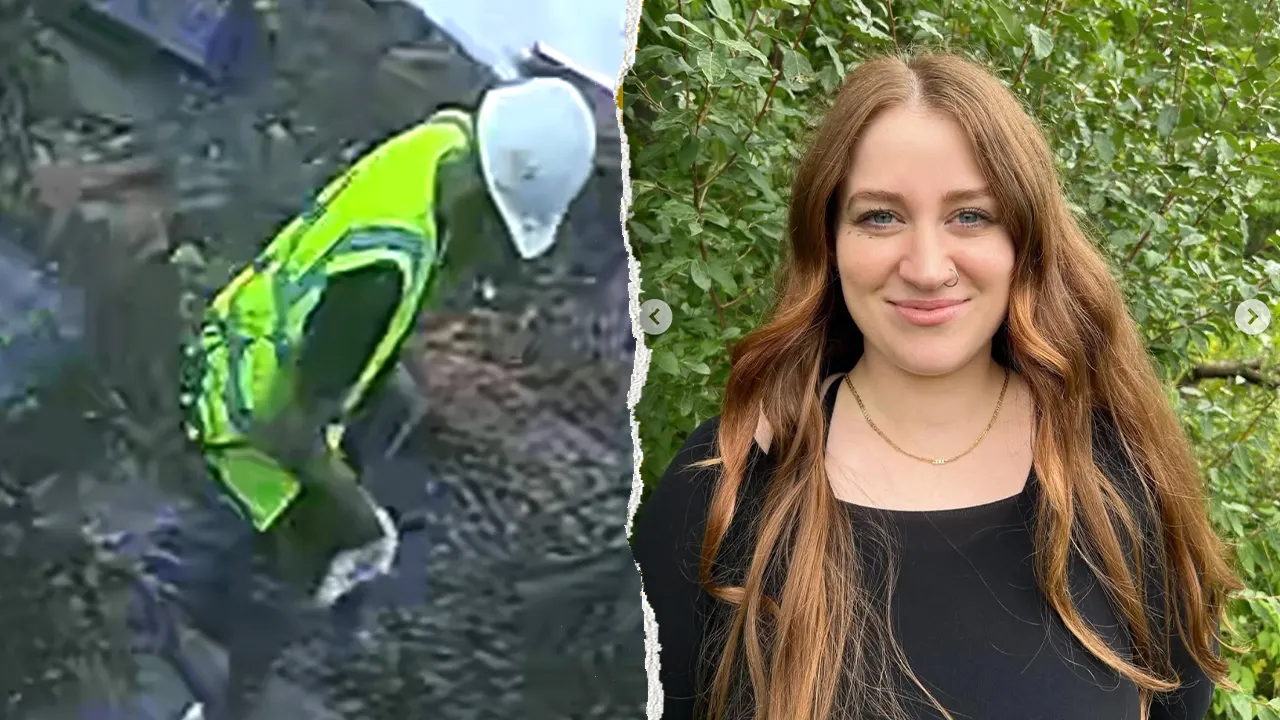
In the bustling heart of St. Louis, Missouri, a sunny Tuesday morning in the Tower Grove East neighborhood turned into a nightmare that shattered lives and dreams. Gabrielle “Sam” Linehan, a vibrant 28-year-old woman whose passion for figure skating had shaped her path from athlete to beloved coach, was simply pulling into a Starbucks drive-thru, perhaps craving a quick coffee to fuel her day. Known as Sam to friends and the skating community, she embodied grace, determination, and a infectious joy that lit up the rink. As a former member of Team USA synchronized figure skating, representing St. Louis Synergy’s junior team, she had helped secure a silver medal at the 2014 U.S. Synchronized Skating Championships—a testament to her teamwork and resilience. Picture her in those shimmering costumes, gliding effortlessly with her squad, building not just spins and jumps, but lifelong friendships and a sense of family. On that fateful day, just after 10 a.m., as she sat in her car waiting for her order, a stranger approached with sinister intent. Surveillance footage captured the horror: a man in a high-visibility vest and helmet, looking more like a worker than a predator, opening fire in broad daylight. Bullet after bullet pierced the air, and Sam’s life, full of promise and potential, was extinguished in an instant. The suspect, later identified as 58-year-old Keith Lamon Brown, fled with her bank cards and driver’s license, leaving behind a community in shock and mourning. Transporting her to a nearby hospital couldn’t reverse the tragedy; she was pronounced dead, her story tragically cut short amid the mundane rhythm of daily errands.
The details of that cold-blooded crime, as laid out in the probable cause statement, paint a picture of vulnerability and betrayal. Sam was just going about her routine—perhaps texting a fellow coach or planning her next session at Metro Edge Skating Club—when Brown allegedly targeted her vehicle as part of an armed robbery. He wasn’t a phantom; he was a man with a history, dressed deceptively in safety gear that mocked the protection he denied his victim. Witnesses and footage revealed the chaos: shots ringing out, people scattering, and Sam’s peaceful moment dissolving into terror. In a city grappling with rising gun violence, this incident highlighted how even the most public places—like a drive-thru under the warm sun—could become battlegrounds. Imagine the fear in the eyes of others who might have glanced up from their phones or steering wheels, witnessing innocence torn apart. Sam’s family, her skating companions, and the extended community were left reeling, not just from the loss of a life, but from the assault on everyday normalcy. The robbery wasn’t opportunistic chance; police later tied it to similar incidents in recent days, suggesting Brown was on a predatory rampage. As authorities pieced together the timeline, it became clear this was no random act—her personal items stolen, her identity pilfered in the aftermath of such brutality. Sam’s belongings, like her license, carried memories of her achievements; now, they were weapons in a criminal’s hands, a stark reminder of how tragedy ripples outward, touching the intimate details that define us all.
Yet, beyond the crime scene, Sam’s legacy shone brightly, a beacon of hope amid the darkness. Her skaters at Metro Edge Skating Club remembered her not just as an athlete, but as a mentor who instilled values that transcended sport. In an emotional Instagram tribute posted by the team, they described her as “a cherished skater, coach, mentor, and friend,” whose impact “stretched far beyond the rink.” She dedicated her heart to developing young talents, teaching them discipline, teamwork, integrity, and resilience—qualities that mirrored her own disciplined life. Picture the late-night practices, the shared laughs after falls, the way she pushed skaters to reach their edge. Sam’s journey started in synchronized skating, where precision and trust are paramount; she brought that spirit to coaching, helping others chase dreams like she once did. Her silver medal wasn’t just a trophy—it was a symbol of collective triumph, and she carried that ethos into her coaching role. Friends spoke of her infectious energy, how she’d spend extra hours encouraging kids who doubted themselves, reminding them that every slip was a step toward grace. In a world of fleeting connections, Sam built deep bonds, leaving behind a void felt by hundreds who knew her as more than a name. Her community gathered in grief, sharing stories of her kindness—how she’d bake treats for team celebrations or lend an ear to those struggling off the ice. This tribute wasn’t just words; it was a living testament to a life well-lived, a reminder that true impact endures, even as the world awakens to senseless loss.
Authorities wasted no time in pursuing justice, capturing Brown and bringing a sense of closure to the chaos. On Wednesday, the St. Louis Police Department announced his arrest, revealing that intelligence detectives had taken him into custody “in connection to the homicide on S. Grand.” Armed during his apprehension, he faced a SWAT-executed search warrant at his home, where detectives unearthed evidence linking him to two prior robberies. Court documents charged him with first-degree murder, three counts of first-degree robbery, four counts of armed criminal action, and unlawful possession of a firearm—charges reflecting the brutality of his actions. Held without bond at the St. Louis City Justice Center, Brown’s arrest offered a glimmer of accountability in a story marked by heartbreak. Yet, it also unveiled a darker history: police noted he was wanted for two other armed robberies in the days before Sam’s killing, suggesting a pattern of violence that endangered countless lives. FOX 2 reports his criminal record stretches back to the mid-1980s, a timeline filled with missed opportunities and choices that spiraled into destruction. As detectives delved deeper, they uncovered connections to other unsolved threads, painting Brown not as a monster out of nowhere, but as someone whose path had long intersected with law enforcement. For Sam’s loved ones, this news was bittersweet—a step toward healing, but not enough to erase the pain. The community watched as details emerged, feeling the weight of systemic issues like recidivism and guns running rampant. In humanizing terms, Brown’s capture reminded everyone that justice is slow and imperfect; families like Sam’s grapple with waiting while their world crumbles.
Broader currents of violence echoed in the headlines around this tragedy, linking Sam’s story to a troubling tapestry of loss. Stories like the “execution-style” shooting of an Illinois bar owner, where a suspect with decades-long criminal history was apprehended, mirrored the patterns of armed confrontations that plague everyday lives. Or the gunfire erupting at a funeral home during a teen’s service, injuring multiple amid hundreds in attendance—a reminder that no safe space exists untouched. These incidents weren’t isolated; they whispered of simmering societal fractures, where desperation or malice turns public moments deadly. In Sam’s case, her death in a drive-thru spotlighted how vulnerability lurks in the ordinary, forcing communities to confront gun laws, mental health, and desperate crimes born of economic despair. New Jersey tales of a teacher abusing trust, leading to prison, underscored how predatory behavior thrives in positions of influence. Yet, amidst this grim chorus, Sam’s narrative offered hope and reflection. She wasn’t defined by her end, but by her flourishing spirit—a skater who chose mentorship over fame, impacting lives quietly but profoundly. Funeral services and memorials honored her, drawing crowds to share anecdotes of her laughter and tenacity. Parents entrusted their children to her guidance, grateful for the resilience she fostered. This wasn’t just about loss; it was a call to celebrate human connections, to honor those who teach and inspire against the odds.
Ultimately, Gabrielle “Sam” Linehan’s story lingers as a poignant testament to the fragility of existence and the enduring power of compassion. In a world rife with headlines of horror, her life reminds us of the unspoken heroes in our midst—those who glide through challenges with elegance, uplifting others along the way. As St. Louis mourns, her memory fuels conversations about change: stricter gun controls, support for victims’ families, and resources for those at risk of repeating cycles of crime. Friends, skaters, and onlookers shared virtual memorials online, pouring out tributes that humanized the pain—raw expressions of how Sam made the ice feel like home, her absence now a chilling void. Her premature departure at 28 evokes universal questions: What dreams did she harbor for her future? Coaching teams to championships? Starting a family of her own? Or simply enjoying more coffee runs without fear? In remembering her, we glimpse the broader human cost of violence—the futures foreclosed, the communities fractured. Yet, her legacy persists in the skaters she coached, carrying forward her lessons of integrity and resilience. As justice unfolds for her killer, Sam’s spirit endures, a quiet force urging us all to skate toward better days. Her name, once a whisper on the ice, now echoes as a call for empathy, healing the wounds one story at a time. In the end, she wasn’t just taken too soon; she lives on in every heart she touched, transforming tragedy into a beacon of what it means to be truly human.