





Rare Glimpse: The Bones of Saint Francis Emerge from Hidden Chambers
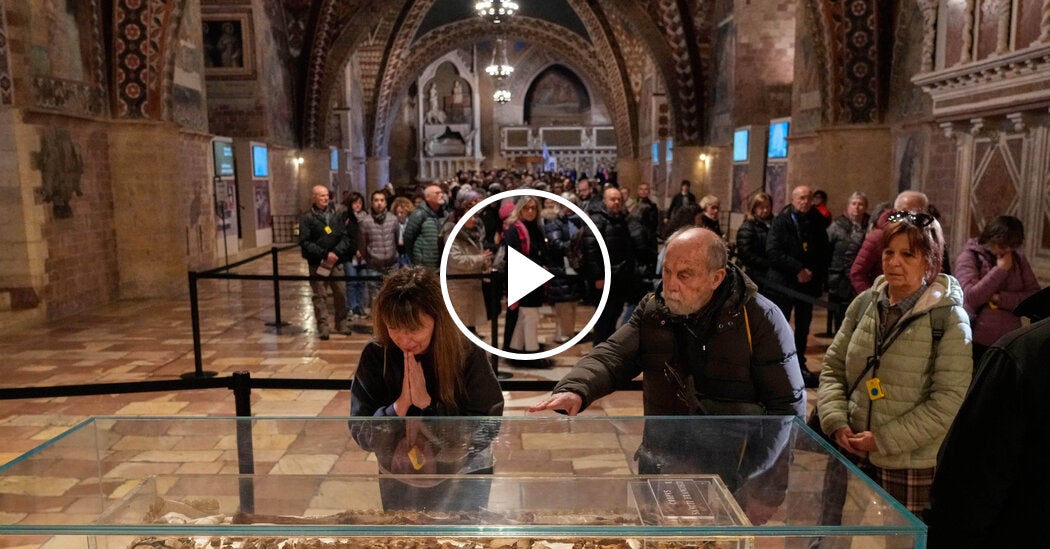
In the heart of medieval Assisi, where hills roll like whispered prayers and ancient stone walls cradle centuries of devotion, a rare event has unfolded that has captivated believers and historians alike. For the first time since 1978, the skeletal remains believed to be those of Saint Francis of Assisi—patron saint of animals, peace, and untold spiritual seekers—are on public display. Tucked inside a specially designed nitrogen-filled plexiglass case to preserve their delicate integrity, these relics offer a tangible link to a man whose life story transcends faith, touching on themes of humility, ecology, and human compassion. As pilgrims and tourists file through the dimly lit Basilica of Saint Francis, the scene evokes a mix of reverence and curiosity, blending the sacred with the scientific in a display that’s as much a historical marvel as a spiritual pilgrimage.
This exhibition isn’t just a momentary flash of curiosity; it serves as a poignant reminder of Francis’s enduring legacy. Born Giovanni di Pietro di Bernardone around 1181 into a wealthy merchant family in Assisi, Francis famously renounced worldly wealth after a vision from Christ in the crumbling San Damiano church. His transformation into a wandering friar, embracing poverty and founding the Franciscan Order, inspired a movement that spread across Europe and beyond. Stories of his compassion—preaching to birds, tending lepers, and mending fences—paint him not as a distant deity but as a relatable figure of radical simplicity. Today, millions worldwide draw inspiration from his teachings, whether through prayer, environmental activism, or simple acts of kindness. Yet, the rarity of viewing his actual remains underscores a paradox: in an age of information overload, these physical artifacts remind us of the raw humanity behind the halo.
The decision to unveil the bones stems from a delicate balance of preservation and profound respect for tradition. Church officials in Assisi, guardians of this sacred heritage, have historically kept the relics private, viewing them as objects of veneration rather than public spectacle. The last public showing, back in 1978, was brief and tightly controlled, lasting only hours before the bones were returned to their secure tomb beneath the church. Experts attribute this caution to the fragility of the remains, which have survived the ravages of time, including a shift in the basilica’s foundation and environmental factors that could accelerate deterioration. Advanced technologies now play a key role; the nitrogen environment combats oxidation, while non-invasive imaging techniques allow scholars to study the bones without disturbance. This approach ensures that the relics of Saint Francis remain accessible not just for faith, but for academic inquiry into medieval relics and forensic anthropology.
As visitors approach the display case, the atmosphere shifts to one of quiet contemplation. The basilica’s Gothic arches overhead seem to echo with the prayers of generations, and the crowd moves in hushed clusters, phones lowered out of deference. School groups, family clusters, and solo pilgrims alike pause, some bowing in prayer, others leaning close to examine the articulations of the skeleton—ribs curving gently like the bars of an open cage, small bones of the hands resting as if ready to hold a beggar. For many, it’s a visceral encounter with mortality and sainthood intertwined. Tourists from across the globe—pilgrims from Italy, ecology-minded visitors from the U.S., and history buffs from Asia—share anecdotes of personal revelations. One woman, tears in her eyes, spoke of how seeing the bones reinforced her commitment to animal welfare, a nod to Francis’s legendary rapport with wildlife. This rare exposure isn’t merely visual; it fosters a deeper dialogue about belief in a secular world.
Among the most touching accounts comes from a local boarding school group of boys, ranging from wide-eyed 10-year-olds to mature 18-year-olds, who recounted an unforgettable experience. Seizing the opportunity during the display’s short window, they walked solemnly past the case, their laughter quieted into respect. Their supervisor, reflecting on the moment, expressed how profoundly moving it was for the young men. “He must be the saint with the greatest following of them all,” he mused, noting Francis’s universal appeal. For these adolescent visitors, it wasn’t just about seeing bones; it was a lesson in empathy and legacy. One 16-year-old shared how it sparked discussions about living with purpose, perhaps emulating Francis’s abandonment of material excess for a life of service. Such encounters highlight how these relics bridge generations, turning history into a living conversation that resonates beyond the basilica walls.
Looking ahead, this fleeting exhibition raises questions about the future of sacred artifacts in an era of digital faith and global travel. As Assisi prepares to re-seal the remains, officials emphasize that such displays must remain exceptional, driven by educational and spiritual merit rather than commercialization. Experts speculate that advances in preservation—perhaps through AI-assisted monitoring or eco-friendly climates—could allow for more controlled viewings. Yet, for believers, the power lies in scarcity; it mirrors Francis’s own life of detachment. In a world grappling with division and ecological crises, these bones serve as a symbol of unity and stewardship. As the display concludes, one can’t help but wonder how Saint Francis, the humble friar who spoke to wolves and kissed lepers, would view this modern homage—a blend of science, reverence, and the unyielding quest for meaning in human fragility.