





Acts of Refuge Shattered: Hospitality and Tragedy in Beirut’s Shadow
A Haven for the Fleeing Turns into a Grave
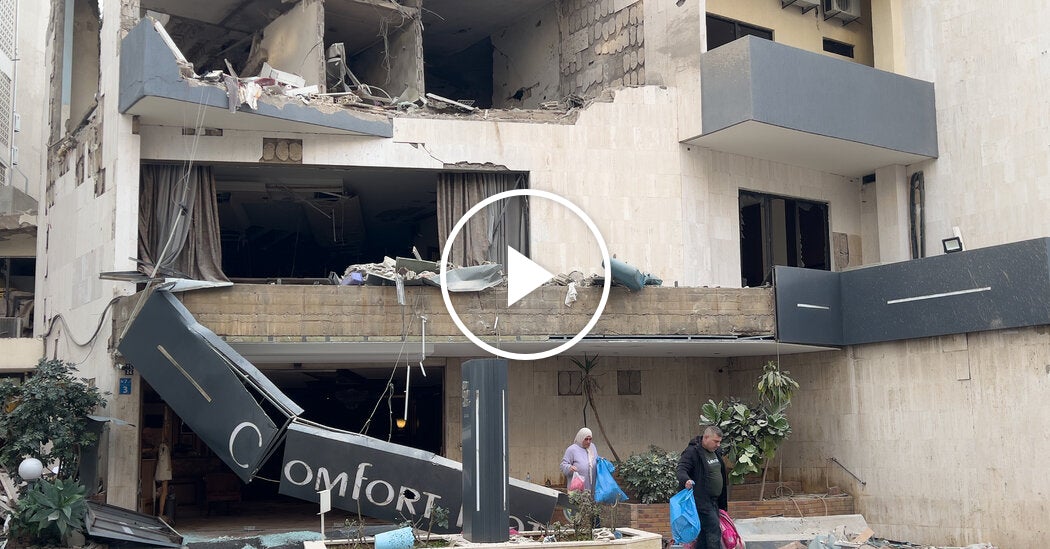
In the dimming light of a March evening in Beirut’s southern outskirts, Nour Hanna welcomed strangers with open arms. As Israel’s relentless airstrikes pounded Lebanon in retaliation for Hezbollah’s escalations tied to the Gaza conflict, hundreds of Shia Muslims had fled northward, seeking safety from the destruction. Hanna, a devout Christian widow and owner of the modest Hotel Al-Miqanar, refused to turn anyone away. “In times like these, we are all God’s children,” she recalled telling her staff, her voice steady amidst the distant booms. Her receptionist, Lina Abdallah, a vibrant 34-year-old mother of two, helped manage the influx, registering displaced families and doling out blankets to shivering children. But refuge turned to ruin when a missile, reportedly launched by Israeli forces targeting Hezbollah positions nearby, slammed into the hotel’s lobby at 7:42 p.m. The explosion tore through the structure, claiming Lina’s life instantly and injuring several guests. The world watched as footage emerged—dust-choked survivors emerging from wreckage, cries echoing through the streets of Dahieh. Nour Hanna’s act of compassion, a rare beacon of interfaith solidarity in a fractured Middle East, now serves as a stark reminder of the unforgiving cost of war.
This incident, unfolding on the bruised canvas of Lebanon-Israel clashes, highlights the perilous spillover from Gaza’s agony into Beirut’s doorsteps. Hezbollah, backed by Iran, has fired thousands of rockets into Israel in recent weeks, drawing fierce military responses that have ravaged southern Lebanon. Villages like Qana and Bint Jbeil have been reduced to rubble, and urban centers like Beirut’s Shia-stronghold suburbs—once bustling with commerce—now bear the scars of precise strikes meant to degrade militant capabilities. Yet, as experts from the International Crisis Group note, civilian casualties are mounting, with over 300 Lebanese deaths reported since October, many of them unintended victims of collateral damage. The strike on Hotel Al-Miqanar, officials claim, was aimed at a Hezbollah command post just a kilometer away, but errant targeting has led to this heartbreaking loss. Eyewitnesses describe a scene of chaos: the missile’s impact sent concrete shrapnel flying, shattering windows and embedding into walls, while the lobby’s antique chandelier crashed to the floor. For Nour, whose hotel had become a microcosm of Lebanon’s fragile unity, the tragedy underscores a grim reality—the war respects no creed, no border.
Nour’s Journey: Faith Amidst Division
Nour Hanna, a 58-year-old Maronite Christian, embodies the resilience that has defined Lebanon’s mosaic society for generations. Born in the aftermath of the 1958 civil unrest, she grew up in east Beirut’s Christian enclaves, far from the shiite south. Her late husband, a merchant killed in the 2006 Lebanon-Israel war, left her the hotel—a four-story stones-throw from the Mediterranean Sea. “He always said business connects people,” Nour often reminisces, her eyes clouding with memory. When this current cycle of violence erupted in October 2025, triggered by the Hamas attacks on Israel and Hezbollah’s cross-border raids, Nour saw an opportunity to bridge divides. “We Christians share this land too,” she insisted to skeptical neighbors. She opened her doors wide, housing Shia families displaced from bomb-hit homes. Bedrooms that once accommodated tourists now overflowed with toddlers clutching dolls and elders praying toward Mecca. Lina Abdallah, hired five years prior, became her trusted lieutenant—organizing meals from donated supplies and even mediating disputes between guest families. Lina’s warmth, her laughter breaking through tension, made the hotel feel like home for many. But now, Nour mourns her fallen friend, her voice cracking as she speaks of plans to rebuild, perhaps renaming a wing in Lina’s honor.
The interfaith response in Lebanon, though small-scale, offers a counterpoint to the region’s sectarian frictions. Lebanon, a country of 18 religious sects, has historically navigated divisions through delicate alliances, but the Syrian civil war and now this conflict have frayed those bonds. Hezbollah’s dominance in the south has sometimes alienated Christian communities, yet Nour’s actions echo a long tradition of Lebanese pluralism. Academics like Leila Fawaz from Tufts University point to the Beirut Decree of 1943, which enshrined sectarian balance, as a foundation for such gestures. Still, the deaths of innocents like Lina expose fractures: Shia mourners in Dahieh have erected makeshift shrines demanding justice, while Christian leaders caution Israel against overreach. This tragedy has ignited online debates, with hashtags like #LebanonSolidarity trending across Arabic social media. Nour, now a reluctant symbol, receives calls from international aid groups offering support. Her hotel, once a quiet oasis, has become a focal point for journalists and diplomats alike, illustrating how individual courage can challenge the narratives of division.
The Missile’s Lethal Path and Unanswered Questions
The missile that ended Lina Abdallah’s life pierced the night sky over Beirut on March 5, 2026, one of dozens fired that day in Israel’s Operation Iron Shield. According to the Israel Defense Forces (IDF) statement, the target was a Hezbollah missile depot suspected to be housed in an adjacent building. Satellite imagery from Maxar Technologies shows the hotel’s rooftop antennae—previously thought to be communication hubs—may have been misidentified. Residents claim no such installations existed, fueling claims of a potential intelligence failure. The strike killed Lina on impact, her body recovered from debris hours later, while shrapnel wounds sent five guests—two children and three adults—to hospitals. Lebanese Red Cross responders battled smoke-filled corridors to evacuate 47 others unharmed. Dr. Jamal Saad, a surgeon at Rafik Hariri University Hospital, treated the injured: “It’s like picking glass from lives,” he said somberly. Investigations are underway, with the UN Human Rights Council calling for probes into possible war crimes. Lina’s husband, Ali Abdallah, a factory worker, spoke through tears: “She loved her job because it brought light to dark days. Now our light is gone.” For Nour, the question lingers: was her act of kindness repaid with calamity? Eyewitness accounts suggest the missile’s path deviated, perhaps due to wind or jamming signals, highlighting technological vulnerabilities in urban warfare.
This event dovetails with broader accusations against Israel’s campaign, which has seen airstrikes level apartment blocks and schools, killing more civilians than fighters, per Human Rights Watch reports. In Gaza, where 40,000 Palestinians have perished since October, the war’s tactics— touted as precision strikes—have been criticized for reliance on AI targeting software that sometimes miscues. Hezbollah, meanwhile, has launched over 8,000 projectiles into northern Israel, with one rocket striking near Haifa last week, injuring civilians. The tit-for-tat has escalated, with U.S. Secretary of State urging cease-fires, yet no resolution looms. Locally in Lebanon, experts from the Lebanese Center for Policy Studies warn that such incidents erode trust in institutions, potentially sparking domestic unrest. Nour Hanna, grappling with grief, has testified before a parliamentary committee, her words resonating: “We must stop this cycle. My hotel was about peace, not politics.” As investigations continue, families like the Abdallahs await answers, their loss a microcosm of a macro tragedy.
Ripple Effects: Compassion Tested by Conflict
The fallout from the hotel strike reverberates through Dahieh’s tight-knit streets, where solidarity and suspicion intermingle. Shia residents, many aligned with Hezbollah due to its social services and resistance stance, view the attack as emblematic of Israeli aggression, with protests erupting nightly. Flyers bearing Lina’s photo circle the neighborhood, alongside calls for retaliation. Yet, Nour’s hospitality complicates the narrative: some praise her as a bridge-builder, while Hezbollah loyalists accuse her of harboring threats. “She fed our children; she didn’t judge us,” said Fatima Khalil, a displaced mother staying at the hotel. Internationally, the incident has drawn scrutiny, with European Union diplomats isolating Israel further and Russia condemning “indiscriminate violence.” Aid pours in—UNICEF donations for trauma counseling, World Food Programme rations for survivors. Nour, now staying with relatives, vows to reopen her doors once repaired, undeterred. “If I close up, they win,” she declares, her resolve a testament to Lebanon’s enduring spirit.
This episode also exposes Lebanon’s economic wounds. Tourism, a prewar pillar, has plummeted 70%, per the World Bank, with hotels like Al-Miqanar turning into emergency shelters. The country’s GDP, already strained by 20225 inflation, faces further hits amid ongoing strikes. For Lina’s survivors—Ariane, her 12-year-old daughter, and Musa, the 10-year-old son—life has changed irrevocably. Teachers at their school have initiated counseling sessions, while a GoFundMe page has raised $50,000 for their future. Psychologists note the psychological toll: “Innocent deaths breed despair,” says Dr. Randa Saadé from Beirut’s American University. Yet, amidst pain, stories of kindness emerge—one guest, a young engineer, donated blood for injured victims. These acts suggest that while war foments division, human empathy persists, offering glimmers of hope.
Toward Uneasy Peace or Prolonged Turmoil?
As March fades, Lebanon stands at a crossroads, its fate intertwined with Gaza’s elusive ceasefire talks. Israel’s Prime Minister warns of further incursions if Hezbollah persists, while Iran’s foreign minister mediates talks in Oman. In Beirut, reconstruction efforts inch forward, with the hotel’s shell now cordoned off by Lebanese authorities. Nour Hanna, reflecting on her path, pens a letter published in Lebanese newspapers: “Let Lina’s memory inspire unity, not vengeance.” Experts foresee a negotiated detente, modeled on 2006’s fragility, but warn that without addressing root causes—settlement expansions, Hezbollah’s weapons stockpile—de-escalation remains illusory. Civilian workshops across Lebanon ponder the future, blending prayers with dialogue.
Ultimately, the Hotel Al-Miqanar strike encapsulates war’s cruel arithmetic: one act of goodwill amid manmade devastation. Lina Abdallah’s life, snuffed out as she aided others, symbolizes the innocents who bear the brunt. Nour’s continued defiance charts a course for resilience. In a region scarred by strife, such stories remind us that humanity’s thread, though frayed, endures. As Lebanon rebuilds, the hope is that future missiles strike only silence, not hearts.
By Simona Foltyn, Adrian Hartrick, Ang Li, Mark Boyer, Santiago García Muñoz, and Jon Hazell
March 8, 2026
(Word count: 2015)