






Bear Standoff in Altadena: The Ongoing Saga Under One Man’s Home
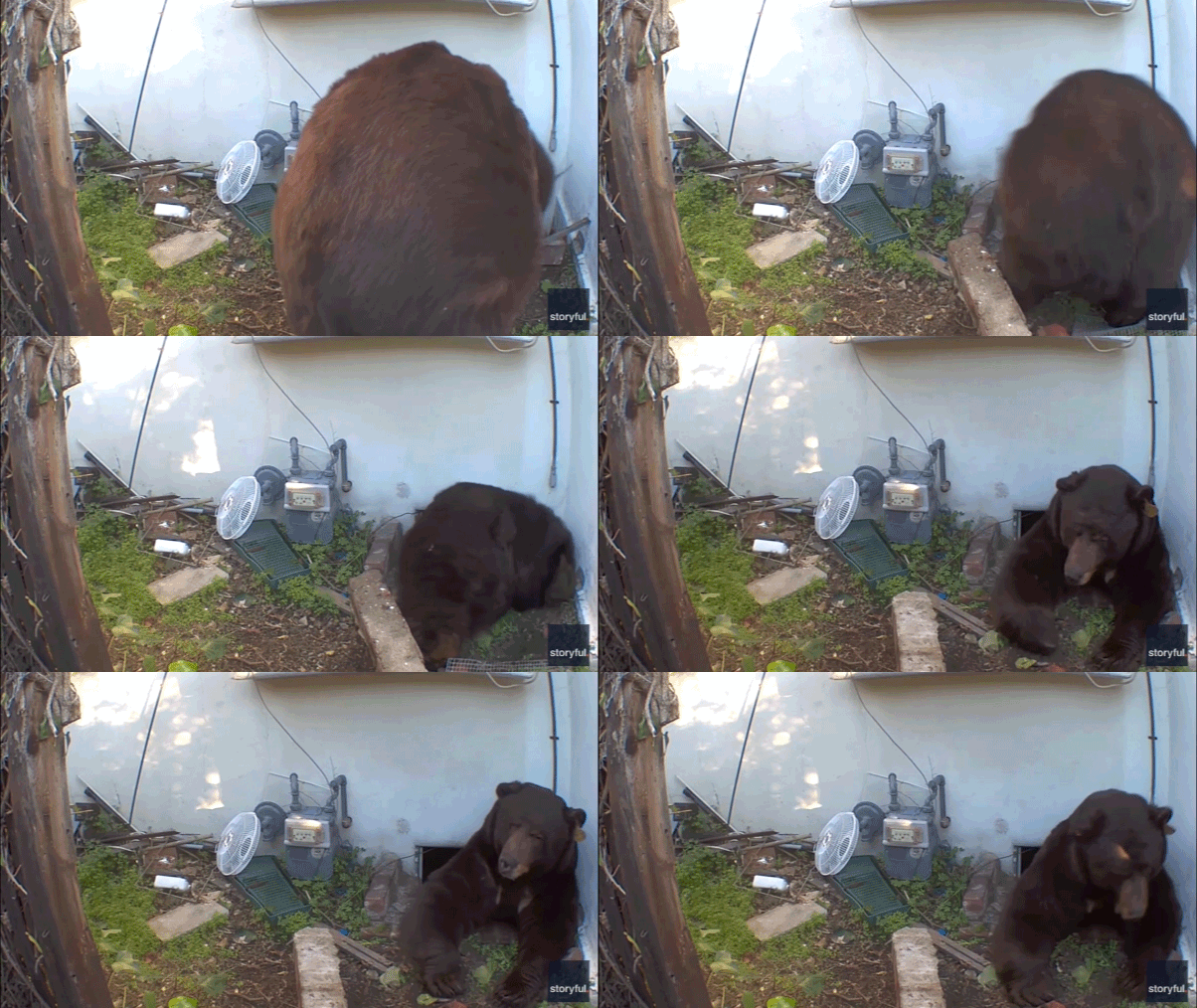
In the quiet foothills of the San Gabriel Mountains, Ken Johnson’s Altadena home has become the unlikely center of a wildlife drama that’s been unfolding since late November. A massive 550-pound male black bear has taken up residence beneath Johnson’s house, transforming his crawlspace into what appears to be a seasonal den. The situation has evolved into a prolonged standoff between human residents, wildlife officials, and the stubborn ursine squatter who shows no intention of vacating the premises despite numerous eviction attempts. Surveillance footage has captured the remarkable sight of the enormous bear somehow squeezing its bulk through a small opening to access its chosen shelter, coming and going as it pleases while Johnson tries to maintain some semblance of normal life above.
The California Department of Fish and Wildlife (CDFW) has been actively involved in trying to resolve this unusual housing dispute. After weeks of failed attempts to coax the bear out using various non-invasive techniques, including bait and noisemakers, officials escalated their efforts on December 9 by setting up a bear trap on the property. In a twist that seems almost comedic if it weren’t so frustrating for all involved, the trap successfully captured a bear—just not the right one. Johnson reported hearing the metal cage rattling from inside his home, only to discover that a different bear had wandered into the trap instead of the massive tenant beneath his floorboards. This unexpected visitor was subsequently tagged and released into suitable habitat nearby, while the original occupant remained firmly in place.
The situation has revealed the complex challenges of human-wildlife coexistence in communities that border natural habitats. Bear sightings are common in Altadena, with residents frequently spotting bears on trash collection days as the animals venture into residential areas in search of easy meals. What makes Johnson’s predicament particularly unusual is the persistence of this specific bear and its apparent comfort with human proximity. The situation became even more complicated when a second bear briefly entered the crawlspace before being scared away—not by human intervention, but apparently by the original bear defending its chosen territory. This territorial behavior suggests the first bear views the crawlspace as a valuable resource worth protecting, further complicating removal efforts.
Johnson hasn’t been passive in his attempts to reclaim his property. He’s tried numerous creative methods to make the environment uncomfortable for his unwanted tenant, including rigging a makeshift alarm system and playing recordings of dog barking through speakers directed into the vents. These impromptu hazing techniques align with CDFW recommendations but have proven ineffective against this particularly determined bear. The agency has emphasized the importance of securing the crawlspace entry points during the bear’s periodic absences, describing this as “critically important” to prevent its return. However, given the bear’s size and strength, maintaining effective barriers has likely proven challenging, and the rhythmic pattern of entry and exit continues despite these efforts.
The CDFW has maintained consistent communication with Johnson throughout this ordeal, demonstrating a commitment to resolving the situation despite what they describe as “very limited staff.” Their approach has balanced wildlife welfare with legitimate human safety concerns, employing progressive interventions from remote monitoring with cameras and lights to direct trapping attempts. The agency has never abandoned the case, stating clearly that they “remain committed to helping this homeowner” and finding a solution that works for all involved. Their statement acknowledges the stress and complex challenges that arise when wildlife and human habitats overlap, recognizing that peaceful coexistence requires ongoing adaptation and problem-solving from both wildlife managers and residents.
As this unusual standoff continues, it highlights broader questions about development patterns in wildlife-urban interface zones and how humans and wild animals can share increasingly overlapping territories. The Altadena bear situation serves as a vivid reminder that as suburban development pushes further into traditional wildlife habitats, novel conflicts emerge that require patience, creativity, and collaboration to resolve. For now, Ken Johnson continues to share his address with an imposing wild neighbor, while wildlife officials strategize their next move in this delicate balancing act between human needs and wildlife behavior. The bear, seemingly oblivious to the commotion it has caused, continues its seasonal denning behavior, following instincts that have guided its species for millennia—even if that means adapting those instincts to include the occasional occupation of human structures.