





Mayor Bass Confronts Trump Over Wildfire Recovery Approach
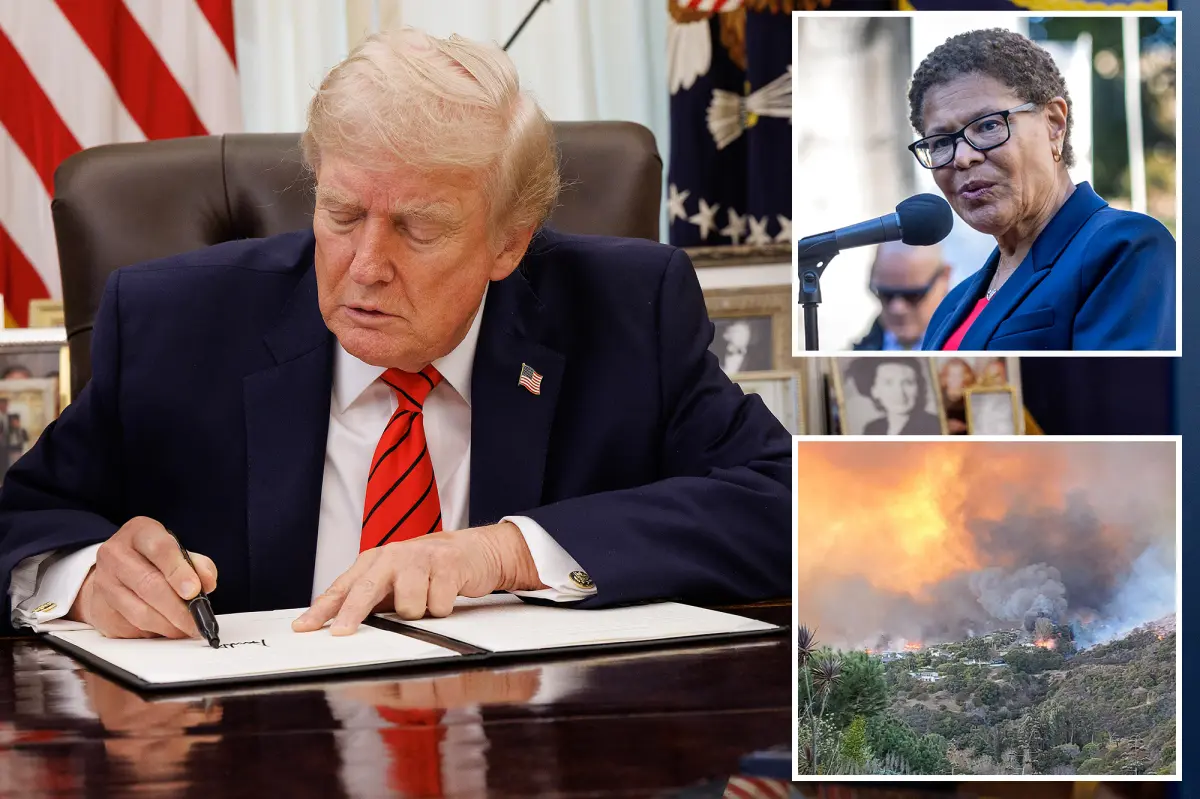
In a heated response, Los Angeles Mayor Karen Bass has challenged President Trump’s recent executive order aimed at expediting wildfire rebuilding efforts in California. The confrontation highlights the ongoing tension between federal and local authorities regarding disaster recovery management, with Bass asserting that Trump “lacks the authority to fast-track wildfire rebuilding efforts” in Los Angeles. This dispute comes approximately one year after devastating wildfires destroyed entire neighborhoods across California, leaving thousands of residents homeless and struggling to navigate complex rebuilding processes. While Trump’s administration frames the executive order as necessary intervention in a stalled recovery effort, Mayor Bass characterizes it as political theater that misses the mark on what wildfire survivors truly need.
The core of Bass’s criticism centers on jurisdiction and priorities. “I’m calling on the President to issue a new Executive Order to demand the insurance industry pay people for their losses so that survivors can afford to rebuild,” she stated in a direct message to The Post. Her pointed response emphasizes that Trump has “no authority over the local permitting process” and should instead focus on areas where federal influence could make meaningful differences – specifically making insurers honor claims and accelerating FEMA funding disbursement. With unmistakable territorial firmness, the mayor concluded: “The President should handle his business, because we are handling ours.” This language reveals the fundamental disagreement about which level of government should control recovery efforts and where resources should be directed first.
The executive order, signed by Trump on Tuesday, spans seven pages and appears designed to address the painfully slow pace of rebuilding that has frustrated thousands of displaced Californians. During an exclusive Oval Office interview with the California Post, Trump expressed his intention bluntly: “I want to see if we can take over the city and state and just give the people their permits they want to build.” This statement reflects Trump’s characteristic approach to governance – identifying bureaucracy as the primary obstacle and proposing federal intervention as the solution. The order represents a direct challenge to local control over permitting and rebuilding processes, suggesting that federal authorities could potentially streamline what many residents have experienced as a frustratingly complex and slow recovery system.
Behind this public disagreement lies a humanitarian crisis affecting thousands of California families who lost everything in the wildfires. The protracted rebuilding process has compounded their suffering, forcing many to live in temporary housing or leave their communities altogether while navigating insurance claims, permit applications, and construction delays. Mayor Bass’s emphasis on insurance companies reflects a common complaint among survivors – that insurance payouts have been insufficient or too slow to facilitate rebuilding. Meanwhile, Trump’s focus on permitting suggests a different diagnosis of the problem, placing responsibility more squarely on local government bureaucracy. Both perspectives contain elements of truth, as wildfire survivors face multiple, interconnected obstacles to recovery including insurance challenges, complex permitting requirements, labor shortages, and limited federal assistance.
The political subtext of this dispute cannot be ignored. Bass characterized Trump’s order as “another meaningless political stunt” intended to distract from issues in Minnesota and other U.S. cities. This framing situates the executive order within broader political narratives rather than treating it as a good-faith effort to address recovery challenges. Trump, for his part, has not hesitated to assign blame, describing the situation as “one of the greatest failures of elected political leadership in American history, from enabling the wildfires to failing to manage them, and it continues today with the abject failure to rebuild.” By targeting Governor Newsom and Mayor Bass specifically, Trump frames the rebuilding challenges as evidence of Democratic governance failures, potentially positioning himself as the solution to bureaucratic gridlock.
As this dispute unfolds, the people most affected – wildfire survivors themselves – remain caught between competing visions of recovery and jurisdiction. The fundamental questions raised by this confrontation extend beyond immediate rebuilding concerns to touch on core aspects of American governance: What is the appropriate balance between federal intervention and local control? How can disaster recovery systems be designed to respond more effectively to increasingly frequent climate-related catastrophes? And perhaps most urgently for those waiting to rebuild their homes, how can political leaders at all levels move beyond finger-pointing to create collaborative solutions that actually accelerate recovery? While Mayor Bass and President Trump exchange barbed statements, thousands of Californians continue waiting for the practical assistance that would allow them to rebuild their lives – regardless of which level of government provides it.