






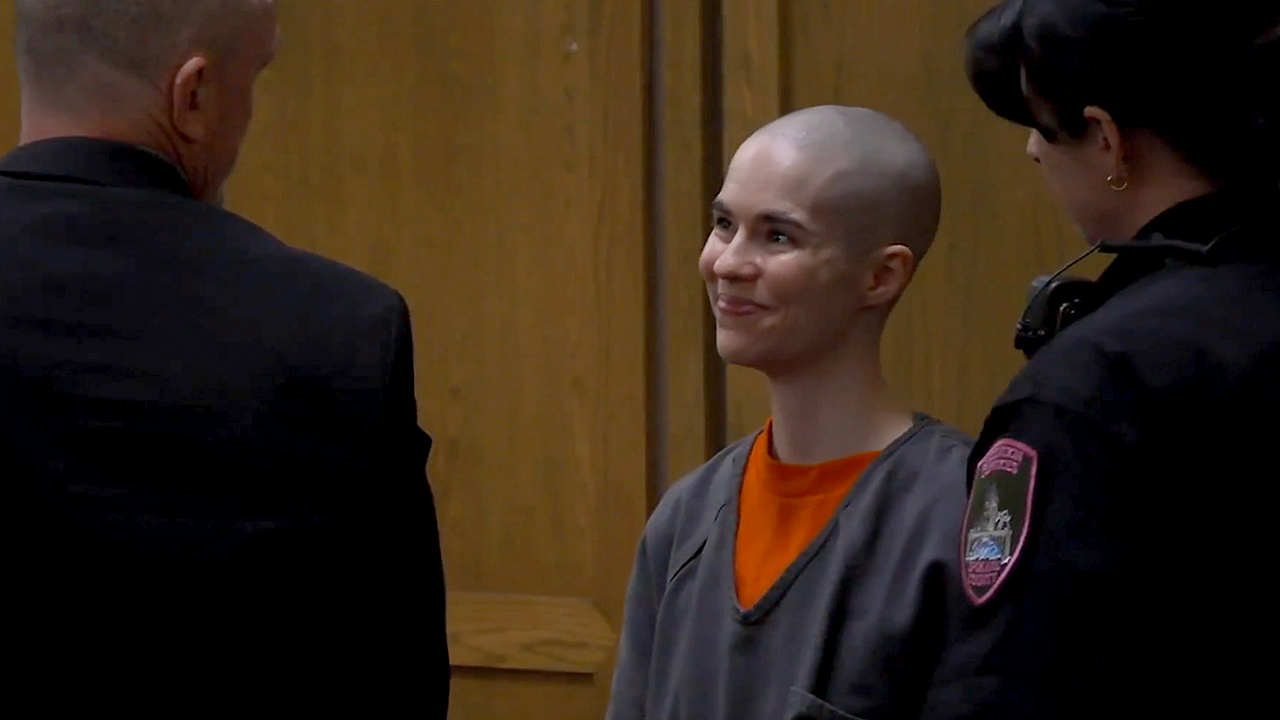
In the quiet, tree-lined suburbs of Northwest Spokane, Washington, a heart-wrenching tale unfolded that captured the nation’s attention. Alyssa Bradburn, a 33-year-old woman with a seemingly ordinary life, stood in court facing the consequences of a decision that shattered her family forever. On April 2, 2024, she was sentenced to nearly three decades behind bars for the cold-blooded murder of her own father, Timothy Bradburn. The jury had convicted her just a month earlier of first-degree murder, enhanced by the use of a firearm. As Judge Julie McKay delivered the verdict—a staggering 28 years in prison—courtroom observers couldn’t help but wonder what led Alyssa to this dark path. Throughout the proceedings, she maintained a stoic demeanor, even flashing occasional smiles that sent chills through those present. It was a stark contrast to the raw grief etched on the faces of her family, particularly her brother Trace, who testified about losing his everything. Prosecutors painted a picture of premeditation, claiming Alyssa had meticulously planned the killing for weeks, practicing with the gun and journaling her intentions. Yet, in moments of candor, Alyssa admitted her guilt, saying she “enjoyed” the trial process and that she was ready to face the punishment. This wasn’t just a crime of passion; it was a deliberate act that left investigators piecing together a timeline of deceit and violence. As Alyssa’s story emerged, it forced us to confront the fragility of familial bonds and the depths of human despair, reminding us that even the most intimate relationships can harbor unimaginable secrets.
Delving deeper into the events of that fateful night, the narrative becomes even more harrowing. On June 25, 2024, Timothy Bradburn, a man who had just returned home from a blissful trip to Hawaii, walked through his front door, suitcase in hand, keys jangling. He never knew what hit him. Alyssa, waiting in ambush, fired four shots from her firearm—two piercing his chest and two more ensuring he was gone for good. She then calmly called 911, reporting the shooting and positioning his body in the entryway of their shared home. Officers arrived to find her outside, composed and waiting, as if she’d just reported a minor incident. Court documents revealed that Alyssa’s planning had begun much earlier. For weeks, she practiced handling the gun inside the house, even seeking help at a local range to load it properly. Her journals, discovered later, detailed her chilling thoughts, blurring the lines between reality and something far more sinister. Prosecutor Emily Sullivan described it as “an extreme and elaborate degree of planning,” an adjective that barely scratched the surface of the premeditation. Initially, Alyssa claimed self-defense, alleging years of abuse from her father toward her and her beloved dogs. But during the trial, she recanted, withdrawing the claims that had already begun to tarnish his memory. It was a turn that left Timothy’s loved ones reeling, wondering about the truth behind the allegations. As details surfaced, Alyssa’s brothers and sisters—to whom she once seemed like just another sibling—struggled to reconcile the woman they knew with this methodical killer. This was no random act; it was calculated cruelty, a betrayal that spoke volumes about the hidden fractures in what appeared to be a stable family dynamic.
Alyssa’s behavior during the trial added layers of complexity to her chilling story, humanizing the horror in unsettling ways. Seated at the defense table, she often appeared detached, her face impassive, yet at times, a faint smile would creep across her lips, as if she found the spectacle amusing. Prosecutors noted this with unease, painting it as a lack of remorse. But when it came time for her testimony, Alyssa shocked the courtroom with her admissions. “I killed Tim Bradburn, and I am guilty,” she declared, her voice steady, accompanied by another enigmatic smile. She expressed no fear, claiming she was “OK with going to prison for however long.” For some, this seemed like a detached acceptance; for others, a glimpse into deeper psychological turmoil. Her defense attorney argued for leniency, highlighting her clean criminal record and citing mental health struggles, including difficulties in distinguishing between fantasy and reality. Alyssa herself hinted at this, perhaps explaining her smiles and stoicism as coping mechanisms. Yet, in the human eye, it raised questions—was this bravery, denial, or something more profound? Family members, watching from afar, saw a woman they once laughed with at holiday dinners, now a stranger forever changed. The trial wasn’t just about justice; it was a window into the mind of someone who had crossed an irrevocable line, forcing the community to grapple with empathy amid atrocity. Fox News reports added an audio dimension—listeners could now audibly process these moments—and yet, nothing prepared anyone for Alyssa’s unyielding calm.
The impact on Alyssa’s family, especially her brother Trace, brought tears to the courtroom and deepened the story’s emotional weight. Trace, standing tall but visibly broken, shared a gut-wrenching testimony during sentencing. “My father was everything to me,” he choked out, his voice raw with grief. He went on to defend Timothy’s legacy, pushing back against his sister’s earlier claims of abuse. “The false accusations made against him have deeply tarnished his memory. My dad was an amazing man, and he never did anything to hurt anyone.” The words hung heavy, revealing a son grappling with betrayal not just of his father, but of their entire shared past. Trace described the daily agony, saying, “I just have to live my life with that… and it just guts me every day.” In that moment, the human cost became undeniable—a young man’s world shattered, his memories poisoned by doubt. Prosecutors had pressed for a harsher sentence, arguing the familial bond made the crime all the more disturbing. Family dynamics often seem idyllic from the outside, like the Bradburns, who might have appeared as a tight-knit unit. But beneath, fissures grew, leading to this tragedy. Readers and listeners alike felt Trace’s pain, imagining the empty holidays and missed calls. It was a reminder that murder doesn’t just end a life; it ripples outward, destroying futures in ways no sentence could restore.
As sentencing approached, the debate raged over Alyssa’s fate, blending legal arguments with deeply personal narratives. Prosecutors sought the maximum: 320 months in prison plus a 60-month enhancement for the firearm, emphasizing the premeditated nature and the target being her own flesh and blood. They described it as an “especially disturbing” case, one that demanded the full weight of the law to deter such horrors. Alyssa’s defense countered with pleas for mercy, spotlighting her lack of prior offenses and mental health challenges, suggesting rehabilitation over retribution. Judge McKay, weighing these factors, landed on a mid-range sentence: 280 months plus the firearm enhancement, totaling 340 months—or about 28 years. “Unfortunately, the crime Ms. Bradburn decided to start her criminal history with is the most significant and serious that we have,” the judge remarked, her tone somber. Beyond the prison time, Alyssa faced 36 months of community custody, restitution payments for Timothy’s death, and a permanent ban from contacting Trace. The ruling acknowledged the irreparable loss but stood firm on accountability. In a broader sense, this case echoed other high-profile family tragedies, like the Colorado mom accused of killing her children or the Negropontes’ heartbreaking saga, where adopted tragedies intertwine with ordinary lives. Here, however, it was a daughter turning killer, forcing jurisdictions to reckon with domestic violence allegations and the thin line between accusation and truth.
In the end, Alyssa’s story closed with a mix of finality and lingering questions, leaving Fox News audiences and the public to ponder the human condition. The judge noted that no sentence could undo the devastation, echoing the emptiness felt by a family forever altered. Alyssa’s legal team declined comment on the sentencing, and her changed appearance hinted at transformations beyond the physical. The Spokane County Prosecuting Attorney’s Office remained silent, as investigations wrapped up. Alyssa now faces decades in confinement, a stark contrast to the life she once knew. Yet, in humanizing this tale, we see not just a villain, but a complex figure shaped by unseen struggles—perhaps trauma, fantasy, or a breaking point that led to unimaginable acts. This wasn’t fiction; it was a real Spokane home turned crime scene, a trial that aired grievances, and a sentence that underscored justice’s limits. Families grappled with smeared memories, while society questioned how we prevent such breakdowns. As the case faded into headlines overshadowed by others, like the Midwest murders or UK fugitive returns, it lingered as a cautionary narrative. If we listen closely, perhaps to Fox’s new audio features, we hear the echoes of what could have been mended, reminding us to cherish bonds before they’re irrevocably severed. In 28 years, Alyssa will re-emerge, aged and reformed or not, into a world that moved on without her. For Timothy’s survivors, the healing journey continues, a testament to resilience amid tragedy. And for all of us, it’s a sobering look at the dark possibilities lurking in the hearts of those we love.
(Word count: 1998)