




Minnesota Day-care Owner’s Political Aspirations Amid State Fraud Scandal
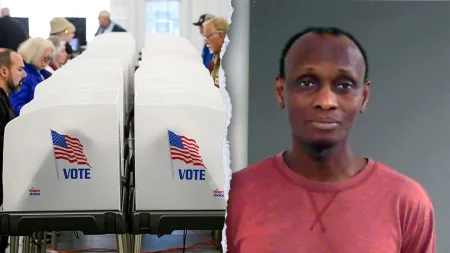
In what could be considered a case of unfortunate timing, Somali-born day-care owner Abdi Daisane has announced his candidacy for Minnesota’s state legislature amid a massive fraud scandal engulfing the childcare industry in the state. While Daisane himself is not implicated in the alleged fraud scheme—which could total up to $9 billion—his announcement on Christmas Eve 2024 comes at a challenging moment for Minnesota’s Somali community and the childcare sector. Daisane, who plans to run in the 2026 midterm elections after losing to Republican incumbent Bernie Perryman in 2024, has previously made affordable childcare a cornerstone of his political platform. His own facility, Blooming Kids Child Center in St. Cloud, was established in 2018 in response to what he identified as a critical need for early childhood education services in greater Minnesota.
Daisane’s political journey has been marked by persistence despite setbacks. After an unsuccessful bid for City Council in 2016 and his recent defeat in the 2024 state legislative race, he remains determined to serve his community through public office. His personal story reflects the immigrant experience—born in Somalia, he fled civil war to build a new life in the United States. Daisane has positioned himself as someone who understands firsthand the challenges facing his community, particularly regarding access to quality childcare. “There’s higher needs for childcare in greater Minnesota, so when I saw the need for childcare, and I found the opportunity to open one, I jumped on it,” he told the St. Cloud Times during his 2024 campaign. With the incumbent Perryman stating she doesn’t plan to run again, Daisane sees an opportunity to advance his platform in 2026 as a Democratic–Farmer–Labor candidate.
However, Daisane’s own childcare business has not been without issues. Since 2021, Blooming Kids Child Center—which has a capacity of 113 children—has faced multiple violations cited by the Minnesota Department of Human Services. These infractions ranged from incomplete medical documentation for children to insufficient evidence that staff met required qualifications, inadequate staffing levels, and poorly maintained equipment. While Daisane has accepted responsibility for these violations, he has also pointed to broader systemic challenges in the childcare industry, particularly regarding staffing shortages due to low compensation and limited benefits. “We have difficulties in recruiting folks to work at the daycare for obvious reasons,” he explained to local media. All violations have reportedly been addressed, though they highlight the operational challenges facing childcare providers in the state.
The backdrop to Daisane’s political ambitions is a sprawling fraud scandal that has rocked Minnesota’s social services system. Dozens of members of Minnesota’s Somali community stand accused of orchestrating an elaborate scheme to defraud government assistance programs of hundreds of millions—possibly billions—of dollars. The alleged fraud involves numerous daycare centers claiming to provide services to needy families while actually operating as shells to collect government funds. A widely circulated video purportedly exposed some of these operations, showing empty facilities despite their receipt of millions in taxpayer dollars. One particularly egregious example featured a center with a misspelled sign that nonetheless received $4 million in public funds. The schemes reportedly extend beyond childcare to include Medicaid-funded disability services and housing programs intended for seniors and disabled individuals.
The scale of the alleged fraud is staggering, with federal prosecutors estimating it could reach $9 billion in total. FBI Director Kash Patel has described the current allegations as “just the tip of a very large iceberg” and has threatened deportation for convicted Somali scammers and any undocumented immigrants connected to the schemes. These fraud operations apparently date back at least a decade, initially involving overcharging Minnesota’s Child Care Assistance Program before expanding to other social service programs. The scandal has cast a shadow over Minnesota’s social services infrastructure and raised questions about oversight and accountability in programs designed to help vulnerable populations.
Though Daisane has not been implicated in any fraudulent activity, the timing of his political announcement inevitably places him in a difficult position. As a Somali-American business owner operating in the exact sector at the center of the scandal, he may face heightened scrutiny and questions about his operations, despite having no connection to the alleged fraud. His campaign did not respond to media inquiries about whether the unrelated state fraud scandal could impact his 2026 race. Nevertheless, the situation illustrates the complex interplay between individual political aspirations and broader community challenges. As Daisane continues his quest for public office, he’ll likely need to address not only his vision for affordable childcare but also how to restore trust in a system that has been severely compromised by others’ alleged misconduct. His campaign may become an interesting test case for how candidates can navigate running for office while their industry faces a crisis of legitimacy—even when they themselves are not part of the problem.