






The Notorious Rise of Tren de Aragua: From Venezuelan Prison to American Streets
In the quiet Venezuelan town of Tocorón stands a prison that became the unlikely birthplace of one of Latin America’s most dangerous criminal organizations. Under the watch of President Nicolás Maduro, Tocorón prison transformed into a paradoxical haven where inmates enjoyed swimming pools, nightclubs, and even a zoo—all while orchestrating violent crimes that would eventually reach American soil. This prison, operating under inmate control for years, set the stage for Héctor “Niño” Guerrero to build his criminal empire after returning to serve time for murdering a police officer in 2013. What began behind those walls has now evolved into Tren de Aragua, a transnational gang recently designated as a foreign terrorist organization by the United States.
The conditions that allowed Tren de Aragua to flourish highlight a fundamental breakdown in government control. “When a country undergoes economic whiplash or negative indicators, it can lead groups to come together—especially in places like jails where you have collections of people with criminal records and violent histories competing for control,” explains David Pyrooz, a sociology professor at the University of Colorado Boulder. The prison operated on a system where inmates paid weekly dues to gang leaders, generating an estimated $3.5 million annually, while additional funds flowed in from external criminal operations. The relationship between prison and street became symbiotic, with Pyrooz noting, “What happens in prison influences what happens on the street, and vice versa. Those walls are pretty porous between prisons and communities.” The lack of state control—a factor that has contributed to gang activity worldwide—allowed corruption to thrive unchecked under Maduro’s administration.
By the time Venezuelan authorities finally attempted to regain control of Tocorón in 2023, dispatching 11,000 troops to the facility, Tren de Aragua had already grown into a formidable criminal organization with over 4,000 members operating in nearly half of Venezuela’s states. This belated show of force proved ineffective, as Guerrero and numerous high-ranking gang members escaped during the raid—an event Pyrooz describes as “no coincidence,” suggesting internal corruption facilitated their departure. This escape marked a turning point, after which Tren de Aragua’s violent presence began to manifest more prominently within the United States, with one Colorado town becoming an unexpected epicenter of their criminal activities.
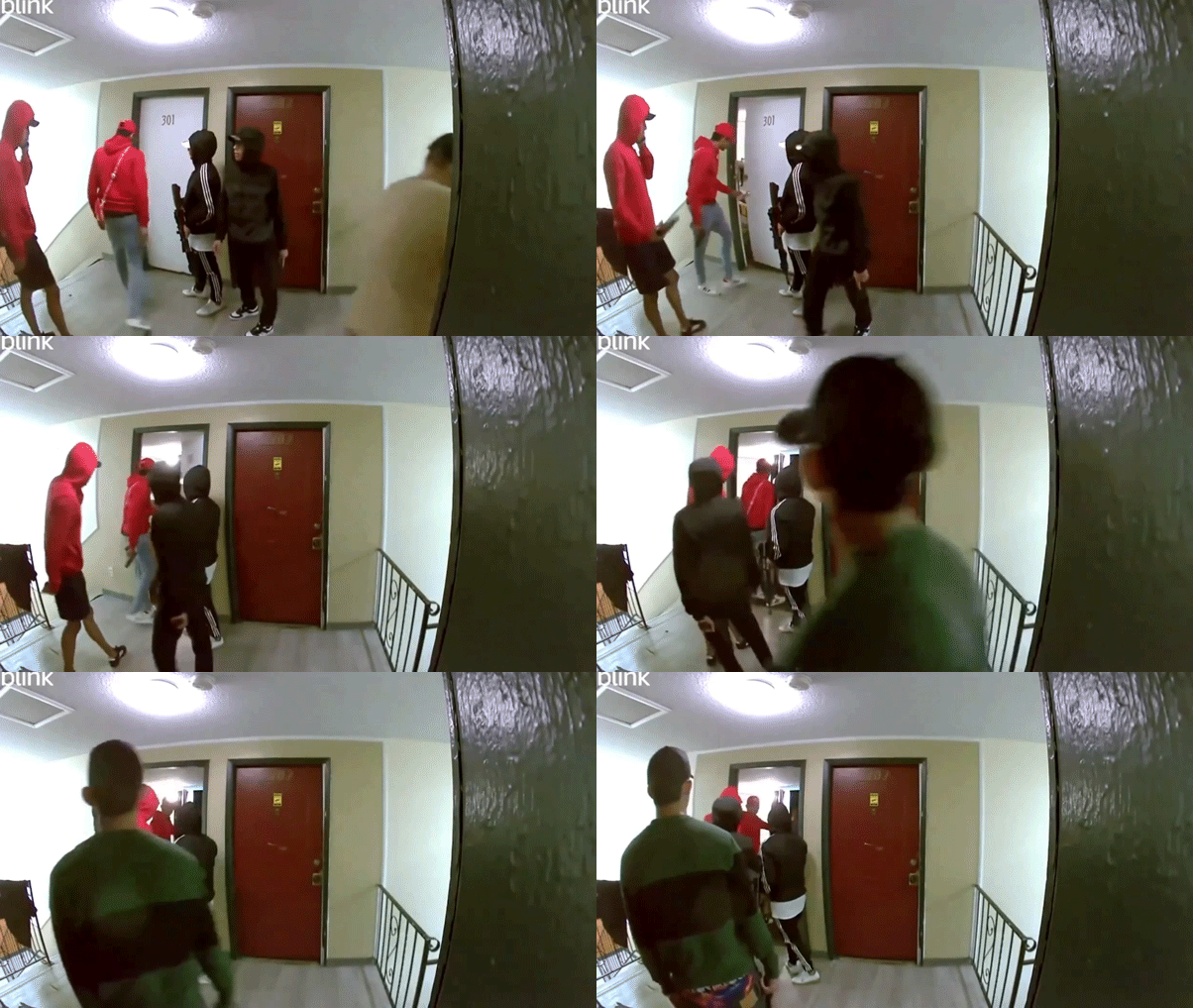
The suburban community of Aurora, Colorado became nationally known for Tren de Aragua’s brazen takeover of apartment complexes in 2024. Surveillance videos captured heavily-armed men patrolling hallways, while property managers and maintenance workers faced brutal assaults for opposing the gang’s occupation of vacant units. In one harrowing incident, an employee who refused a $500 bribe was severely beaten and subsequently received threats containing his home address and spouse’s name—information later linked to Tren de Aragua by the FBI. “I think they were trying to kill me. I don’t know how I got out, but I got out,” the bloodied employee later told local media. The situation deteriorated to the point where one property manager was assaulted by known gang member Yoendry Vilchez Medina-Jose, while legitimate tenants returned from vacation to find their apartments commandeered, forcing them to relocate rather than confront the dangerous occupiers.
The crisis reached such proportions that a Colorado judge ordered the temporary closure of an apartment complex due to “immediate threat to public safety,” with city officials helping approximately 85 families find new housing. Aurora Police Chief Todd Chamberlain emphasized how the gang “specifically targeted its own community, Venezuelan immigrants, through violence, intimidation, extortion and even kidnapping,” turning the residential complex into “a hub for drug trafficking, home invasions, shootings and violent assaults.” In early 2025, authorities arrested Anderson Zambrano-Pacheco, believed to be one of the armed men seen kicking down doors in Aurora. Despite these enforcement actions, Pyrooz notes that preventing such problems before they escalate remains challenging, “especially when you have very ineffective government mechanisms in place to stop these groups.”
The response from American law enforcement has intensified, with the Department of Justice indicting two alleged Tren de Aragua leaders in December on Racketeer Influenced and Corrupt Organizations (RICO) charges related to crimes in Colorado. Similarly, the Southern District of New York unsealed an indictment against Guerrero himself, who remains a fugitive. While Aurora has seen decreased gang activity in 2025—with Pyrooz noting “enforcement actions did correspond with lessening some of the influence of groups like Tren de Aragua”—the crisis underscores a fundamental failure of governance. As Pyrooz concludes, “If you let gangs take control of these institutions, it could be related to more of an abject failure of the state to either support the conditions of confinement or [provide] correctional officers having the effective governance in place to stamp out these conflicts before groups can rise to power.” The story of Tren de Aragua stands as a stark reminder of how institutional failure in one nation can create security threats that eventually cross borders and impact communities thousands of miles away.