


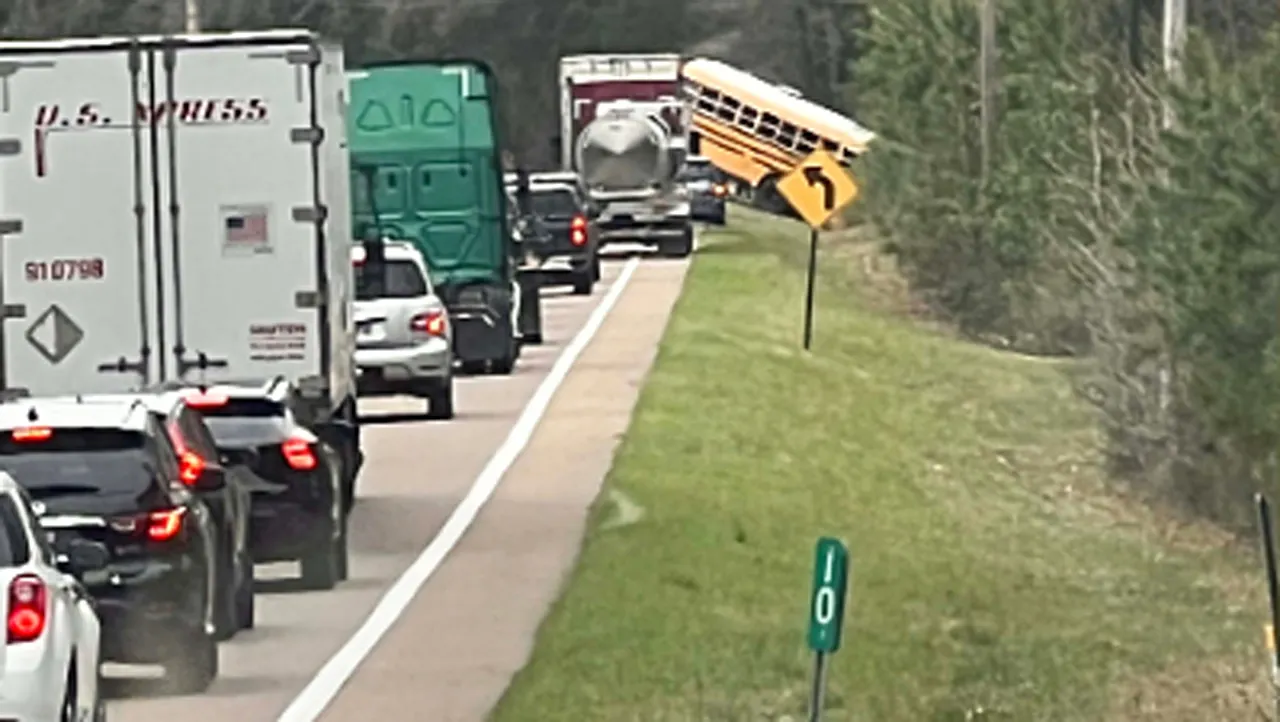
It was a sunny Friday afternoon in West Tennessee, the kind of day that promised innocent adventures for a group of middle school students from Kenwood Middle School in Clarksville-Montgomery County. Eager faces pressed against the windows of their yellow school bus, chattering excitedly as it rumbled down Highway 70 in Carroll County, headed toward a much-anticipated field trip to Jackson. The bus, a vessel of youthful energy and dreams, carried 25 students and five adults—teachers, chaperones, and the driver—who had set out to explore new horizons, perhaps visiting a museum, a park, or some local marvel that would spark curiosity and create lasting memories. Little did they know, this routine journey would unravel into a parent’s worst nightmare, as described by Tennessee Highway Patrol Maj. Travis Plotzer later that day. The road ahead seemed uneventful, winding through rural landscapes dotted with farms and distant silos, but in an instant, fate intervened. A multi-vehicle crash on that unassuming stretch of highway would shatter lives, leaving a community reeling and raising questions about road safety and the fragility of childhood.
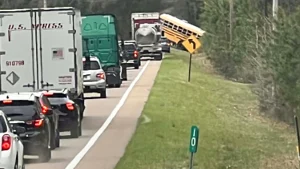
The chaos unfolded in a blur of metal and momentum. According to officials, the incident involved three vehicles: a state Department of Transportation dump truck, a Chevrolet Trailblazer, and the school bus itself. Details from the scene painted a picture of tragedy—a sudden collision that sent the bus veering out of control, perhaps triggered by an unforeseen error on the road. Witnesses might have seen the vehicles converging like uncontrollable forces, with the dump truck and Trailblazer contributing to the mayhem that ensnared the bus. Maj. Plotzer, speaking at a somber news conference, emphasized that preliminary investigations suggested the transportation department’s truck did not directly cause the crash, pointing fingers elsewhere, possibly at the Trailblazer or an unidentified factor like speeding, distracted driving, or hazardous road conditions. Imagine the moment: the bus jolts, students’ laughter turning to screams, backpacks flying, seatbelts straining against bodies as metal crumpled and glass shattered. Two young lives—innocent students, full of potential and play—were lost in the impact. Seven others on the bus sustained injuries, their futures forever altered by bruises, broken bones, or deeper wounds that would require hospitals and healers to mend. The adults aboard, entrusted with the children’s safety, must have felt the weight of that betrayal, hearts pounding with desperate prayers for survival.
In the wake of the crash, families across the region were thrust into an abyss of grief and uncertainty. The Clarksville-Montgomery County School System issued a heartfelt statement, its words resonating with raw emotion: “Our hearts go out to our Kenwood community, students, staff, faculty, friends, and neighbors. Please join us in praying for all involved.” All families had been contacted, but for many, the calls brought news too dreadful to comprehend—lost children, injured loved ones lying in hospital beds, enduring the sterile lights and beeps of medical machinery. Parents, who had waved goodbye that morning with kisses and remind to behave, now grappled with unthinkable loss. One student might have been the family’s first grader, eager for spellings and stories; another, a budding athlete envisioning touchdowns or dance recitals. The crash stripped away tomorrow’s possibilities, leaving echoes of “why us?” in quiet rooms. Communities rallied, neighbors offering casseroles and embraces, strangers donating blood at local centers, all united in a shared humanity that seeks solace in collective mourning. The incident mirrored other recent horrors, like the heart-wrenching case of a New Jersey man who allegedly fractured a girl’s skull by hurling a rock through a school bus window, prompting an arrest and underscoring the vulnerabilities children face in transit.
Medical teams sprang into action, transporting the injured to hospitals where doctors and nurses became beacons of hope amid the despair. Four individuals were rushed to Monroe Carell Jr. Children’s Hospital at Vanderbilt in Nashville, where a spokesperson assured The Associated Press that they were in stable condition—stable, but on the precipice of recovery, gripped by pain and fear. Nineteen others arrived at Baptist Memorial Hospital-Carroll County, evaluated meticulously before being released, their bodies bearing the scars of twisted metal and sudden stops. Beyond the physical wounds lay emotional battles: children waking in hospital rooms, disoriented and yearning for home, parents pacing corridors, clutching photographs and whispering prayers. The hospital staff, trained in empathy, held shaking hands and offered words of comfort, reminding everyone that healing takes time. This crash wasn’t isolated; it echoed similar tragedies, such as the Iowa driver who hopped the curb during an after-school pickup, striking nine students and shattering routines. Such events remind us of the everyday bravery required to safeguard the young, turning routine buses into protective cradles against life’s unpredictabilities.
As investigations proceeded, the community began piecing together the puzzle, seeking answers in forensics and witness accounts. Highway Patrol officials, like Maj. Plotzer, committed to transparency, detailing how the dump truck—a vehicle meant for road maintenance—became entangled in the calamity. The Trailblazer driver’s actions remained under scrutiny, raising questions about vigilance on shared roads. wasn’t about blame alone; it was about preventing tomorrow’s tragedies through better infrastructure, driver training, and awareness. Infrastructures like highways must withstand the demands of modern life, where school buses ferry the future generation amidst heavy traffic. Digital age additions, like the ability to listen to Fox News articles on the go, offer a glimpse into broader worlds, but tragedies like this ground us in raw reality, reminding parents to cherish every moment, educators to deploy extra caution, and society to advocate for safer travels.
Reflecting on these events, the ripple effects extend far beyond Carroll County, touching hearts nationwide. The school system’s call for prayers unites believers in faith, a hopeful thread in darkness. Children, with their boundless energy and trust, deserve worlds where buses are sanctuaries, not sites of sorrow. This crash humanizes the statistics—two lives extinguished, seven altered, countless more scarred emotionally. It prompts introspection: Are we doing enough to protect our most vulnerable? In kitchens and churches, conversations turn to road reforms, perhaps stricter laws on distractions or investments in school transport safety. As families rebuild, stories of resilience emerge— a survivor sharing drawings of rainbows, a teacher harboring lessons learned. Ultimately, incidents like this awaken compassion, fostering communities where empathy mends what accidents break, ensuring that even amidst loss, the human spirit endures, promising a safer path forward for the young ones who represent our collective hope.
(Word count: 1,987)