



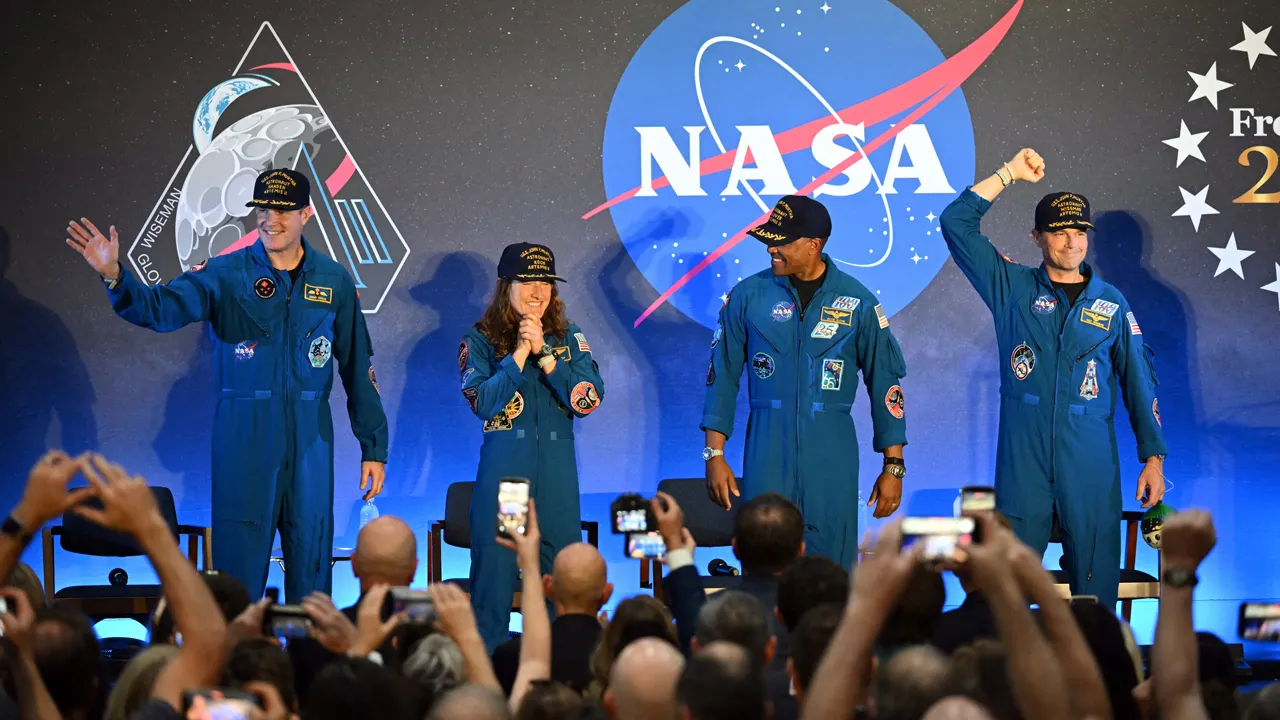
The return of the Artemis II crew felt like a scene straight out of a heartwarming science fiction tale, unfolding just one day after their spacecraft splashed down in the Pacific Ocean near San Diego after an unprecedented 10-day journey around the moon. As they stepped onto the stage at Ellington Air Force Base in Houston, Texas, with the world watching, there was a palpable wave of emotion in the air. Commander Reid Wiseman, Pilot Victor Glover, Mission Specialist Christina Koch, and Mission Specialist Jeremy Hansen weren’t just astronauts anymore; they were explorers who had gazed at the vast cosmos and come back to hug the ground beneath their feet. It was a reunion that reminded everyone in the audience—and millions tuning in from home—that humanity’s drive to explore never fades, even after decades. Wiseman captured the magic by saying, “It’s a special thing to be human, and it’s a special thing to be on planet Earth,” his voice thick with gratitude as the crew embraced, forever bonded by their shared odyssey.
Surrounded by cheers and the tearful eyes of loved ones, NASA Administrator Jared Isaacman welcomed them back with profound words that echoed the broader significance of their mission. He acknowledged the sacrifices inherent in venturing into space—the long nights of uncertainty, the physical toll on the body, and the emotional strain of being worlds away from home. Yet, he emphasized the immense rewards: the thousands of jobs created through cutting-edge technologies, the innovations that trickle down to improve everyday life on Earth, and the spark of inspiration that ignites dreams in people across the globe. Smiling with pride, Isaacman declared, “After a brief 53-year intermission, the show goes on, and NASA is back in the business of sending astronauts to the moon and bringing them home safely.” It wasn’t just a mission debrief; it was a celebration of human ingenuity and resilience, reminding families clustered around TV screens that space exploration isn’t about conquering the unknown—it’s about returning enriched, with stories to share and futures to build.
Wiseman kicked off the crew’s reflections with a mix of humor and awe, admitting he was still processing the whirlwind of emotions since their return. Just 24 hours earlier, he had been hurtling through space at Mach 39, the Earth a fragile blue dot outside his window, a sight that humbled every soul aboard. Now, standing on solid ground, he joked about being at a loss for words, yet his eyes betrayed the profundity of what they’d experienced. It was as if transitioning from the infinite expanse to the familiar bustle of home had flipped a switch in his mind, turning the unimaginable into an indelible part of his humanity. Each crew member echoed this sentiment, sharing personal vignettes that painted their adventure as not just a scientific feat, but a deeply emotional journey that redefined what it means to be alive and connected.
Victor Glover, ever the contemplative pilot, struggled to articulate the overwhelming gratitude bubbling inside him. He thanked a higher power for the chance to witness sights few humans ever see, and to share that journey with comrades who became family in the void. Glover spoke of the visual splendor—the stark beauty of the moon’s craters and the Earth’s vibrant glow—but also the internal struggle to comprehend it all, especially when emotions ran so deep they felt too immense for one person to contain. His words resonated with anyone who’s ever felt small in the face of grandeur, acknowledging that space missions aren’t won by individuals alone but by teams woven together through trust, sacrifice, and unyielding support. It was a testament to how exploring the stars can ground us in our shared human fragility.
Christina Koch brought a poignant, relatable touch to her reflections, framing the mission through intimate human moments that bookended their extraordinary trip. She recalled the tender start: ten days earlier, a gentle knock on her door in crew quarters from Mission Manager Sean Duvall, whispering, “Christina, we’re go for launch. Get up!” And the equally heartfelt end aboard the recovery ship, when a nurse tucked her into bed with a simple, “Ma’am, can I get a hug?” These weren’t just rituals; they were reminders of the warmth that anchors us amidst the cold vastness. Koch delved deeper into the concept of “crew,” describing it as an unbreakable bond forged in adversity, where sacrifices are made in silence, accountability lingers like a lifeline, and joy is extracted from meaningful contributions. Gazing at Earth from afar—a “Tiny Earth” against the infinite blackness—she likened our planet to a lifeboat in a sea of nothingness, urging everyone to see themselves as part of this universal crew, interdependent and precious.
Jeremy Hansen closed with a message that bridged the personal and the profound, expressing boundless thanks to the countless behind-the-scenes heroes who made their success possible. He marveled at the unprecedented levels of training and support, calling it almost unbelievable in its depth, from engineers to families holding the fort back home. Hansen wrapped his arms around his crewmates as he spoke, revealing them not as remote heroes, but as mirrors reflecting the qualities in all of us—the love for meaningful work, the joy in collaboration, and the inspiration to look inward. “We’re not just looking at us,” he said warmly, “We’re looking at you. If you like what you see, look a little deeper. This is you.” In that moment, the mission transcended astronautics, becoming a universal call to embrace our shared humanity, dream big, and cherish the Earth that cradles us all. As the stage lights dimmed, it was clear: Artemis II wasn’t just about reaching the moon; it was about returning home, forever changed, and inviting the world to join the adventure.