



Ed Bambas: A Life Transformed by Generosity
In a world often criticized for its indifference, the story of Ed Bambas stands as a powerful reminder of humanity’s capacity for compassion. At 88 years old, this Michigan grocery store cashier found himself thrust into the global spotlight when his heart-wrenching tale of resilience captured the attention of millions. Working full-time at a Meijer store in Brighton to make ends meet, Bambas had been silently carrying the weight of financial hardship and personal loss for years. When Australian positivity influencer Sam Weidenhofer encountered him during a “US Kindness Tour,” neither could have predicted the tidal wave of generosity that would follow. The emotional moment when Bambas received a check for $1.77 million—raised by thousands of strangers through GoFundMe—represents one of the most remarkable crowdfunding success stories in recent memory, transforming one man’s golden years from struggle to security in less than a week.
The path that led Bambas to working as an octogenarian cashier was paved with misfortune and economic hardship. After retiring from General Motors in 1999 following decades of dedicated service, he faced a devastating double blow in 2012 when the company’s bankruptcy wiped out his pension and insurance. This financial catastrophe coincided with the serious illness of his beloved wife of more than 50 years, Joan. “The thing that hurt me the most was when my wife was really sick and when they took the pension, they also took the health care coverage and all but $10,000 of my life insurance,” Bambas revealed in Weidenhofer’s viral video. The Army veteran was forced to sell his home to manage mounting debts, and after losing his wife seven years ago, he had no choice but to return to the workforce in his 80s, taking on a grueling 40-hour workweek just to survive—a situation all too familiar to many American seniors whose retirement dreams have been shattered by economic realities.
The unlikely catalyst for Bambas’s change of fortune was a simple act of community kindness. Twenty-six-year-old Lexi Wallace, a regular shopper at the Meijer store, had noticed the elderly cashier and was moved by his situation. When she saw Weidenhofer’s social media posts about highlighting extraordinary people during his kindness tour, she commented with Bambas’s name, age, and workplace. This digital gesture of recognition prompted Weidenhofer to visit the supermarket about 45 miles west of Detroit. “All I knew was that he was a man in his 80s and he was working at the grocery store,” the Australian influencer explained. “I didn’t know he was struggling. I just wanted to highlight how amazing he was for working at that age. I never thought this would happen.” This chance encounter between Weidenhofer and Bambas—facilitated by Wallace’s thoughtful connection—demonstrates how the seemingly small actions of ordinary people can sometimes trigger extraordinary outcomes in our interconnected world.
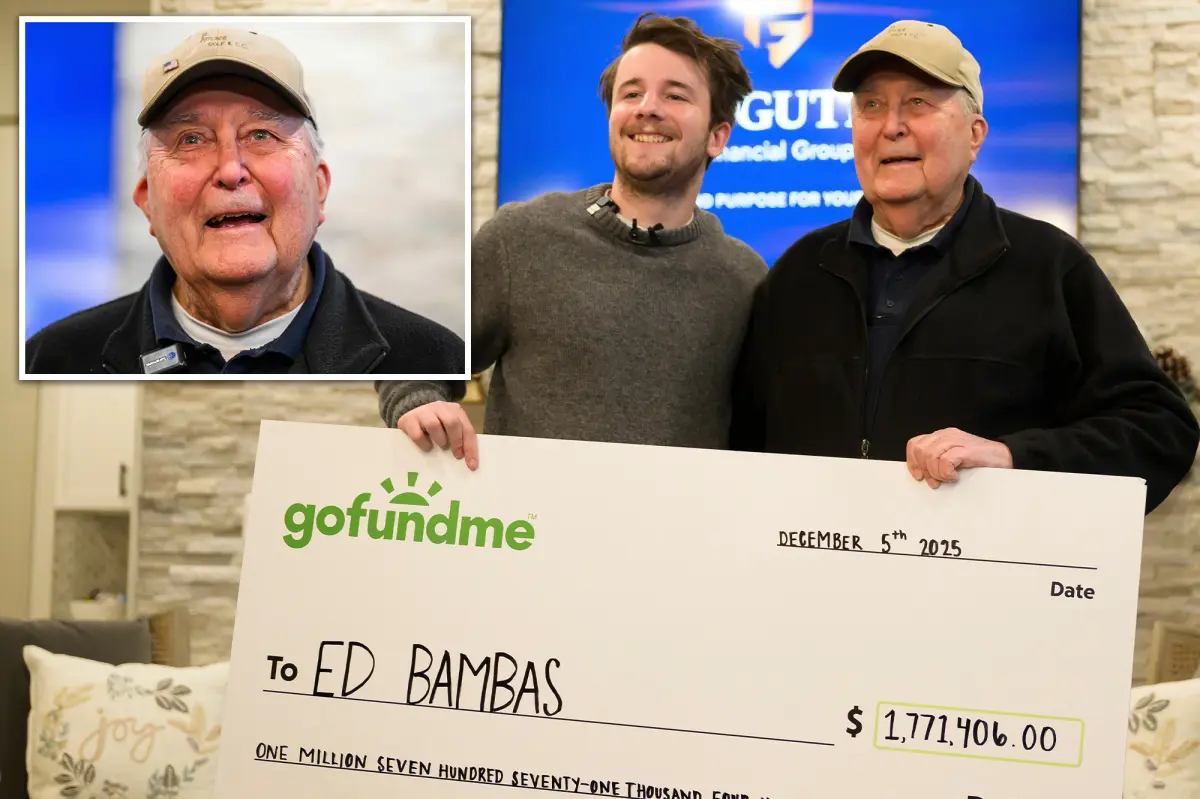
The emotional video that Weidenhofer posted on Instagram last Monday resonated deeply across social media platforms, touching viewers with its raw portrayal of dignity amid hardship. In the footage, Bambas tearfully shared his story, revealing not just financial struggles but the deep personal loss that had shaped his later years. His vulnerability and resilience struck a chord with people worldwide, who saw in him the embodiment of an entire generation’s quiet suffering. Within hours of launching a GoFundMe campaign, donations began pouring in from across the globe. The fundraiser quickly became one of the platform’s largest individual campaigns in history, according to Weidenhofer. Even after the formal check presentation ceremony held at Foguth Financial Group in Brighton on Friday—where Bambas nearly lost his footing upon seeing the staggering sum—contributions continued to flow, ultimately exceeding $1.8 million. This overwhelming response speaks to how Bambas’s story transcended individual circumstances to represent broader concerns about elder care, retirement security, and society’s treatment of its senior citizens.
When presented with the life-changing check, Bambas’s reaction embodied both gratitude and bittersweet reflection. “Thank you… oh my God,” he said through tears. “I wish my wife were here, but it’s something that dreams are made out of, trust me, from my beginnings to here.” The ceremony was attended by his family members, Weidenhofer, and Lexi Wallace, who humbly stated, “He deserves it. He earned it, it’s all him, for sure.” Until that moment, Bambas had been completely unaware of the fundraising effort’s magnitude, making the surprise all the more powerful. The funds have been placed into a trust managed by Foguth Financial Group, ensuring that this unexpected windfall will provide long-term security and proper financial planning for the remainder of his life. This prudent approach addresses concerns about elder financial vulnerability while honoring donors’ intentions to give Bambas the retirement dignity that circumstances had previously denied him.
Ed Bambas’s story transcends the individual to highlight systemic issues facing many American seniors—from the fragility of pension systems to inadequate safety nets for retirees. Yet beyond these societal critiques lies a heartening testament to humanity’s enduring capacity for connection and compassion. In an era often characterized by division and digital detachment, thousands of strangers united to transform one man’s life, demonstrating that technology can sometimes amplify our best impulses rather than our worst. The viral spread of Bambas’s story also reveals our collective hunger for narratives of genuine kindness in an often cynical media landscape. As the 88-year-old veteran now contemplates a future free from financial anxiety, his journey offers a powerful reminder that while systems may fail us, people still possess the remarkable ability to recognize each other’s humanity and respond with extraordinary generosity. In this sense, the story of Ed Bambas is not just about one man’s changed fortune, but about our shared potential to create meaningful change when moved by another’s struggle.