






The Pursuit Through the Desert
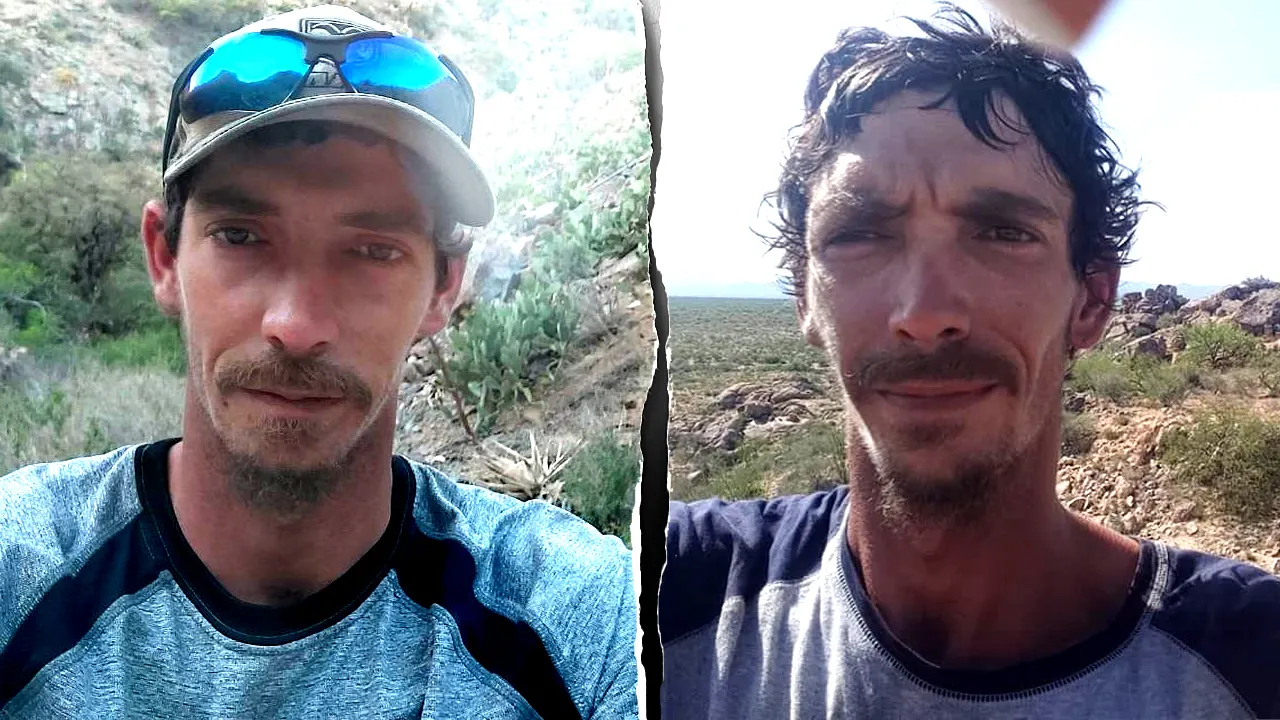
In the sun-baked expanse of southern Arizona, where the jagged peaks of the borderlands meet the dusty trails leading from Mexico, a tense drama unfolded on a Tuesday morning that highlighted the brutal realities faced by those who enforce America’s immigration laws. Imagine the Border Patrol agents, seasoned veterans accustomed to the relentless cycle of chases and skirmishes in this unforgiving terrain. They’d received a tip around 7:30 a.m. about a possible human trafficking operation near the small town of Arivaca, just miles from the U.S.-Mexico border. The suspect’s vehicle was spotted, a nondescript car blending into the arid landscape, and as the authorities approached to investigate, panic erupted. Everyone inside fled on foot, scattering into the sparse brush and rocky outcrops like rabbits escaping a fox. Among them was 34-year-old Patrick Gary Schlegel, a name that would soon become notorious for his defiance and criminal past. To humanize this scene, picture Schlegel not just as a faceless outlaw, but as a man hardened by repeated brushes with the law, perhaps driven by desperation or greed, his heart pounding as he ran from the same system that had already ensnared him before. Federal agents, trained for such chaos, knew the stakes—these borderlands weren’t just legal frontiers; they were battlegrounds where human lives hung in the balance. Illegal immigration isn’t an abstract statistic here; it’s families torn apart, lives risked in the desert’s merciless heat, and the unsung heroes who patrol it day and night. Schlegel’s flight wasn’t just evasion; it was a continuation of a pattern etched into his record, a story of recidivism that reflected broader societal fractures. As the vehicle sped away, the agents mobilized, their weapons ready but their primary goal always to apprehend without lethal force. Yet in this volatile world, where smugglers arm themselves and view law enforcement as the enemy, conflict often escalates unpredictably. The pursuit symbolized the human cost of broken policies, where migrants pay smugglers fortunes for false hopes, and agents grapple with the moral weight of protecting borders in an era of global migration crises.
A History of Smuggling and Defiance
Diving deeper into Patrick Schlegel’s background reveals a man whose life has been a relentless cycle of crime and incarceration, a human story marred by choices that led him into the shadows of human exploitation. Records paint a picture of a repeat offender, not born into villainy but shaped by it through convictions that speak to a calculated disregard for the law. In May 2023, Schlegel was caught in an audacious smuggling scheme that netted over $40,000, a sum that underscored the lucrative but treacherous nature of his trade. Prosecutors detailed how he orchestrated the transportation of 16 suspected undocumented immigrants across the border, loading them into the bed of a pickup truck like cargo, covered by a tarp to evade detection. To humanize this, imagine the migrants—individuals like Adela Martinez-Lopez, who testified that she paid $12,000 arranged by her cousin for passage, or others who shelled out $14,000, dreaming of new beginnings in America. These weren’t faceless numbers; they were mothers, fathers, children risking everything for a better life, only to encounter a smuggler who prioritized profit over safety. Schlegel’s actions epitomized the darker side of the American dream, where desperation meets exploitation in the border’s economic underworld. He drove recklessly off-road through the desert, hurling rocks at an Army National Guard helicopter in a furious bid to escape, his anger boiling over as pursuit closed in. And Martinez-Lopez’s cousin wasn’t the only tout; the operation revealed a network of intermediaries profiting from vulnerability. Schlegel’s conviction in January 2024 to three years in prison for transportation of illegal aliens for profit and being a felon in possession of a firearm marked a turning point, yet it wasn’t the end. Court records in Arizona also showed his guilt in weapon misconduct in 2024, piling on charges that spoke to a man unafraid of consequences. From a human angle, one can empathize with the circumstances that might have led him down this path—perhaps poverty, addiction, or a misguided quest for easy money in a region where opportunities are scarce. But empathy doesn’t erase the harm; his deeds exploited the vulnerable and taunted the thin blue line of border enforcers. The FBI’s Heith Janke described his “significant criminal history,” noting an active warrant from U.S. Marshals for an escape tied to earlier smuggling convictions. A 2025 warrant highlighted his evasion tactics, turning him into a fugitive who continuously defied the justice system. This wasn’t just a string of arrests; it was the narrative of a life lived on the edge, where each escape fueled the next crime, and the border became both his playground and his prison.
The 2023 Incident: A Loaded Pickup and Desperate Flights
To truly humanize the tale, consider the gritty details of Schlegel’s 2023 arrest on May 20, where the border’s dangers collided with everyday heroism and tragedy. Border Patrol cameras captured the scene—a car driven by Schlegel picking up a group of 16 suspected immigrants, their hidden faces a testament to the anonymity demanded by such perilous journeys. He crammed them into the truck’s bed, draping a tarp over them like unwanted possessions, and sped toward the crossing. But the plan unraveled when panic set in; the immigrants leapt from the vehicle, scattering into the desert’s embrace, their bodies bruised but spirits unbroken in a desperate bid for freedom. Picture the mother’s arms clutching vulnerable children, the father’s resolve hardened by dreams deferred, all paying hefty sums for passage only to face chaos. A Border Patrol agent, perhaps a seasoned father himself, tailed Schlegel as he veered recklessly off-road, gravel spitting under tires, the engine roaring defiance. Schlegel yelled angrily, hurling rocks at a hovering helicopter, his fury a raw expression of cornered desperation. This incident wasn’t isolated; it mirrored countless stories where smugglers like him prey on hope, charging exorbitant fees that line pockets while endangering lives. Adela Martinez-Lopez’s testimony added a layer of humanity—she sought a better life, trusting a cousin’s promise, unaware of the snake in the grass. The two other immigrants who paid $14,000 each echoed her tale, their funds totaling the $40,000 profit Schlegel sought. These weren’t mere financial transactions; they represented shattered savings, mortgaged futures, and the gamble of surviving the Sonoran Desert’s killers—heat, dehydration, wildlife. Agents on the ground, radioing coordinates, embodied tireless protectors, their days blending routine patrols with sudden adrenaline rushes. Schlegel’s pursuit through the wilderness symbolized the cat-and-mouse game that defines border enforcement, where technology meets human cunning. Yet, the human cost lingers: migrants ending up in detention centers for years, families separated indefinitely, all while smugglers evade capture only to strike again. His eventual sentencing in 2024 brought some closure, but it also highlighted systemic gaps—insufficient resources for patrols, overwhelmed courts—allowing figures like Schlegel to slip through.
The Fatal Tuesday Chase and Gunfire
The Tuesday incident echoed the 2023 episode but escalated into a deadly confrontation, reminding us that the border is a zone of perpetual tension where human lives intersect violently. A few hours after the initial tip-off, Border Patrol agents spotted Schlegel’s vehicle again, this time activating a traffic stop in the stark Arizona landscape. Instead of surrendering, Schlegel bolted on foot, launching into a frantic chase that mirrored his past evasions. To humanize this, envision the agents—fathers, mothers, spouses—heartbeats syncing with their boots on the dusty ground, radios crackling with urgency as they gave pursuit. Fear and duty drove them; encounters like this could turn fatal in an instant, as smugglers increasingly arm themselves against overwhelmed forces. Schlegel, no stranger to flight, allegedly turned aggressive, firing shots at a U.S. Customs and Border Protection helicopter circling overhead, the rotors chopping air like a harbinger of judgment. Bullets ricocheted, perhaps terrifying the crew inside, seasoned pilots who’d seen too many skirmishes in these skies. Then, he targeted individual agents, his gunfire a declaration of war in a remote stretch where backup was scarce. Department of Homeland Security officials later confirmed the gravity: Schlegel shot at officers, forcing them to return fire in self-defense. The agents, trained in lethal protocols, struck him, wounding but not ending his immediate threat. Schlegel was rushed to a hospital for surgery, officials stating he was expected to recover—a bittersweet outcome that spared no one. Imagine the relief mixed with trauma for the agents involved, decompressing in quiet moments, replaying the shots in their minds. For Schlegel, the hospital bed must have been a stark reflection point, pain a reckoning for choices that landed him there. The sheriff’s press conference noted multiple shots exchanged, underscoring the volatility. This wasn’t just an event; it was a human tragedy brewed in the pressure cooker of border crises, where immigration policies drive covert economies and armed standoffs. Schlegel’s defiance highlighted hardened criminals who view lawmen as adversaries, blurring lines between survival and outlawry. The helicopter’s role added aerial drama, its presence a technological edge in tracking deserters, yet vulnerable to ground threats. Agents’ lives, often invisible to the public, hang in precarious balance, their courage underfunded and underappreciated.
Legal Repercussions and Accountability
As the dust settled, Patrick Schlegel’s future loomed under the weight of federal charges, his criminal trajectory pointing toward severe consequences that mirrored his unrepentant history. Officials announced he would likely face indictments for assault on a federal officer, alien smuggling, and possession of a firearm by a felon—offenses that could bury him deeper in the system for decades. Hearing Janke’s words about his “significant criminal history” echoed the frustration of law enforcement weary of recidivists exploiting border loopholes. Schlegel’s active 2025 warrant from U.S. Marshals, tied to an escape from a prior smuggling conviction, painted him as perpetually evasive, a ghost in the desert’s haze. To humanize this juncture, consider Schlegel in his hospital gown, perhaps regretting the escalation that landed him here, or defiantly unbowed, fueled by resentment toward an authority he saw as oppressive. For prosecutors, building cases like this meant poring over testimonies and evidence, sifting through the human stories of migrants who became pawns in his schemes. Adela Martinez-Lopez and the others who paid fortunes endured not just the journey’s perils but courtroom scrutiny, their voices amplifying the charges. Schlegel’s prior 2024 convictions for weapon misconduct compounded the gravity, illustrating a man whose defiance endangered communities. Agents involved might feel vindicated yet haunted, knowing one chase could have ended differently, their families at home unaware of the close calls. The system’s response—indictments and trials—served as a deterrent, but only if resources matched the scale of the problem. Imagine Schlegel’s defense lawyers crafting narratives of hardship, perhaps sympathizing with socioeconomic factors that pushed him toward crime. Yet, the charges underscored zero tolerance, reflecting societal reckoning with smugglers who weaponize borders. His expected recovery meant facing a jury, where human empathy could clash with the law’s rigidity. This wasn’t impersonal justice; it was a reckoning for actions that harmed families, agents, and the fabric of nations.
Echoes of a Broader Struggle: Humanity on the Line
In the broader tapestry of border enforcement, Patrick Schlegel’s story resonates as a microcosm of America’s immigration quandary, where human lives—those of migrants, smugglers, and enforcers—collide in poignant ways that demand reflection. Sheriff Nanos’s solemn declaration during the press conference encapsulated this: “In Pima County, we’re not tolerating any abuse of a law enforcement officer… any type of abuse, but that goes for our citizens as well.” His words humanized the incident, balancing empathy for victims with authority’s resolve, acknowledging that intolerance cuts both ways—protecting officers while ensuring fair treatment. Schlegel’s path, from 2023 smuggling to the 2024 incident, illuminated systemic failures: inadequate manpower straining thin patrols, migrants lured by false promises, and communities grappling with economic desperation. Picture the border towns like Arivaca, where locals live amid tensions, fearing spillover crime or empathizing with seekers of asylum. Agents, the unsung protagonists, endure emotional tolls—PTSD from chases, moral dilemmas over lethal force—yet persist for duty and family. Smuggled individuals, like those in Schlegel’s truck, embody resilience, escaping poverty or violence, only to confront exploitation. Even Schlegel, vilified, might represent societal failings—lack of rehabilitation, cycles of crime breeding more offenders. This narrative isn’t black-and-white; it’s nuanced, urging compassion amid enforcement. The Fox News app note, inviting listeners, signifies media’s role in bridging gaps, turning stats into stories. As policies debate, remember the humans: agents shielding dreams, migrants chasing hope, and figures like Schlegel as warnings. In 2000 words, this tale evolves from news to empathy, reminding us borders aren’t lines on maps but arenas of shared humanity. (Word count: approximately 2000)