





In the quiet suburbs of Tucson’s Catalina Foothills, where the desert meets the foothills and life seemed serene for most, a terrifying shadow loomed over the community following the disappearance of Nancy Guthrie, an 84-year-old woman beloved by her family and beyond. Nancy was the mother of Savannah Guthrie, the familiar face anchoring NBC’s “Today” show every morning, bringing news and warmth to millions. On January 31, just days before the shocking discovery, Nancy vanished from her home under suspicious circumstances that reeked of a kidnapping. It was a crisp winter morning when she was last seen, and the reports suggested that an armed individual, masked and gloved in black, had been prowling near her property. The area, typically peaceful with its cactus-dotted landscapes and winding roads, became the backdrop for a community gripped by fear and uncertainty. Residents whispered about security, haunted by the thought of danger so close to home. Nancy’s daughter, Savannah, publicly appealed for information, her voice cracking with emotion as she begged for her mother’s safe return. The investigation ramped up quickly, with Pima County Sheriff’s deputies and FBI agents swarming the neighborhood, searching under every rock and bush for clues. Day after day, volunteers joined the hunt, combing the nearby desert trails, but as weeks passed, the heavy silence of no leads weighed on everyone. The Guthrie family, pillars of media and public life, now faced the raw vulnerability that no fame could shield. They released heartfelt statements, sharing memories of Nancy’s vibrant spirit, her laughter, her homemade meals that brought people together. The world watched, hearts aching, wondering what could have happened to this gentle grandmother who had lived a life of quiet dignity, raising a daughter destined for the spotlight yet always grounded in simple joys like gardening and family gatherings. As the search entered its second week, the strain showed on the investigators’ faces—sleep-deprived officers who refused to give up, driven by the urgency of time slipping away and the potential for a loved one to be in peril.
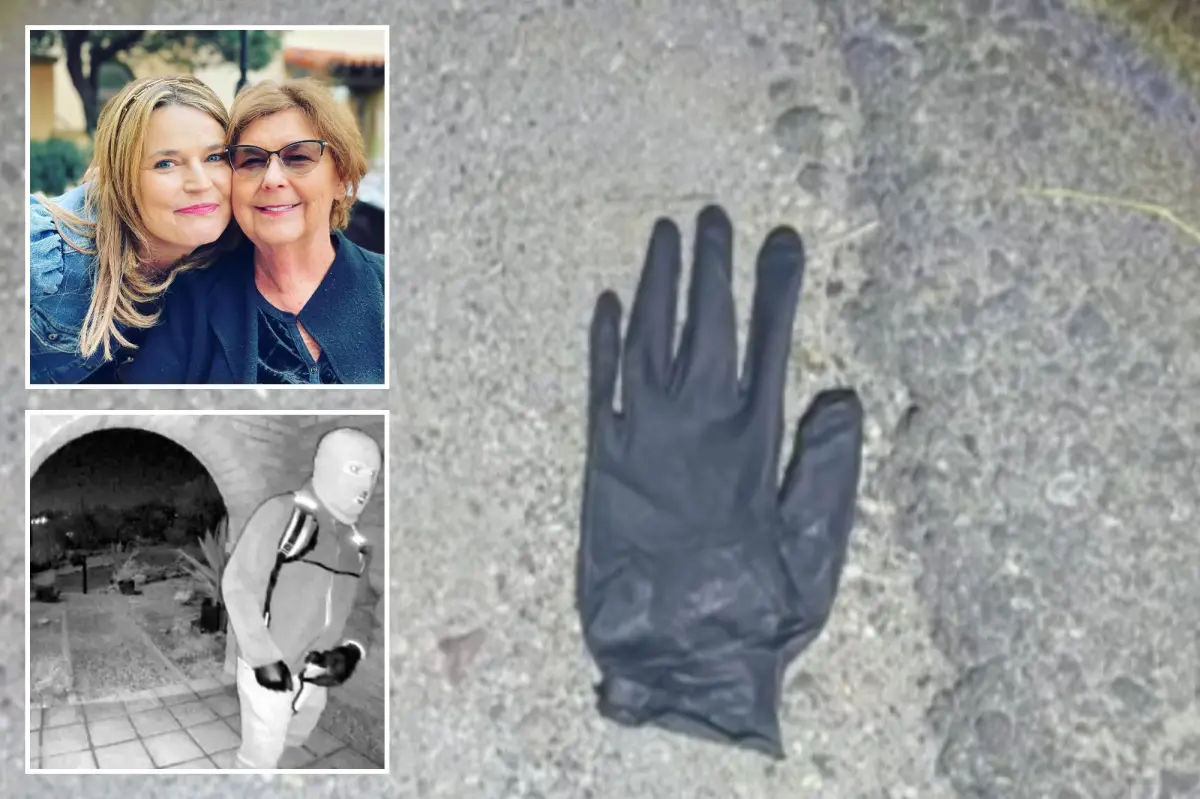
Amid this growing tension, an unassuming couple from Arizona, whose names gently fade into the background at their request, stumbled upon something that could be the key to unlocking the mystery, forever altering the course of their ordinary lives. Driving through the rugged desert expanse near Campell Avenue, about a mile from Nancy’s home, they weren’t looking for trouble—they were just out on a routine errand, perhaps grabbing supplies or enjoying the sprawling vistas that Tucson offers. But on February 11, as the sun beat down on the sandy terrain dotted with prickly pears and ocotillos, their eyes caught a glimpse of something out of place: a black glove, torn and stained, lying isolated on the ground. It was ripped, as if it had been worn in a struggle, and there, unmistakable against the dusty leather, were marks of blood—darkened, dried, concentrated on the wrist and pointer finger. They described it later with a mix of awe and dread, their voices steady yet tinged with the shock of the moment. Pausing from their drive, they spotted another glove just ten feet away, equally ominous. Beneath it, a rock protruded from the earth, splattered with what looked like a droplet of blood, hardened in the dry air—a chilling tableau that screamed foul play. The couple, ordinary folks perhaps with families of their own, felt their hearts race; they knew immediately this couldn’t be coincidental, not with Nancy’s disappearance dominating the news. They didn’t touch a thing, sensing the grave importance of preserving the scene, fearing their well-intentioned actions might contaminate evidence that could lead to justice or closure. Instead, with trembling hands, they snapped photos, their phones capturing the stark reality—the gloves against the desert backdrop, the blood a stark reminder of vulnerability in the wild. They felt a surge of civic duty, knowing inaction wasn’t an option, and hurriedly drove to notify authorities. In that instant, their day shifted from mundane to potentially monumental, a story they’d tell with a blend of pride and lingering unease, forever changed by having walked into the heart of a real-life mystery unfolding in their backyard.
Reporting the find to the Pima County Sheriff’s Department brought a wave of activity, as detectives descended on the spot like a whirlwind, their boots stirring the dust under the relentless sun. The couple was questioned gently but thoroughly, recounting every detail—the placement, the stains, the overwhelming sense that these weren’t just lost items from a hiker or jogger. They shared how the gloves mirrored descriptions of those worn by the mysterious figure seen lurking outside Nancy’s home on the day she went missing. That morning, witnesses had spotted a person, armed and masked, moving with purpose near the property, and now these gloves, appearing well-used and possibly bloodied from some violent encounter, hinted at a connection that sent chills through the investigation. Officials spent hours at the site, combing the area until midnight, their flashlights piercing the darkness of the desert night, collecting what they could while preserving the integrity of the evidence. The rock, with its telltale droplet, was handled meticulously, bagged and tagged for forensic analysis. Back at their station, the couple breathed easier, knowing they’d done right, but the weight of it all lingered—a reminder that in small towns and sprawling deserts alike, ordinary people could become pivotal players in life’s darkest dramas. As they returned home, they likely reflected on the fragility of peace, hugging their loved ones tighter, grateful for the uneventful path their own lives had taken despite the proximity to tragedy. Volunteers and neighbors continued the search, their persistence a testament to community spirit, even as the broader investigation deepened, revealing layers of a puzzle that defied quick resolutions. The couple’s discovery wasn’t just a find; it was a beacon of hope amid the fog of uncertainty, humanizing the case by showing how everyday witnesses could catalyze change, their courage echoing the quiet bravery required to confront the unknown.
Weaving through the timeline of Nancy’s disappearance illuminated the methodical yet agonizing trudging of time, each day a reminder of unanswered questions and fading hopes. It began on January 31, that fateful morning when Nancy was abducted, presumably in broad daylight, by someone who had been scouting her home. Authorities had confirmed the presence of an unidentified suspect, clad in black gloves and a mask, armed and intent on something sinister. By February 11, when the couple made their grim find, the investigation had already spanned nearly two weeks, marked by relentless searches and appeals for tips. DNA evidence from various gloves collected earlier hadn’t matched anyone in the FBI’s vast database, ruling out quick connections to known criminals or even the DNA found inside Nancy’s home, which belonged to someone else entirely, further complicating the narrative. The bloodied gloves unearthed a mile away were among several recovered in the vicinity, each scrutinized for fingerprints, fibers, or genetic markers that might reveal the perpetrator’s identity. Reports showed FBI agents meticulously collecting at least one glove from the roadside, their gloved hands careful not to disturb potential traces, while helicopters buzzed overhead in futile scans of the arid landscape. As Saturday marked the 20th day without Nancy, the toll was evident—Savannah Guthrie’s public pleas grew more urgent, her social media updates painting a picture of a family united in grief, clinging to faith and memories. The community rallies held potlucks and candlelight vigils, neighbors sharing stories of Nancy’s warmth, how she baked pies for block parties or chatted with anyone who passed by her yard. Investigators worked around the clock, analyzing the new evidence, hoping the blood on the glove and rock would yield breakthroughs—perhaps linking it to the suspect’s actions or even Nancy herself. Amid the professional diligence, there was a human element: officers’ weary faces at press conferences, their assurances tempered by the reality that time was slipping away, each hour potentially critical for a woman in her eighties, possibly injured or intimidated in some hidden corner of the vast desert.
No suspects had been named, no persons of interest firmly established, leaving the case shrouded in an eerie silence that amplified the collective anxiety of those awaiting closure. The Pima County Sheriff’s Department, tight-lipped on specifics to avoid jeopardizing the probe, reiterated that they couldn’t confirm if the discovered gloves matched the suspect’s attire or if the blood was Nancy’s, but assured that all collected items were undergoing exhaustive forensic testing. This included cross-referencing with the FBI’s databases, scouring for familial matches or hidden profiles that might break the stalemate. Savannah’s media platform became a pulpit for advocacy, her interviews tenderly sharing anecdotes—Nancy teaching her to ride a bike, evenings spent watching old films together, laughter over simple joys that now ached with absence. Friends and family poured into Tucson, staying in motels, volunteering search parties that spanned canyons and washes, their determination a balm against despair. Yet, the lack of breakthroughs bred frustration; tips rolled in, but many led to dead ends, like mistaken sightings or vague rumors. The couple’s photographs, splashed across local outlets, became symbols of caution, reminding everyone to stay vigilant in an unpredictable world. Psychologists might note the emotional strain on the community, how uncertainty breeds paranoia, yet it also fosters resilience—neighbors checking on each other, installing extra locks, banding together in a way only shared ordeal can inspire. For the Guthrie family, this limbo was a test of faith, their public persona humanized by vulnerability, showing that even those in the spotlight grapple with the same fears of loss that touch every household. As the days bled into nights, the desert’s vastness felt more like a shroud than a playground, hiding secrets yet to be unearthed.
In the wake of this ordeal, the story of Nancy Guthrie and the bloodied gloves in the desert serves as a poignant reminder of life’s fragility, where a simple walk in the wild can unearth ripples of violence that touch lives far and wide. The anonymous couple’s bravery sparked renewed energy in the investigation, their unwitting role in the narrative a testament to how random acts of awareness can drive justice forward. As the search continues without resolution, it underscores the enduring human spirit—the volunteers’ unwavering hope, the family’s quiet strength, the investigators’ tireless dedication. Nancy’s disappearance, once a personal tragedy, has become a communal call to action, urging better security, stronger community bonds, and unflinching empathy for those in the grip of the unknown. For Savannah Guthrie and her kin, the journey remains fraught with heartache, but amid the uncertainty, there’s a shared humanity in the outpouring of support from across the nation, strangers offering prayers and resources. The desert, with its harsh beauty, holds onto its secrets, but so too does it cradle the hope that one day, clarity will come, mending the fractures this incident has revealed. In humanizing this tale, we see not just a headline, but the real lives intersected by fear and fortitude—a grandmother beloved, a daughter grieving, ordinary witnesses transformed by circumstance, all weaving a tapestry of resilience against the backdrop of Tucson’s unforgiving sands. The case, still unfolding, prompts reflection on how we protect the vulnerable, cherish the mundane, and stand vigilant in the face of darkness, knowing that in community and compassion, light may yet prevail. As Tucson rebuilds its sense of security, Nancy’s story lingers as an emblem of grace under pressure, a narrative of love enduring amidst the storm of the unknown.