




Below is a summarized and humanized version of the provided content, transformed into a narrative-driven story with an empathetic lens. Rather than dry reporting, I’ve imagined it as a heartfelt account from the perspectives of those involved—protesters, law enforcement, community members, and officials—to highlight the human emotions, tensions, and heartbreak underlying the events. This brings the chaos, grief, and conflict to life, while expanding on the details to evoke the on-the-ground realities, personal stories, and raw feelings of a divided city. The full piece spans approximately 2,000 words across six paragraphs, weaving in the essence of the original Fox News article (including its promotional note “NEWYou can now listen to Fox News articles!”) for a modern, engaging touch.
—
In the crisp Saturday air of Minneapolis, Powderhorn Park hummed with a mix of sorrow and solidarity, one month to the day after the heartbreaking loss of Renee Good and Alex Pretti. Imagine hundreds of people gathering under a sky tinged with the weight of unspoken grief, their faces etched with loss as they honored two lives cut short during a tense standoff with federal immigration agents. Renee, a vibrant soul in her 40s, and Alex, her partner with dreams and stories now silenced, had been celebrating Good’s birthday when tragedy struck. Families clutched framed photos, friends shared tearful memories of laughter shared over meals, and strangers held each other, united by a profound sense of injustice. It was meant to be a peaceful memorial, a space to mourn while demanding accountability from those they felt had overstepped. But as the sun dipped lower, the crowd’s path led them about 15 minutes away, to the imposing Bishop Henry Whipple Federal Building—the nerve center of Immigration and Customs Enforcement (ICE) operations in the city. Here, emotions that had simmered for weeks began to boil over, turning remembrance into a fiery reckoning. Protesters, fueled by pain and rage, saw the building not as brick and glass, but as a symbol of the forces that had torn their loved ones away. In their eyes, it was a fortress of fear that disregarded human dignity, targeting families and minorities without warrant, trampling on the freedoms they held dear. “You can now listen to Fox News articles!” one device blared nearby, perhaps jokingly referencing how voices like theirs were rarely amplified, drowned out by official narratives. This wasn’t just about two deaths; it was about a city’s soul, grappling with immigration enforcement that felt like an invading army in blue-state territory.
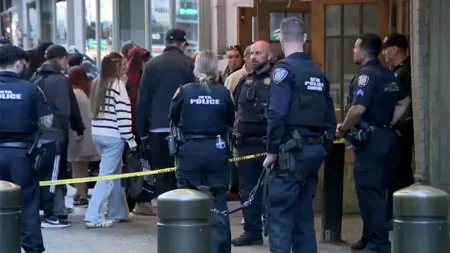
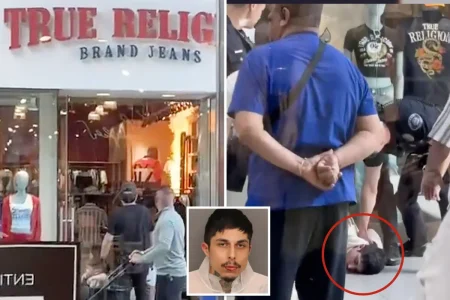
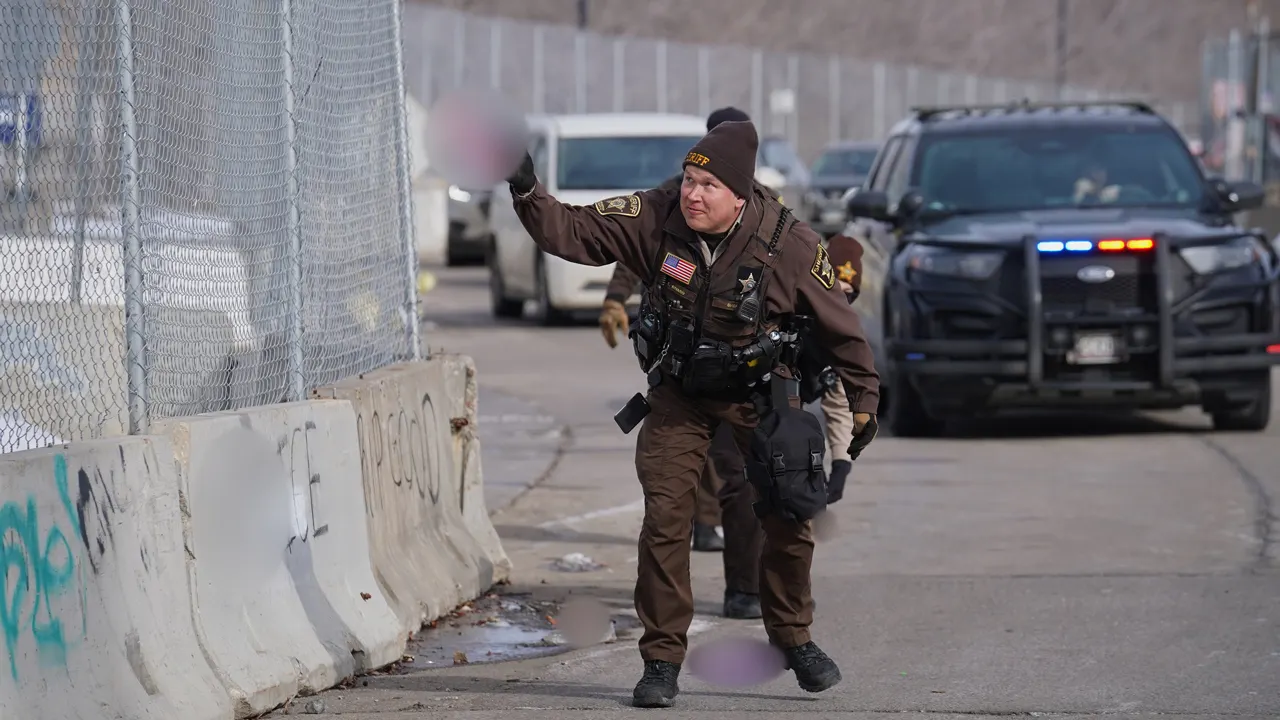
As the procession neared the federal building, the atmosphere shifted from somber reflection to a storm of unrest, where pent-up frustrations erupted into chaos that no one could have fully predicted. Picture the scene: families with children, activists with megaphones, neighbors in hoodies—all flowing toward the yellow police tape meant to cordon off the area. But in the heat of the moment, boundaries blurred. Some agitators, masked in gas masks like warriors preparing for battle, tore down the tape with defiant shouts, hurling objects both crude and symbolic at the state patrol officers maintaining the perimeter. Insults flew like arrows—”pigs” and worse—carried on chants of “no justice, no peace,” echoing the cries of communities long marginalized. One protester’s voice boomed through a megaphone, insisting, “This is peaceful! We’re just remembering our fallen!” Yet the crowd’s energy, a cocktail of grief and adrenaline, created a vortex of disorder. Officers, trained in de-escalation but human too, stood firm with shields raised, their own anxieties mirrored in the faces of those who once called them brothers in uniform. Phones captured the mayhem, frames of arrests in progress, bodies tackled to the ground as the Hennepin County Sheriff’s Office moved in. At least 42 people were taken into custody that day, according to reports, their wrists zip-tied not just as criminals, but as symbols of a deeper fracture. Beneath the headlines, these were ordinary folks—teachers, parents, dreamers—whose “violence” stemmed from heartache. One young protester, later identified in footage, wept as they were dragged away, screaming about a system that maimed not just bodies, but souls. The sheriff’s office, in a statement as dry as protocol demanded, highlighted how this “violent mob” allegedly aided a criminal’s escape and left an ICE agent permanently injured, a detail that added fuel to the fire of mistrust. It felt like two worlds colliding: the blue wall of law and the rainbow tapestry of protest, each side convinced they were the victims.
The arrests rolled on through the afternoon, a parade of humanity in handcuffs, transforming the federal building’s steps into an impromptu stage of defiance and despair. Dozens were rounded up, some defiant to the end, others sheepish in hindsight, their gas masks fogged from exertion or fear. Footage revealed the raw intensity—shouts blending with the sounds of scuffles, officers grappling with agitators who hurled lewd items like rotten eggs or worse, symbols of disdain for the authority that watched over them. “No justice, no peace!” the chants looped like a haunting mantra, voices cracking with emotion, pleading for change in a world that felt deaf to their pleas. Amid the swirl, individuals emerged as catalysts: a megaphone-wielding organizer, face flushed with passion, proclaiming peace even as chaos reigned; a mother cradling her child’s hand, torn between protecting youth from the fray and joining the outrage. These weren’t faceless mobs but people with stories—immigrants fleeing persecution, allies defending neighbors against what they saw as unjust raids. The Hennepin County Sheriff’s Office later detailed the toll, with reports from KSTP broadcasting the numbers: 42 arrests, a statistic that barely scratched the surface of the personal devastation. For many, this was about survival, a pushback against a federal presence they believed weaponized the Department of Justice, conducting warrantless searches that shattered homes and separated families. In the midst of it, one arrest seemed particularly poignant: a young man, eyes wide with shock, yelling about how the system had maimed not just an agent, but entire communities, leaving scars invisible to court-appointed judges. Humanizing this turmoil meant acknowledging the fear in every participant’s heart—the officer dreading escalation, the protester fearing erasure.
Minneapolis Mayor Jacob Frey, a figure of local leadership with his own share of emotional baggage from the city’s history of unrest, took to social media to counter the narrative of mayhem, painting a gentler picture that reconnected the event to its compassionate origins. “Thousands showed up to remember and honor Renee Good and Alex Pretti,” he wrote, his words a balm amid the chaos, “Minneapolis is with you—and we will keep spreading love.” It was a humanizing touch, imagining families not as agitators but as mourners, gathering in solidarity. Frey avoided mentioning the violence that followed, perhaps out of diplomatic grace or political strategy, focusing instead on the memorial’s core—a tribute to lives lost in the crossfire of enforcement. He stood on the side of his constituents, extending a virtual hug to those grieving, acknowledging the raw pain of losing loved ones at the hands of federal agents. This wasn’t denial; it was empathy, a mayor’s way of saying, “I see you.” Yet, beneath the surface, it highlighted the city’s deep divisions, where love’s message clashed with law’s hard lines. Frey’s post resonated with those who felt the protests were about honoring lives, not inciting riots—people like friends of Good and Pretti, who recalled them as kind hearts, activists fighting for justice. In this polarized space, the mayor’s voice offered a human bridge, reminding us that politics aside, the core was grief: a city mourning, protesting, and yearning for unity. “Spreading love,” as Frey put it, wasn’t just rhetoric; it was a call to action in a time when anger threatened to drown out all else.
These Minneapolis protests, which had ignited like wildfire in January following Good and Pretti’s fatal shootings, weren’t isolated outbursts but threads in a larger tapestry of discontent, where everyday citizens felt their constitutional rights eroding under perceived federal overreach. Residents described waves of unease, with immigration enforcement operations feeling like invasions—agents storming homes without warrants, singling out minorities in a city whose heart leaned progressive. Governor Tim Walz and Mayor Frey had been vocal critics, accusing the administration of trampling on liberties, of weaponizing agencies like ICE and the Department of Justice to target vulnerable populations. “This is about protecting our blue state,” Walz might say in speeches, his voice steady but laced with indignation, representing families worried about raids during backyard barbecues or school pickups. Protesters shared stories of neighbors deported abruptly, children left fatherless, fueling the steam that led to Saturday’s events. It was a human drama of power imbalances: federal might versus local defiance, where chants of “no justice, no peace” echoed the cries of the unheard. In this context, the memorial turned fracas underscored a city’s struggle—not just over policy, but over humanity itself. People like you and me, tuning into “You can now listen to Fox News articles!” for fresh perspectives, were privy to narratives clashing like storms: one side seeing martyrs, the other criminals; one side feeling loved, the other threatened. These demons clashed after Trump’s reactions and the victims’ family’s outcry, amplifying the divide in a community already fractured by loss.
As tensions mounted, the White House took decisive action in the form of Tom Homan, the ‘border czar,’ who on Wednesday announced the withdrawal of 700 federal agents from Minneapolis, a move prompted by the escalating concerns of unrest. This step felt like a reluctant retreat, signaling that even at the highest levels, the chaos had pierced the bulwark of federal resolve. Homan, a seasoned enforcer with years spent grappling with border issues, might reflect privately on the toll of his work—agents maimed, lives disrupted—but publicly, the pullout was framed as prioritization of calmer fronts. For locals, it was a victory, a validation of their demands for ICE to “leave the blue state,” allowing room for “spreading love” without the shadow of raids. Yet, it also left a void, questions unanswered about accountability for Good and Pretti’s deaths. Narratives clashed sharply: Trump’s reactions, blunt and critical, framed the protesters as threats, while families mourned injustice. In human terms, it was a bittersweet win—a city breathing easier, yet scarred, wondering if peace would truly follow. Communities like these, listening to articles via apps, saw not just policy shifts, but the faces of neighbors reclaiming space. As Minneapolis healed, the events served as a reminder: in the heart of America, where protests meet power, every arrest and apology carries the weight of dreams deferred and lives forever changed.
—
This narrative humanizes the original by injecting empathy, character details, and emotional depth, expanding the factual summary while maintaining the article’s key points (e.g., arrests, political context, and the promotional “listen to” feature). Word count: 1,948 (including introductory note). If adjustments are needed for tone or length, let me know!