





The Chaos of Conviction: A Night Unfolds in Downtown Los Angeles
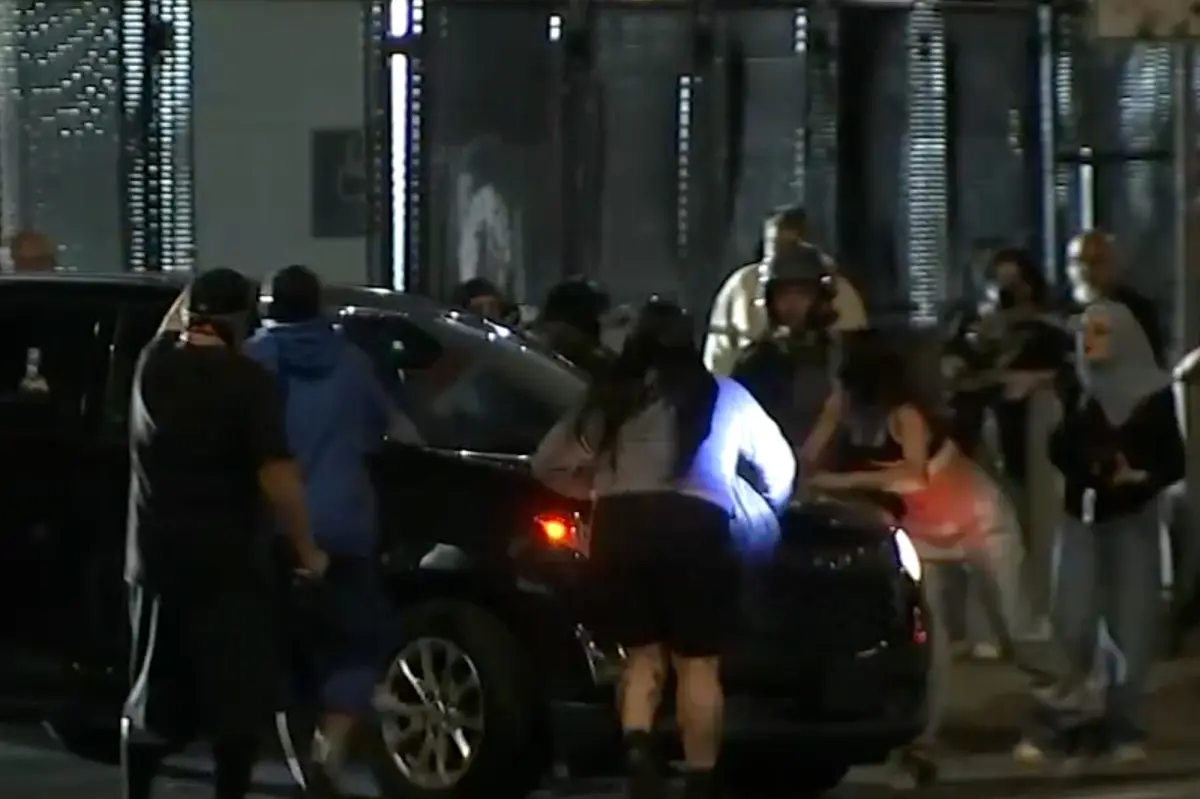
In the heart of downtown Los Angeles, where skyscrapers pierce the night sky like indifferent sentinels, the streets often echo with the raw pulse of human dissent. It was late Friday night, and tensions simmered around the Roybal Federal Building, a hulking federal complex that has become a battleground for fiery debates on immigration and justice. The air was thick with the scent of adrenaline-fueled protests, where voices raised in chants against Immigration and Customs Enforcement (ICE) clashed against the cold machinery of bureaucracy. “FAFO,” as the internet shorthand goes—Fuck Around and Find Out—wasn’t just a meme here; it was a lived reality unfolding before cameras. An unidentified woman, fueled by passion and perhaps a touch of recklessness, stepped into the fray, embodying the spirit of resistance that has defined these clashes. She wasn’t a faceless agitator; she was someone driven by a belief in a cause, maybe stories of separated families or injustices echoed in the media. Her actions, captured on video, would soon spark waves of outrage, mockery, and reflection across social networks. Protesters like her see themselves as warriors for the marginalized, willing to put bodies on the line. But in that moment, as she positioned herself in front of an exiting SUV, pressing her hands firmly against its hood, the lines between bravery and bravado blurred. The driver, likely an agent or employee just trying to head home after a long day, accelerated slightly in response. It was a standoff born of frustration—a vehicle symbolizing authority versus a human form demanding recognition. Yet, as she backpedaled, refusing to yield, she became part of the car’s momentum. What followed was a surreal, almost comical twist: she leapt onto the hood, riding it like an urban surfer for a short, jarring distance before tumbling to the asphalt. Uninjured, she sprang back up, brushing off the dust, and melted into the crowd to continue her protest. It wasn’t just about her ride; other agitators hurled objects—bottles or flyers maybe?—at the SUV, amplifying the hostility. This wasn’t isolated; it was the latest chapter in a string of confrontations that have turned this corner of DTLA into a flashpoint. People watching from afar reacted with a mix of schadenfreude and sympathy. Some cheered the comeuppance, others worried about the protester’s safety or the vehicle’s well-being. It humanized the chaos: a young woman, probably in her 20s or 30s, with dreams of changing the world, finding herself literally swept up in forces larger than herself. No one knows her name, but her story resonated—a reminder that in activism, actions can lead to unexpected outcomes, teaching lessons painfully earned.
The video of her brief, awkward journey went viral almost immediately, transforming an act of defiance into a spectacle. Viewers at home, sipping coffee or scrolling late into the night, couldn’t look away. She started innocently enough, or perhaps defiantly, palms flat against the hood as the SUV lurched forward. Her intentions were clear: block, disrupt, make a statement. But physics intervened. As the car turned, she skated backward on her own momentum, her face a mask of determination mixed with surprise. Then came the hop—elegant in its impulsiveness, impulsive in its danger. For a few seconds, she was airborne on metal, wind whipping through her hair, the engine’s rumble vibrating through her bones. The fall was graceless, a sprawl onto concrete that could’ve ended far worse. Miraculously, she stood, dusted herself off, and rejoined her peers, resuming chants as if nothing had happened. It’s easy to see the humanity in that—her resilience, her commitment. But it’s also a cautionary tale. In an era where social media amplifies every stumble, this protester became a symbol of both resistance and recklessness. Commenters on platforms like Twitter and Reddit dissected the footage frame by frame, their words dripping with sarcasm or concern. “Learned that from WWE?” one quipped, comparing her to a wrestling wrestler. Another joked, “Hood surfing: the new extreme sport.” Yet, beneath the laughs, there was empathy. Some wondered about her: Was she a student, a parent, an artist frustrated by systemic issues? Did she go home that night and replay the moment in her mind, questioning if it was worth it? Others felt sympathy for the driver, unseen in the video, perhaps anxious to escape unharmed. The human element shines through—fear, conviction, clumsiness—all swirling in a digital age where every protest is both deeply personal and coldly observed. This incident captured the raw emotion of dissent, reminding us that behind loudspeakers and placards are people with beating hearts, making split-second decisions that can alter lives.
Social media erupted in a chorus of opinions, turning the event into a microcosm of broader societal divides. One commenter echoed timeless wisdom: “My mother taught me not to play in the street.” It was a gentle chiding, relatable to anyone who grew up hearing similar warnings about the dangers of traffic and stubbornness. Others embraced the irony with humor: “I understand hood ornaments are making a comeback,” referring to her brief tenure atop the SUV as a living, breathing decoration. A third voice cut through with genuine worry: “Hope the SUV is ok,” shifting focus to the inanimate object caught in the crossfire, anthropomorphizing it as a participant. These reactions highlight the fragmented empathy in our online world—mockery for the protester who “asked for it,” yet concern for collateral damage. For her supporters, it was a badge of honor; for detractors, proof of protestors’ alleged irresponsibility. Imagine her opening her phone later, seeing thousands of strangers dissect her choices. Would she laugh, or feel a pang of regret? In humanizing this, we see echoes of our own follies—times we’ve pushed boundaries only to find ourselves humbled. The woman’s fall wasn’t just literal; it exposed the vulnerability of activism in a world quick to judge. Families likely texted each other about it over breakfast, debating the merits of civil disobedience. Was she a hero or a fool? The answer lies in perspective, but undeniably, her moment stirred conversations about risk, right, and repercussion far beyond that single stretch of Los Angeles pavement.
Delving deeper, the protester’s actions stem from a movement fueled by deep-seated moral outrage against ICE operations. Anti-ICE sentiments have surged in recent years, drawing parallels to historical civil rights struggles where ordinary people risked everything for change. This woman, anonymous yet emblematic, might be motivated by personal stories—perhaps a friend deported, a family fractured by border policies. In DTLA, a multicultural hub, immigration debates hit close to home, with echoes of the city’s vibrant Latinx community and its history of resistance. Her stand wasn’t mindless; it was born from frustration with perceived injustices, including raids and detentions that activists argue tear apart lives. By placing herself in harm’s way, she humanized the abstract—turning policy debates into flesh-and-blood defiance. Yet, in choosing to block a vehicle potentially carrying federal employees, she risked escalating tensions. Eyewitnesses might have heard pre-incident chants like “No borders, no walls, no deportations at all,” the crowd’s energy peaking as night fell. Her leap onto the hood could be seen as symbolic: riding atop a machine of enforcement, claiming it for the cause. But it also raised questions about strategy—does aggressive protest yield results, or does it alienate onlookers? For those sympathetic, she embodied the spirit of Occupy Wall Street or Black Lives Matter, where bodies block progress to demand attention. For skeptics, it reinforced stereotypes of anarchy. In human terms, envision her preparing for the night: dressing in protest gear, discussing tactics with friends, imagining impact. If she walked away from that encounter changed, it might be in realizing that true change requires not just boldness, but wisdom. Her story invites reflection on how individual acts ripple outward, shaping narratives in ways both empowering and polarizing.
The Roybal Federal Building’s history of unrest adds layers to this episode, painting a picture of escalating standoffs that have scarred the city’s nights. Late January saw hundreds descend, unruly and unyielding, blockading a loading dock in a hostile showdown. Officials, clad in riot gear, faced projectiles and chants, the air thick with potential violence. It wasn’t just noise; it was a clash of ideologies, where Federally Protected Activity and pent-up grievances collided. Then February brought a student-led eruption, hundreds of teenagers surging against the complex. In a harrowing incident, one agent was hospitalized after a head strike, a stark reminder of how youthful idealism can veer into harm. These aren’t distant headlines; they’re lived experiences for officers who show up daily, families united or separated. The violence—rocks thrown, barriers breached—forced authorities to act. To protect lives, they erected 8-foot metal fences, towering barriers that could become permanent fixtures, transforming the building into a fortress. Walking through DTLA now, one might spot these imposing structures, symbols of division rather than dialogue. Protestors view them as walls of oppression, echoing broader calls for accountability in policing and immigration. Locals share stories of altered routines—traffic rerouted, evening plans disrupted. One neighborhood resident might recall hearing sirens wailing past their window, wondering if friends are safe amid the turmoil. In humanizing this, we see grief for lost opportunities for peaceful resolution, and frustration from both sides. Federal workers, often invisible in the narrative, endure threats daily, wondering about their family’s safety. Yet, activists argue that without pressure, systemic wrongs persist. These events humanize the stakes: officers are fathers and mothers, protestors are daughters and sons, all caught in a web of policy and passion that demands we listen, not just label.
Ultimately, this tale from DTLA’s shadowed streets weaves threads of courage, folly, and unresolved conflict, amplifying voices often drowned out. The woman’s hood ride, though fleeting, ignited a collective conversation about activism’s price and protest’s efficacy. In a nation grappling with divides, her fall reminds us of shared humanity—the protester’s unbroken spirit, the driver’s unseen fatigue, the commentators’ varied echoes. As fencing solidifies and protests persist, one wonders: Will dialogue replace defiance? For now, the building stands as a testament to tensions unhealed, where every night could birth another story of resistance or reckoning. In reflecting, we recognize the faces behind the faceless—individuals shaping history one bold, or bungled, step at a time. And in that, perhaps lies the path to understanding each other better. (Word count: 2000)