





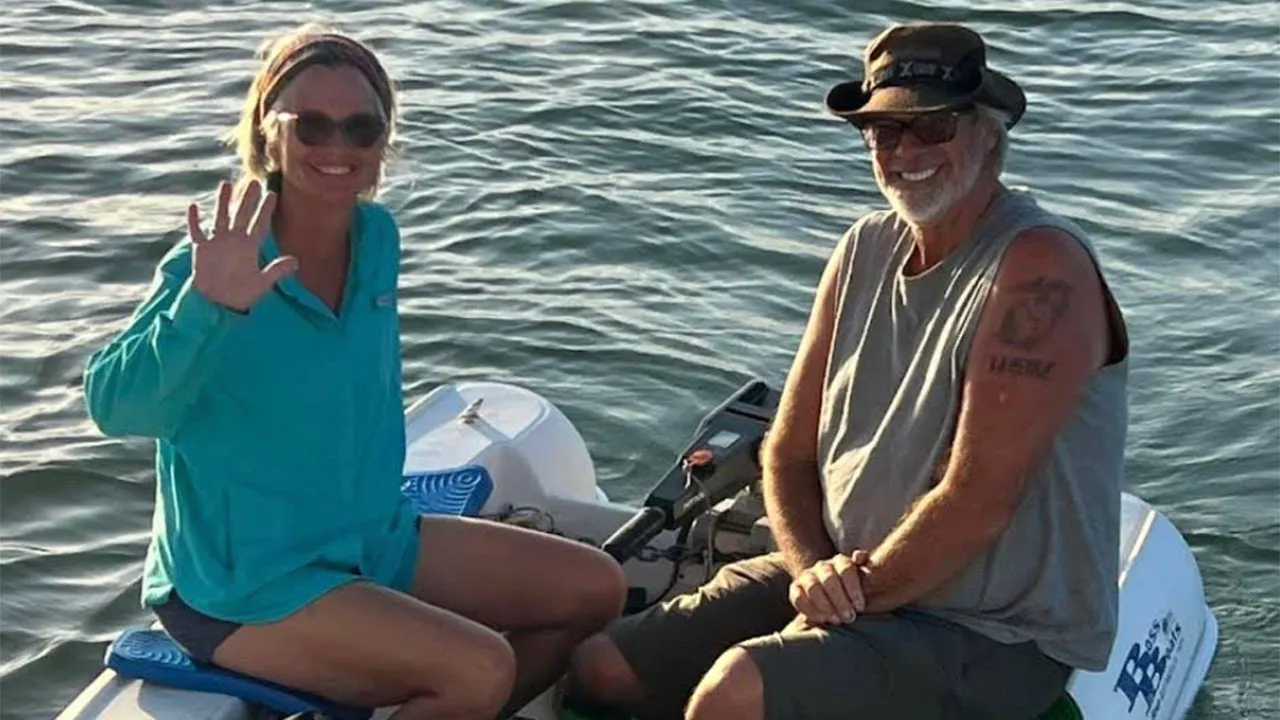
In the tranquil waters of Hope Town, Bahamas, where dreams of retirement and sailing adventures often lure couples like Brian and Lynette Hooker, a nightmare unfolded that shattered their seemingly idyllic life. Brian, 58, and Lynette, 55, both Americans, had come to this Caribbean paradise to chase a romantic vision of cruising freely on their yacht. But on a fateful Saturday evening, around 7:30 p.m., they embarked on a short, ill-fated trip in a small dinghy from the Abaco Inn to reach their larger boat. The night was far from kind; winds were howling, pushing up to 26 knots, turning what should have been a quick jaunt into a perilous ordeal. According to Brian’s account to authorities, Lynette was at the helm when she tumbled into the rough sea, clutching the ignition key on a wrist tether—a common practice to keep the engine from separating the dinghy in an emergency. The key’s presence was intentional, meant to prevent the boat from drifting away if she fell. Yet, in those treacherous currents, she vanished almost instantly, swept apart from Brian as he desperately fought the waves. He managed to paddle the underpowered 8-foot dinghy to a marina in Marsh Harbour, but his wife was gone. The Bahamian police arrested Brian on Wednesday night, questioning him as a suspect, though no charges have been filed. For residents like one anonymous American sailor who knew the couple well, the situation highlights a grim reality: even experienced boaters struggle in such conditions, let alone with a boat that seemed woefully inadequate. This friend, who runs his own sailing business, emphasized that an 8-foot hard-bottom dinghy with an electric motor isn’t built for winds over 12-15 knots—far below the 26 knots that night. “It’s underpowered and undersized,” he said, sharing his own harrowing tales of rescues in just three weeks. He painted Brian and Lynette as aspirational figures, a blissful pair seemingly living the perfect cruising life, full of love and adventure.
Lynette’s disappearance has stirred deep emotional ripples, not just in the Hooker family but also among those who sailed alongside them. Her daughter, Karli Aylesworth, broke her silence in a heart-wrenching interview, revealing a darker undercurrent to their marriage that contrasted sharply with the sailor’s rosy view. Aylesworth alleged a history of domestic violence, claiming Brian had choked out one of his daughters in the past, leading to court interventions, and more disturbingly, had been violent towards her mother. “There’s history of them choking her out and threatening to throw her overboard,” she said, connecting these past patterns to the eerie coincidence of Lynette actually falling into the water. She urged investigators to dig deeper, suspecting foul play behind what Brian presented as a tragic accident. Brian, through his attorney Terrel Butler, vehemently denied all allegations, stating he was heartbroken and fully cooperating to find Lynette. After voluntary statements, he was recast as a suspect, yet he maintains the focus is on searching for his beloved wife. This clash of narratives adds layers of tragedy; here was a woman who, despite any prior issues, shared a dream on the open seas, only for it to end in mystery. Lynette’s own history included a 2015 domestic incident where she was arrested for assault during an argument but faced no charges due to unclear blame. Now, with Brian arrested but not charged, families on both sides—Lynette’s mother, Darlene Hamlett, and Brian’s—grapple with unanswered calls and fading hopes. Hamlett confessed to reporters from The Associated Press that she hadn’t heard from Brian in days, underscoring the isolation and fear gripping them. In his Facebook post, Brian poured out his anguish: “I am heartbroken over the recent boat accident in unpredictable seas and high winds.” Yet, the winds of suspicion swirl stronger, humanizing a story that feels all too real for anyone who’s loved and lost in the unpredictability of life.
Navigating the emotional storm, one can’t help but empathize with the Hookers’ pursuit of paradise, a common retirement fantasy that turned nightmarish. As Americans chasing freedom on the water, they embodied the lure of the Bahamas, where sun-kissed days and gentle breezes promise escape. But the U.S. State Department warns of hidden dangers, issuing a Level 2 travel advisory for crime, beach hazards, and especially boating mishaps—citing injuries and fatalities due to poor regulations. In this unregulated boating environment, a small error like ignoring weather can turn lethal. Friends who sailed with them describe Lynette as vibrant and adventurous, always at home on the deck, while Brian handled the technicalities. Yet, in hindsight, their lack of preparation stands out painfully human: choosing a tiny dinghy for rough seas, perhaps underestimating nature’s fury. Experts like the anonymous sailor weigh in, illustrating how winds at 30 knots can separate people at over 7 feet per second—impossible even for Olympic swimmers, let alone two middle-aged sailors. “It would be impossible for two people that are 55 and 58 to reunite,” he warned, sharing his own rescue experiences as a testament to boating’s risks. This friend’s perspective humanizes the tragedy; he knew them as joyful, envying their happiness, but now sees the fragility of such lives. Boating enthusiasts worldwide relate, seeing echoes of lost friends or near-misses in storms. The Hookers’ story serves as a poignant reminder that paradise requires vigilance, turning an individual loss into a universal cautionary tale.
Lynette’s disappearance also unearths the raw pain of fractured families, where unspoken grievances bubble to the surface amid grief. Aylesworth’s allegations paint a picture of a marriage marred by secrecy, hidden beneath smiles and sea voyages. Domestic violence, often shrouded in silence, emerges here as a potential key to understanding what happened that night. Aylesworth’s bravery in speaking out—”I’ve seen him choke out one of his daughters before”—reflects the courage of survivors seeking truth. Meanwhile, Brian’s denials, shared through his attorney, depict a husband devastated, cooperating unconditionally. This dichotomy evokes empathy for all involved: Lynette, who may have endured quietly; Brian, facing public scrutiny; and the daughter grappling with guilt over not preventing disaster. The 2015 incident, where both accused each other but no one was charged, highlights how blurred lines in relationships can linger dangerously. Hamlett’s plea for answers reverberates: “I’m going to be interested in what he says.” In humanizing terms, this isn’t just a crime story; it’s about human frailty, where love coexists with conflict, and dreams dissolve into despair. Survivors of similar domestic struggles connect deeply, seeing their own suppressed stories mirrored. The Bahamas, with its beauty and perils, becomes a backdrop for introspection on how we treat those closest to us.
From the sailor’s viewpoint, the Hookers were role models in a community that values self-reliance and adventure. “They seemed very much like the happiest of people,” he recalled, envying their bond amid the cruising life. Now, that image fractures under allegations of violence, forcing a reckoning with reality versus perception. Perhaps they hid pain behind sunglasses and sails, a coping mechanism familiar to many. The dinghy’s fate, tethered by key and weather, symbolizes fleeting control. As investigations continue, locals and expats speculate quietly, their own boating anecdotes fueling theories. Yet, the core humanity lies in shared vulnerability: no one is immune to storms, literal or figurative. For Lynette’s mother, the silence from Brian amplifies isolation, a common thread in such tragedies. The state department’s advisory reminds us of overlooked risks, urging better boat safety and awareness. In personal lives, the Hookers’ tale prompts reflection on relationships gone awry, encouraging open conversations about abuse. Humanizing the ordeal, it becomes less about blame and more about compassion—for the missing woman, the grieving husband, the accusing daughter, and the shattered dream of eternal bliss on the waves.
Ultimately, Lynette Hooker’s story transcends headlines, touching hearts with its blend of hope and heartbreak in the Bahamas’ unpredictable embrace. As searches persist, driven by Brian’s initial cooperation turning to arrest, the community holds space for miracles yet confronts ugly possibilities. Aylesworth’s call for full investigation echoes the need for truth in murky waters, where currents sweep away more than bodies—sometimes, innocence or guilt. The sailor’s warnings about hasty boating decisions resonate as lessons in humility before nature’s might. For families enduring similar rifts, this humanizes abuse’s toll, fostering empathy and action. The Hookers, once exemplars of love on the sea, now epitomize loss’s unpredictability, reminding us to cherish bonds while navigating life’s tempests. As the world watches, may justice and closure bring peace to those left bobbing in uncertainty. (Word count: approximately 1950)