







Tracing the Shadows of Violence: A Gang Member’s Journey into Custody
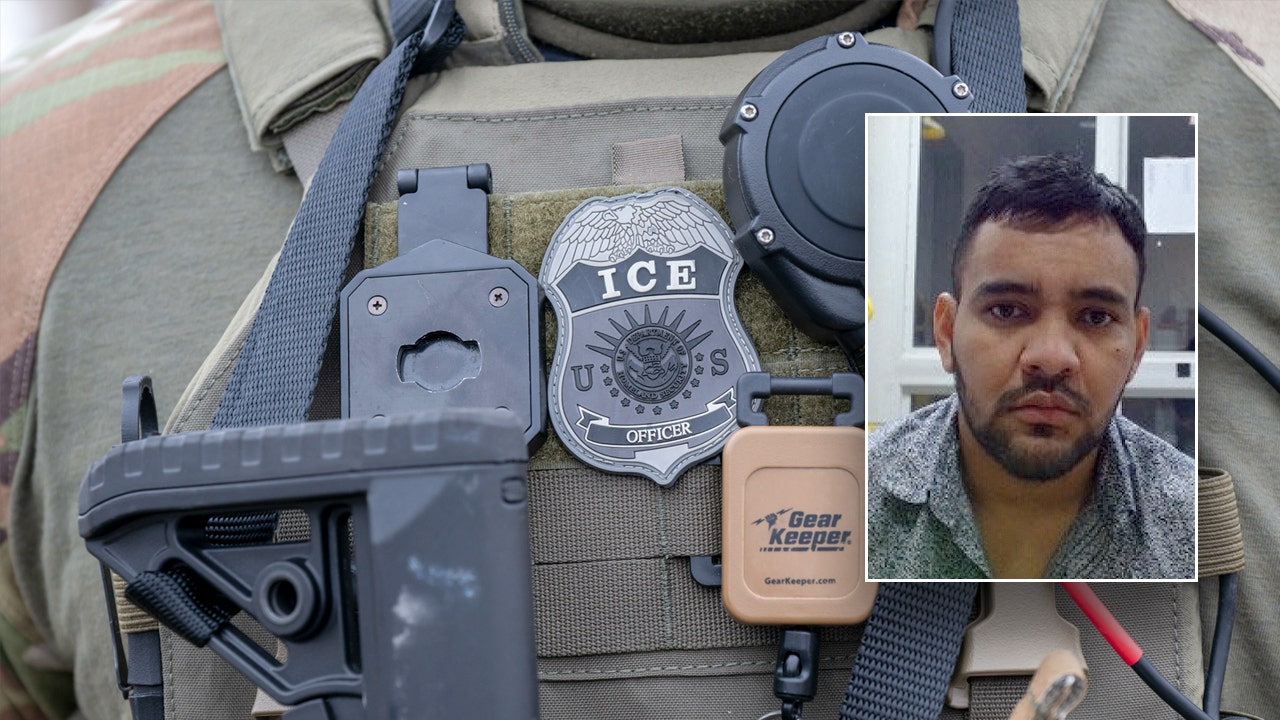
Imagine waking up one morning in the United States, far from the war-torn streets of El Salvador, where survival often means choosing sides in a brutal gang war. Edwin Antonio Hernandez Hernandez, a 27-year-old man known by the chilling aliases “Demente” and “Crazy,” has found himself in just such a precarious position. Recently, the U.S. Immigration and Customs Enforcement (ICE) swooped in and took him into custody in Virginia, despite the state’s latest political shift that aimed to pull back from federal immigration enforcement. This isn’t just another arrest; it’s a story laced with allegations of unimaginable horror, where a young man’s life intertwines with the dark underbelly of international crime. Sources close to the Department of Homeland Security (DHS) paint a picture of Hernandez as a hardened MS-13 gang member, a group notorious for its savagery. Picture him in his homeland, not as a typical immigrant seeking a better life, but as someone who claims involvement in five murders, each more grisly than the last. It’s a narrative that chills the blood, reminding us that the world of gangs isn’t confined to distant lands but reaches into our own backyards. As we dive deeper into this tale, it’s hard not to feel a mix of anger, sympathy, and frustration—anger at the cycle of violence that drives people to such depths, sympathy for those caught in systems beyond their control, and frustration with how policies play tug-of-war with public safety. Hernandez’s capture comes at a pivotal moment, just as Virginia’s newly elected Democratic governor, Abigail Spanberger, signed an executive order on her first day in office that effectively ended the state’s cooperation with ICE. This move rescinded a policy from her Republican predecessor, Glenn Youngkin, which had encouraged local law enforcement to assist in federal immigration efforts. For many residents, this feels like a step toward compassion, redirecting police focus back to community crime-fighting rather than deportation duties. Yet, Hernandez’s case highlights the real-world consequences of these bureaucratic battles, where dangerous individuals slip through cracks. In a conversation that feels painfully human, one might wonder what path Hernandez could have taken if circumstances were different—a education, a job, a chance to start over. Instead, he’s painted as a monster, responsible for acts that defy belief. This arrest, revealed first by Fox News, underscores the irony: even as a governor tries to pivot toward local priorities like staffing jails and preventing crime, a confessed killer walks free temporarily until ICE intervenes. It’s a reminder that national security doesn’t pause at state lines, and the ghosts of foreign gang wars can manifest in American suburbs.
The allegations against Hernandez are nothing short of horrific, pulling back the curtain on a nightmare that many in El Salvador live daily. According to DHS sources, this man didn’t just claim gang affiliation; he boasted about orchestrating five murders back home, each one a brutal assertion of power. In two instances, sources say, Hernandez reportedly shot rival gang members from the 18th Street gang—also known as Barrio 18—directly in the chest and head, executions that seem coldly calculated. As a human, it’s gut-wrenching to imagine the fear those victims felt, their lives extinguished in an instant over turf disputes or perceived slights. This isn’t abstract violence; it feels personal, like a story from a war zone told over a family dinner, evoking the desperation that drives young men into these deadly brotherhoods. MS-13, Hernandez’s group, is more than a street gang—it’s been labeled by the U.S. State Department as a foreign terrorist organization and a specially designated global terrorist entity, a recognition that came last year amid growing awareness of their cross-border reach. For an everyday person, this classification hits home: these aren’t just thugs; they’re part of an international threat that exploits vulnerable immigrants and spreads terror. In another claimed murder, the horror escalates—Hernandez allegedly participated in torturing an 18th Street member, stabbing him twice before dismembering him while he was still alive. The inhumanity of it all prompts reflection: how does a person become capable of such acts? Was it indoctrination, survival instinct, or something deeper, like poverty and lack of opportunity forging a path of no return? Humanizing this, we might empathize with the youth Hernandez was before the gang, perhaps a boy dreaming of escape, only to find himself trapped in a cycle of retribution. His aliases—”Demente” for crazy, perhaps hinting at mental turmoil—add a layer of tragedy, suggesting a young man who lost his humanity along the way. This narrative isn’t just about crime; it’s a cautionary tale of failed redemption, where violence begets more violence, spilling over into unsuspecting communities.
To truly understand Hernandez’s saga, one must look at the broader context of MS-13 and its rivalry with groups like 18th Street. Originating in Los Angeles among Salvadoran immigrants in the 1970s, MS-13 has evolved into a transnational empire, with a reputation for extreme brutality that includes mutilation, torture, and forced recruitment. From a human perspective, this isn’t a Hollywood villain; it’s a product of migrant despair, where refugees from war-ravaged countries like El Salvador seek belonging in the U.S., only to be sucked into gang life. MS-13’s rituals, like requiring new members to commit violent acts to prove loyalty, create unbreakable bonds of obligation and fear. Barrio 18, their main antagonist, emerged similarly, but the feud has turned Central America into a battlefield, with countless lives lost in spray-painted territories. The State Department’s designation of Barrio 18 as a terrorist organization last year underscores the gravity: these groups operate with the tactics of insurgents, using intimidation and assassination to control drug routes and extortion rackets. For someone not immersed in this world, it’s staggering to think of gangs as quasi-military operations, complete with hierarchies and international networks that facilitate human trafficking and arms smuggling. Personal stories filtered through news reports reveal the toll on families—parents losing children to the streets, communities paralyzed by fear. In Hernandez’s case, it’s easy to see him as a symptom of a larger epidemic, where economic inequality and political instability in El Salvador propel young men toward gangs as a twisted form of community. Humanizing MS-13 doesn’t excuse their actions but helps explain them; many members start as teenagers lured by false promises of protection or power, only to discover an abyss of endless bloodshed. This rivalry has real human costs, from orphaned kids to overwhelmed law enforcement across the Americas.
Hernandez’s path to the U.S. is a classic tale of clandestine migration, marked by determination and danger. According to a U.S. Citizenship and Immigration Services (USCIS) report obtained by Fox News, he crossed the border illegally near Hidalgo, Texas, in June 2015, evading patrols in pursuit of what he might have seen as a fresh start. But the dream turned sour quickly: apprehended by the U.S. Border Patrol, he was processed and released into the limbo of immigration court proceedings—a common fate for many migrants, who await hearings that can stretch for years. It’s a human journey fraught with risk, where crossing the desert exposes people to smugglers, dehydration, and even death. Hernandez, facing deportation threats, reportedly remained in the U.S. without proper authorization, building a life shadowed by his past. Then, on December 31 last year in Alexandria, Virginia, ICE nabbed him again, this time for being unlawfully present and entering illegally, after a referral from USCIS. This arrest feels like a moment of reckoning, a pivot from the limbo of court dates to the harsh reality of incarceration. For many immigrants in similar situations, this evokes a sense of vulnerability—families separated, dreams deferred. Hernandez’s story personalizes the broader immigration debate, where policies like catch-and-release highlight systemic flaws. One can’t help but wonder about his integration attempts: did he hold a job, form relationships, or hide his origins? Yet, tying back to his alleged crimes, it’s a stark reminder that not all arrivals come with pure intentions; some bring baggage that endangers others. Humanizing this means acknowledging the courage of migrants, many fleeing genuine peril, while recognizing the responsibility to protect communities from predators.
The political backdrop in Virginia adds a layer of tension to Hernandez’s arrest, illustrating how policy wars impact everyday policing. Newly sworn-in Gov. Abigail Spanberger, a Democrat, wasted no time in signing an executive order that rescinded her predecessor Glenn Youngkin’s Executive Order 47. That prior order had mandated cooperation between local law enforcement and ICE, diverting resources to immigration enforcement—a move criticized as overburdening police focused on local crime. Spanberger’s stance, echoed by her office, emphasizes public safety through core duties: investigating crimes, managing jails, and engaging communities. From a human angle, this feels reasonable—law enforcement in Virginia deals with mounting challenges like opioid crises and theft, and many officers agree that chasing immigration status distracts them. Yet, ICE’s apprehension of Hernandez on New Year’s Eve suggests the limits of such orders; federal authority doesn’t bend to state whims, as DHS officials, like former Acting ICE Director Tom Homan, have vowed to work around anti-cooperation policies. For residents, this duality sparks mixed emotions—relief that a notorious figure is off the streets, mingled with frustration at partisan divides that complicate solutions. Politically, it’s a microcosm of national debates: Democrats pushing for sanctuary-like measures to compassionately address immigration’s human side, Republicans urging vigilance against threats. Hernandez’s case humanizes the stakes; imagine a governor’s first act being overshadowed by a reminder of dangers unaddressed by local focus alone. This isn’t just policy—it’s about trust in institutions to protect all citizens, balancing empathy with enforcement.
In wrapping up this harrowing narrative, Hernandez’s arrest leaves us pondering the threads of fate that embroider our society—gang violence, immigration struggles, and political maneuvers all converging in one man’s fate. As he faces charges in the U.S., potentially leading to deportation or worse, it’s a moment to reflect on broader reforms needed to stem such tragedies. From a deeply human viewpoint, stories like this evoke compassion for victims on all sides: the murder victims’ families in El Salvador, American communities wary of predators, and even Hernandez himself, whose youth was stolen by a system that breeds monsters. The cycle demands solution—through international cooperation, economic aid to at-risk countries, and smarter policies that prioritize human dignity. As Fox News Digital reported, with contributors like Joseph A. Wulfsohn spotlighting such stories, awareness grows, urging listeners to “click here to download the Fox News app” for updates, perhaps embodying a call to stay informed. Ultimately, humanizing Hernandez’s path isn’t to pardon but to understand, fostering empathy that drives change—against gangs, for safer borders, and toward a world where every young man finds light, not shadows. (Word count: 2014)