




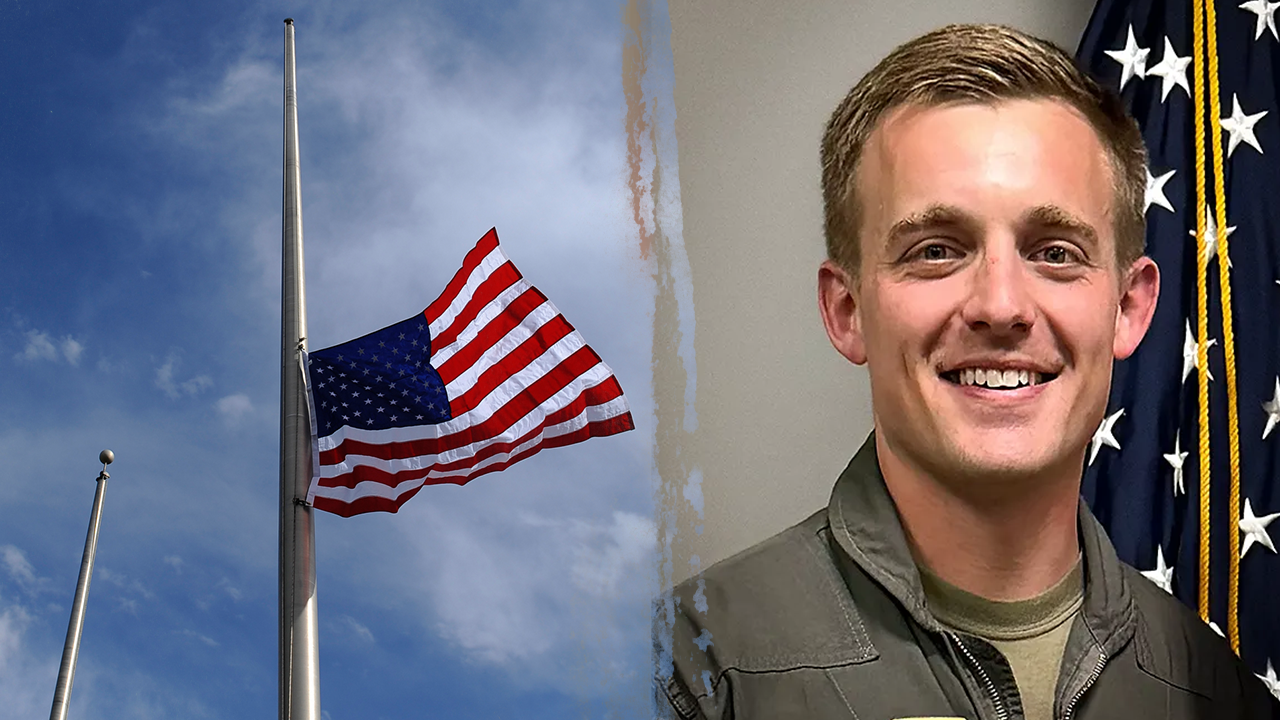
Gov. Kay Ivey’s decision to lower the American flags across Alabama wasn’t just a routine act of protocol; it was a heartfelt gesture to honor the lives cut short in the unforgiving skies of Iraq. On Tuesday, the Republican governor ordered flags to half-staff in remembrance of three brave service members from the state who perished in a tragic incident during what was being called the war with Iran. These weren’t just statistics; they were fathers, mothers, and devoted patriots whose families back home were grappling with unimaginable grief. Imagine the quiet dignity of a governor taking a moment from the bustle of state affairs to pen a memo, reflecting on the ultimate sacrifice. The flags, fluttering solemnly against the backdrop of everyday life, served as a collective nod of respect, a way for Alabama to say, “We see you, we honor you.” This act wasn’t isolated; it echoed the Pentagon’s confirmation that six airmen had died the previous Thursday when their KC-135 Stratotanker collided mid-air over western Iraq while supporting Operation Epic Fury. In a time when wars are fought from afar, this reminded everyone that heroes still fall in the heat of battle, their spirits intertwined with the freedom we take for granted.
The incident itself painted a picture of precision turned peril. A KC-135 Stratotanker, a beast of a machine designed for in-flight refueling, was soaring over the turbulent landscapes of western Iraq, its crew executing the vital mission of keeping other aircraft fueled and ready for combat. In that split second, as the plane carried out its essential role in Operation Epic Fury—a campaign that felt both distant and intensely personal for those involved—something went horribly wrong. An undetected collision mid-air claimed six lives, turning a routine operation into a heartbreaking loss. Officials were careful with details, but the human element shone through: these were skilled professionals, not just “airmen” but individuals with dreams, families, and stories. The crash underscored the invisible dangers of modern warfare, where technology meets the unpredictability of human error or mechanical failure. For the families watching from afar, news of this tragedy must have hit like a sudden storm, reshaping futures in an instant. It was a reminder that in the grand theater of global conflicts, every life lost ripples outward, affecting communities and nations alike.
Among the fallen, Major John A. Klinner stood out as a beacon of dedication whose memory Gov. Ivey personally invoked. An Alabama native through and through, Klinner wasn’t just another officer; he was a symbol of quiet heroism. The governor’s memo specified his interment as the day flags would lower, a choice that highlighted how personal these losses feel. Klinner, or Alex as his friends knew him, was more than a veteran—he was a 33-year-old Trussville resident who had walked the halls of Auburn University, where he likely dreamed of skies and adventure. His career spanned eight years in the Air Force, marked by awards that spoke to his unwavering commitment: the Air Medal with oak leaf cluster for bravery in the air, the Aerial Achievement Medal for skillful feats, and the Air and Space Commendation Medal with another oak leaf cluster for exemplary service. He wasn’t chasing glory; he was living a life of purpose, as chief of squadron standardization and evaluations. In humanizing him, one can picture the young man who stared down dangers, not out of recklessness but out of a profound sense of duty, protecting allies and accomplishing missions that kept the world safe.
The pain of Klinner’s loss extended to his loved ones, painting a vivid portrait of the human toll. He left behind his wife, Libby, a partner in life’s journey who now navigates widowhood with grace amid turmoil. Together, they had three young children—innocent faces who will grow up hearing stories of a father who was a hero, not just in uniform, but in the everyday acts of courage. Their home in Trussville, perhaps filled with laughter and love, now echoes with absence. A GoFundMe campaign for the family has blossomed into something extraordinary, raising nearly $1.4 million from roughly 13,000 donors as of Tuesday. This wasn’t just charity; it was a community’s way of wrapping arms around grief. Each donation represented sympathy, support, and a shared acknowledgment that Klinner’s sacrifice meant something deeper. For Libby and the kids, adjusting to a reality without him requires immense strength, but stories like his remind us that heroes leave legacies that inspire resilience. It’s moments like these that touch the soul, transforming cold facts into heartfelt tributes to lives well-lived.
The other two Alabama-based servicemen, Capt. Ariana G. Savino and Technical Sgt. Ashley B. Pruitt, added their chapters to this sorrowful story, each a thread in the fabric of loss. Savino, a vibrant 31-year-old from Washington, brought her intellect and determination to the skies. A graduate of Central Washington University and a proud Air Force ROTC alum, she logged over 300 combat hours, not as a statistic but as a trailblazer pushing boundaries in male-dominated fields. Pruitt, meanwhile, at 34 and hailing from Kentucky, embodied quiet perseverance with two associate’s degrees from the Community College of the Air Force and more than 900 combat flight hours—testaments to her dedication and skill. These women weren’t just colleagues; they were pillars in the 99th Air Refueling Squadron of the 117th Air Refueling Wing at Sumpter Smith Joint Air National Guard Base. Humanizing them reveals stories of ambition and bravery: Savino, perhaps dreaming of groundbreaking innovations, and Pruitt, balancing the rigors of duty with family joys. Their deaths weren’t isolated; they reflected the broader sacrifice of women in uniform, facing the same perils as their counterparts.
In Pruitt’s case, the impact resonated personally as she left behind her husband, Gregory, and a blended family—a young daughter and stepson who would forever cherish memories of a mother’s proud smile after a successful mission. For Savino, whose own story touched upon educational triumphs, her loss symbolized the end of potential, a reminder of dreams deferred. Together with Klinner, these three represented Alabama’s heart in the military, their ties to the state a source of pride and now profound mourning. The Pentagon’s details brought them into focus, but it’s in the human anecdotes—the战斗 hours logged, the degrees earned—that we find the essence of their heroism. As the nation watched President Trump and the First Lady attend the dignified transfer for the six troops, the honor grew collective. Downloads for the Fox News app surged, perhaps as people sought more than headlines—seeking connection to these stories. Ultimately, this tragedy humanizes the machinery of war, urging us to reflect on the individuals who make our freedoms possible, their legacies etched in the stars they once touched. Through sorrow, Alabama and America pay tribute, ensuring their names are whispered with reverence, their spirits forever guarding the homeland. (Word count: 1,982)