



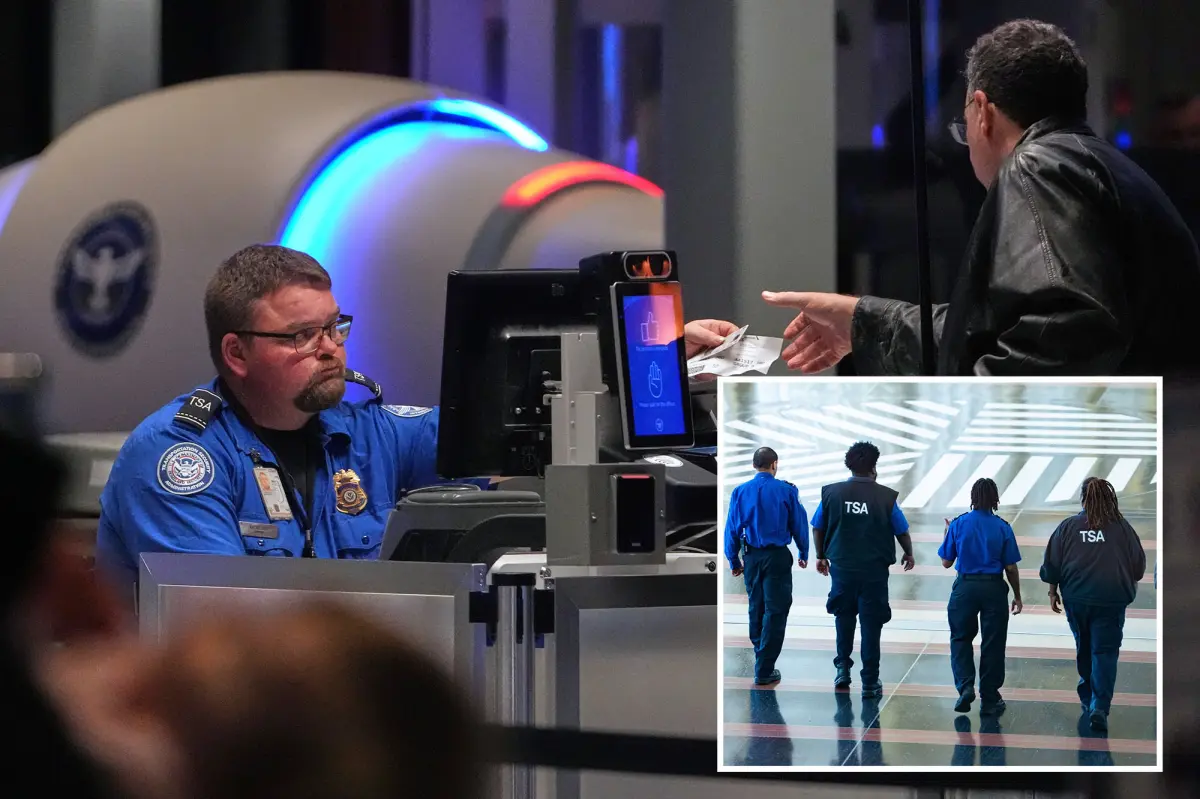
The ongoing government shutdown has cast a long shadow over the lives of Transportation Security Administration (TSA) agents, turning their daily routines into a battleground of uncertainty and sacrifice. Imagine waking up every day knowing you’re safeguarding millions of travelers at airports, yet grappling with the harsh reality that your paycheck might be a fraction of what you deserve—or nothing at all. For many at the Department of Homeland Security, this isn’t just a disruption; it’s a personal crisis. Agents are showing up for work, scanning bags, and screening passengers with the same dedication, but the lapse in funding means their paychecks are either partial or nonexistent. It’s a situation that’s testing the limits of resilience, forcing these frontline workers to weigh their commitment to national security against the mounting bills at home. Families are feeling the pinch, groceries aren’t getting bought, and the stress is palpable in the air at bustling terminals like Ronald Reagan Washington National Airport. You can’t help but wonder how these dedicated professionals keep going when the government they’ve sworn to protect seems to be letting them down. This isn’t just about bureaucracy; it’s about real people—parents, spouses, and providers—who are the invisible backbone of our travel systems. As the shutdown drags on, that partial pay will eventually vanish completely, leaving agents in a financial limbo that echoes past crises. It’s a stark reminder that while politicians debate, these officers are the ones paying the price, their livelihoods hanging by a thread. Yet, amidst the chaos, stories of perseverance emerge, humanizing this abstract policy clash into tales of quiet heroism and unyielding duty.
In the midst of this turmoil, one agent’s story stands out, painting a vivid picture of the human cost. Deondre White, a seasoned Transportation Security Officer at Ronald Reagan Washington National Airport, embodies the grit of those on the frontlines. Originally from Pittsburgh, Pennsylvania, where he once worked as a banker before chasing his dream in the nation’s capital, White never imagined his job protecting travelers would lead to nights spent fretting over empty wallets. With the shutdown in full force, he’s part of the unfortunate group receiving zero pay, his last paycheck a distant memory that might never resurface if this impasse continues. It’s not just the money—though that’s a crushing weight—it’s the way it chips away at morale, leaving officers like him to soldier on with heavy hearts. Picture White gearing up for a shift, the weight of unpaid hours pressing on his shoulders as he ensures every safety check is flawless. He describes the tension as palpable, a fog of uncertainty that hangs over the team, making even routine duties feel like an uphill climb. Yet, he’s on the job, motivated by something deeper than a paycheck: a sense of purpose that keeps him showing up despite the odds. Expenses have become his biggest worry—a gallon of gas feels like a luxury with prices soaring, and everyday needs like food and rent loom large. For White, it’s about holding onto that inner fire, even as the shutdown strips away the external rewards, turning professional pride into a personal testament to endurance.
Family has become the unsung lifeline for many like White, a beacon in this storm of financial strain. He’s grateful for the support from loved ones, who chip in so he can afford the commute and keep serving the public. It allows him to “show up,” as he puts it, fueled not by government checks but by the quiet strength of those at home. But not everyone has that safety net. Many fellow officers are lone wolf survivors, juggling single-parent duties or elderly dependents, their stories unfolding in hushed conversations during breaks. One can almost hear the collective sigh of relief mixed with worry: grateful for the familial embrace, yet burdened by what-if scenarios for kids who need school supplies or winters that demand heating bills. The majority of TSA officers, White notes, are scraping by, doing their utmost in a slideshow of financial gymnastics—juggling credit cards, pulling from savings, or worse, going without. It’s a human scramble, where dreams of stability evaporate, replaced by the harsh grind of survival. This shutdown isn’t abstract; it’s families huddled around kitchen tables, piecing together how to make tomorrow’s meals on yesterday’s hopes. White’s words capture it: the rising gas prices biting hard, the uncertainty clouding every decision, and the unfairness of being treated as pawns in a political standoff. Yet, in their vulnerability, these officers reveal a profound humanity, their struggles a mirror to the American dream deferred.
Compounding the personal toll, the shutdown has spurred a quiet exodus from the ranks, with over 300 airport security officers fleeing TSA since it began. Unsanctioned absences—or “callouts”—have spiked to a worrying 6% average, turning once-reliable teams into skeletal crews straining under the pressure. White reflects on this attrition with a mix of understanding and frustration: officers with families at home are making agonizing choices, weighing love for the job against the urgent needs of those who depend on them. It’s a departure that’s not just numbers on a report; it’s faces from training days, colleagues who dreamed of serving the nation, now walking away with heavy hearts. Against this backdrop, White shares his journey, a tapestry woven from dreams and realities. Leaving banking behind for the adrenaline of airport security, he poured his energies into honing skills that matter profoundly in our turbulent world. But now, that motivation clashes with the unknown future, a haze where answers from on high feel like elusive mirages. Officers are left to ponder the “what next,” their steadfastness tested by an environment that demands heroes but rewards them with silence. This mass departure underscores the crisis, humanizing policy debates into stories of abandonment and loyalty, where the frontline defenders are the casualties of a system that should protect them first.
In heartfelt pleas, White lays bare the emotional wreckage, a cry for recognition that resonates deeply. “It’s just very unfair,” he says, his voice carrying the weight of untold stories, “not being compensated for what we are entitled to as transportation security officers.” Accumulating debt feels like a cruel joke, loans an unreachable lifeline for many already drowning in red ink from prior shutdowns. His message to lawmakers is raw and real: believe us when we say we’re hurting, that this partisan theater isn’t just background noise—it’s our reality. Distressed and feeling overlooked, officers like him deserve to be seen as more than faceless cogs, their distress a valid chorus in the symphony of national discourse. White’s appeals humanize the cycle of despair, turning statistics into snapshots of sleepless nights and whispered fears. “We love our jobs,” he affirms, a declaration of unwavering commitment despite the neglect, underscoring that passion isn’t transactional—yet bills demand payment. This isn’t about entitlement; it’s about dignity, the right to support loved ones after securing our skies. As he speaks of being “very thankful to be able to do what we do every day,” you sense the dual edge of gratitude and grievance, a love affair with duty marred by systemic betrayal.
Amid the delays and disruptions at airports nationwide, White offers a bridge of empathy to distressed passengers, urging patience as officers navigate this tempest. “When we’re here, we will do our best as always,” he reassures, his words a balm for frayed tempers at crowded checkpoints. It’s a human reminder that behind the badges are people committed to a vital mission, ensuring safety in an unpredictable world. Recent tweaks, like letting passengers keep shoes on and deploying cutting-edge tech, have eased some burdens, speeding up lines and offering glimmers of progress. But White’s counsel transcends policy; it’s about mutual respect, acknowledging the shared humanity in this chaos—travelers craving journeys, officers yearning for stability. As the shutdown lingers, his story humanizes the broader narrative, revealing TSA agents not as government entities, but as neighbors, friends, and family members holding the line. Their perseverance, fueled by love for the job and sheer will, reminds us that true resilience isn’t in faceless outcomes, but in the people powering through. In the end, White’s tale isn’t just a critique of bureaucracy; it’s an ode to the unsung heroes who keep us safe, patiently waiting for the resolution that restores their worlds. And as passengers bustle through terminals, perhaps they’ll pause to recognize the faces behind the screens, grateful for the quiet sacrifices that make air travel a marvel, even amid uncertainty.