


The Heartbreaking Reality of the Texas Hill Country Flood: Voices from a Tragedy
Five months after the devastating Texas Hill Country flood that claimed more than 130 lives, newly released 911 calls have revealed the harrowing moments when residents and campers fought for survival against rapidly rising waters. The recordings capture the raw emotion and desperation of those caught in what would become one of the region’s deadliest natural disasters. Two overwhelmed emergency dispatchers fielded over 400 calls that night, each representing lives hanging in the balance as the floodwaters surged without warning. The calls paint a vivid picture of human resilience in the face of catastrophe, as strangers rescued each other and families desperately tried to stay together amid chaos. “We’re okay, but we’ve already got two little girls who have come down the river, and we’ve gotten to them,” reported one caller who had rescued children swept away from their camp, their voice steady despite the unfolding tragedy.
The flood’s devastating impact on Camp Mystic, a beloved all-girls Christian summer camp along the Guadalupe River, represents one of the most heartbreaking chapters of the disaster. Twenty-five young campers and two teenage counselors lost their lives as waters rose with terrifying speed. Dick Eastland, the camp’s longtime director and co-owner, died while heroically attempting to save children from the surging waters. His son Britt, co-director of the camp, called 911 in desperation, requesting National Guard assistance as he reported that as many as 40 people were missing. The tragedy at Camp Mystic forever changed the lives of hundreds of families whose children had attended the camp for generations, considering it a second home and safe haven. Meanwhile, at nearby Camp La Junta, counselors called for help as cabins filled with water “super fast,” the screams of frightened campers audible in the background. Fortunately, everyone at Camp La Junta was ultimately rescued, one of the few miracles on an otherwise devastating night.
The 911 calls reveal ordinary people facing extraordinary circumstances with both terror and remarkable composure. One woman’s frantic call described being trapped in a house with two elderly individuals, her voice breaking as she begged for help, telling the dispatcher she was scared as the waters continued to rise. Another caller reported people floating by in the current, screaming for help, while others sought refuge in attics and on rooftops. “We have people in water, I guess, floating that are screaming for help and we, we can’t get to them,” the caller explained desperately. “People are in their attics and on their routes if there’s anybody that can get to us with a helicopter or something?” The dispatcher, maintaining professional calm despite the overwhelming number of similar calls, assured the caller that help was coming, though the floodwaters were “slowing us down a little bit.” These exchanges highlight both the desperation of victims and the impossible challenges faced by first responders attempting to reach them in catastrophic conditions.
Perhaps one of the most haunting calls came from Bradley Perry, a firefighter trained to handle emergencies, who found himself clinging to a tree as the floodwaters raged. With remarkable composure, he calmly informed the dispatcher, “The tree I’m in is starting to lean, and it’s going to fall. Is there a helicopter close?” In the same call, he reported witnessing his wife Tina and their RV being swept away by the current. Perry’s professional demeanor despite his dire circumstances speaks volumes about his character and training. Tragically, Perry did not survive the flood, becoming one of more than 130 victims claimed by the disaster. In a bittersweet twist of fate, his wife Tina was later found alive, clinging to a tree – a survivor who would have to face life without her husband, who had dedicated his career to saving others only to lose his own life to nature’s fury.
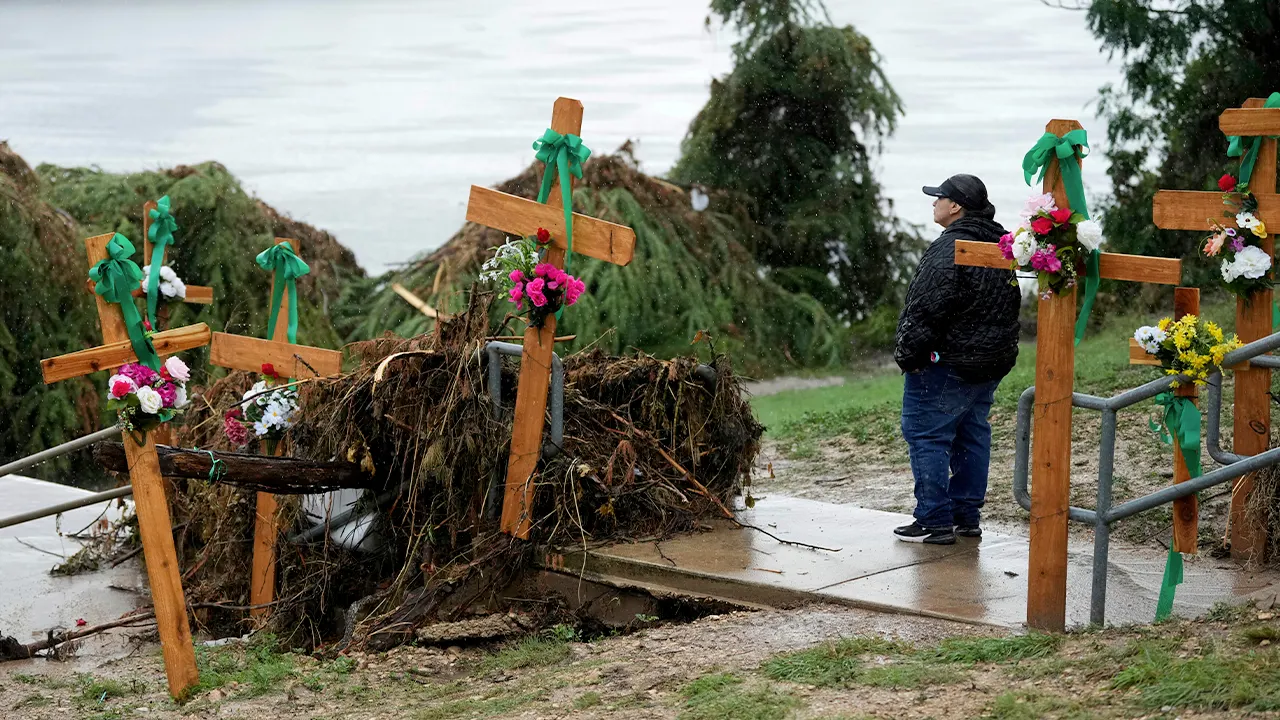
The July 4th floods transformed the typically serene Texas Hill Country into a landscape of destruction in mere hours. The disaster’s unexpected nature contributed to its high death toll, as families celebrating the holiday had little to no warning before waters rose to life-threatening levels. Emergency services, while responding heroically, were simply overwhelmed by both the scale of the disaster and its rapid onset. In the aftermath, communities throughout the region established memorials like the “River of Angels” in Kerrville, honoring those lost. The recordings of these 911 calls now serve as both a painful reminder of the tragedy and important documentation that could inform future emergency preparedness efforts. Weather experts have noted that such extreme flooding events may become more common due to climate change, making the lessons learned from this disaster all the more crucial for vulnerable communities across America.
The release of these 911 calls has reopened wounds for many survivors and families of victims, but also provided a form of collective catharsis for a community still healing. They stand as testament to both the fragility of life and the profound courage ordinary people can demonstrate in extraordinary circumstances. In the calls, we hear strangers risking their lives to save children swept downstream, parents desperately trying to protect their families, and neighbors checking on the elderly even as their own homes flooded. Five months later, rebuilding continues throughout the region, but the emotional recovery may take generations. Many survivors still struggle with trauma and survivor’s guilt, while families who lost loved ones face empty chairs at holiday gatherings. The calls, difficult as they are to hear, offer important insights into how communities can better prepare for disasters and remind us all of our shared humanity in the face of tragedy – how in our darkest hours, the connection between a caller and dispatcher, between neighbor and neighbor, can make the difference between life and death.