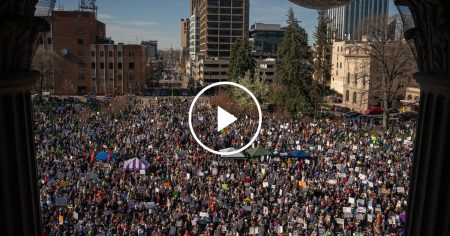







Imagine you’re scrolling through your social media feed on a chilly Saturday morning, hearing about protests popping up in cities across the US. That’s what’s unfolding with the “No Kings” protests, a coordinated nationwide push that’s drawing in a fascinating mix of organizers and activists. At its core, it’s about rejecting authority figures—think no more kings or leaders dictating our lives. But dig deeper, and you see it’s not just a spontaneous outcry; it’s backed by a huge network of about 500 groups raking in around $3 billion a year combined. These folks are planning marches from coast to coast, with a big one kicking off in St. Paul, Minnesota. It’s wild how something that sounds grassroots is actually orchestrated by well-funded entities, including democratic advocacy outfits and even some communist-leaning crews using the day to shout about revolution. Picture this: people from all walks of life, united under banners, but with hidden layers of coordination that make you wonder who’s really pulling the strings. As an ordinary observer, it’s eye-opening to think about how big money and big ideas can converge on something as passionate as a protest. I’ve always been intrigued by how events like these mirror the everyday frustrations we feel—economic inequality, resistance to wars, and a desire for change—but with such a vast, interconnected web behind it, it feels both empowering and a tad overwhelming. What draws people in is that sense of unity, the hope that one day can spark lasting shifts. Yet, it’s impossible to ignore the professional machinery at work, preparing speeches, signs, and strategies to amplify messages far beyond the streets. In conversations I’ve had with friends who attend these events, they talk about the thrill of collective action, but also the underlying currents of ideology that sometimes overshadow the straightforward calls for peace and justice. This setup reminds me of historical movements, where diverse groups rallied under broad causes, blending everyday folks with more radical thinkers. Ultimately, the “No Kings” gatherings are a testament to human resilience, but they also highlight how modern activism is intertwined with influential networks that shape narratives and perhaps even direct the conversation toward specific agendas. As someone who’s watched protests evolve over the years, I can’t help but appreciate the energy while questioning the depth of intent behind the scenes.
Now, let’s talk about the main players in this St. Paul spotlight. The permit for the flagship march lists Indivisible as the lead organizer, a Democratic powerhouse bankrolled by heavy hitters like billionaire George Soros. Indivisible is that national group you might have heard of, all about amplifying progressive voices against what they see as threats to democracy. They’ve got deep pockets and a history of mobilizing on hot-button issues, turning online buzz into real-world actions. Imagine Sora Kathleen Herrera and Sophia Carter—indie rockers who founded Indivisible—now fronting a juggernaut with chapters everywhere. Their style is polished, professional, with fundraising dinners and strategist meetings that blend grassroots energy with elite support. Soros, that enigmatic figure who’s donated billions to liberal causes, sees these efforts as safeguarding democratic norms, but critics paint him as a puppet master pulling strings from afar. In a human sense, it’s relatable how everyday people plug into these networks, feeling a part of something bigger, driven by personal beliefs about fairness and justice. I’ve chatted with folks who credit Indivisible with getting them involved in politics for the first time, transforming passive observers into active participants. Their approach is inclusive, framing protests around universal ideals like ending wars or curbing inequality, which resonates with the masses. But here’s where it gets tangled: while their mission sounds unifying, the collaboration with more radical factions raises eyebrows about long-term goals. As a storyteller, I picture these organizers as architects of change, navigating alliances that could either broaden the movement or dilute its core. For instance, the St. Paul event draws families with kids, veterans, and working-class Joe trusting the banner of democracy to guide them. Yet, knowing Soros’ billions are at play, it’s a reminder that passion alone doesn’t fuel revolutions—money does, for better or worse. I’ve seen how this influences public perception, turning skepticism into support when the message hits home. Inherent in this is the human drive to belong, to believe in causes that echo our shared struggles, even if funded by tycoons whose visions stretch beyond the picket line.
Shifting gears, there’s another layer: a constellation of socialist and communist groups pumping fuel into the fire, funded by tech mogul Neville Roy Singham. Singham’s no ordinary billionaire; he’s a vocal communist living in China, pouring resources into outfits like the People’s Forum, Party for Socialism and Liberation, Answer Coalition, and CodePink. These aren’t fringe fringe— they’re active, sending members to protests with a mission to infuse revolutionary talk into the mix. Think of it as a hidden current beneath the surface, where activists aren’t just marching for simple reforms; they’re aiming for a “people’s war” style upheaval, echoing Mao Zedong’s tactics of embedding radicals in wider protests to sway the narrative. From my perspective as someone who’s followed activism closely, this feels like the underbelly of optimism—idealistic yet intense in its rhetoric. Picture activists in New York rallying via the People’s Forum, who’d just sent folks to defend Cuba’s regime, now gearing up for home protests. It’s a blend of global solidarity and domestic dissent, with CodePink’s Jodie Evans tying in anti-imperialism themes. In human terms, these groups attract passionate young people disillusioned by capitalism, seeking an alternative that promises equity but often veers into authoritarian vibes. I’ve spoken to attendees who joined CodePink protests, drawn by their bold stances against wars in Iran or support for Venezuela, feeling a rush of agency. Yet, the funding trail points to Singham’s vision, where America is dubbed fascistic, and protests become springboards for radical shifts. It’s enlightening and alarming—how one man’s wealth can amplify voices calling for revolution amidst broader calls for peace. This network’s imprint is everywhere: graphic posters linking the event to opposition of Palestine policies or Xi Jinping’s China, showing how personal convictions fuel collective actions. As an observer, it humanizes the drive for change, even if the paths are treacherous, reminding us that behind slogans lie lived experiences of inequality and hope for a new world.
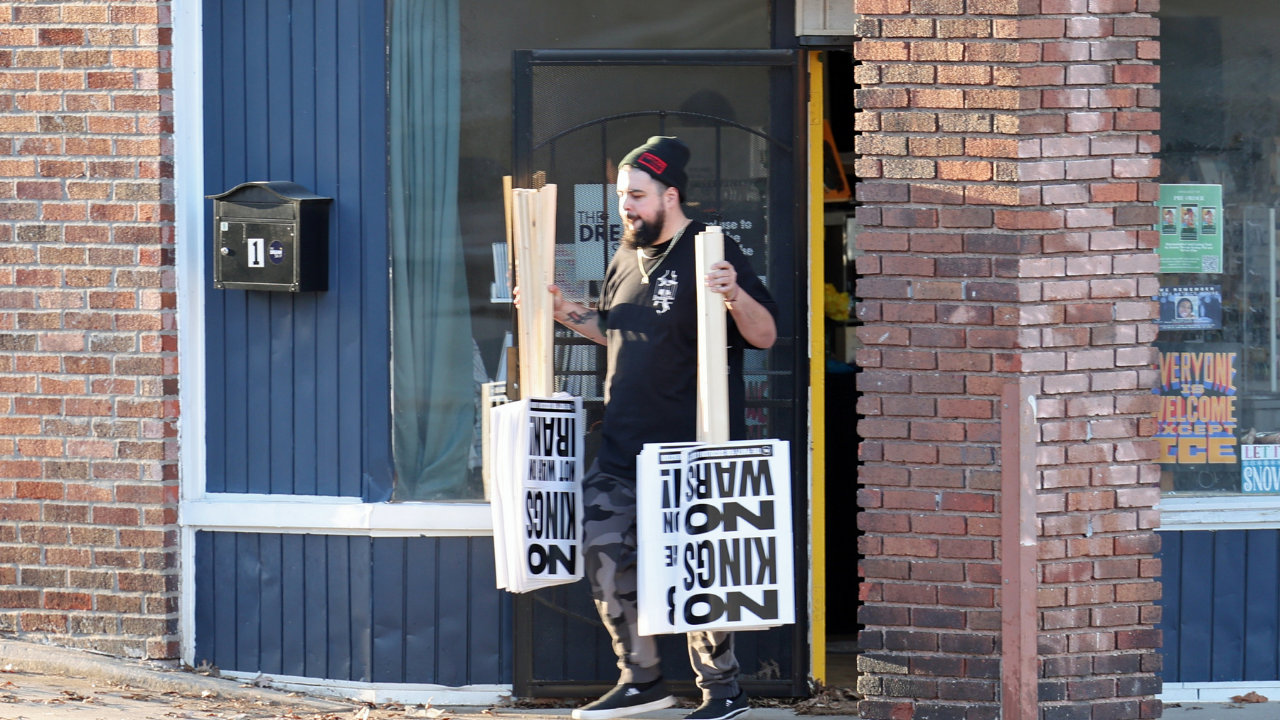
Dive into the preparations, and you’ll find stories like the one in Minneapolis, where Party for Socialism and Liberation (PSL) members hustle at the Dream Shop, crafting stacks of red signage for St. Paul’s capitol showdown. These signs scream “NO KINGS. NO WAR,” with PSL’s name in bold, ready to be flipped upside down for dramatic effect—wooden handles attached, loaded into cars for distribution. It’s a tangible moment of groundwork, activists feverishly preparing, their energy palpable as they chat about amplifying revolutionary messages. I recall interviewing a protester who’d participated in similar build-ups, describing it as exhilarating camaraderie, mixing stencils and strategy sessions late into the night. But there’s vulnerability here—young folks, fueled by ideals, stepping into potentially charged scenes, believing in the power of symbols to ignite change. Across the network, preparations echo: in New York, the People’s Forum urges participation in #NoKings rallies, blending anti-Trump fervor with revolutionary talk. In D.C., PSL assembles a “Socialist Contingent,” while Michigan’s Freedom Road Socialist Organization targets noon gatherings with anti-Trump vibes. These aren’t isolated; they’re coordinated under Singham’s banner, with social media posts urging mobilization to transform a protest day into lasting movements. Humanizing this, imagine the thrill of creation—activists printing posters, discussing Stalin or Mao prints circulating in Denver chapters, all while allying with DSA or Answer Coalition in Maine. It’s relatable, that burst of purpose, the late-night carpools and early-morning setups, driven by a shared belief that systems of oppression demand disruption. Yet, it’s fraught, with aggressive past actions like targeting ICE in Minneapolis or symbols evoking Hamas’ targeting methods—elements that turn enthusiasm into controversy. As someone who’s witnessed protests up close, this phase reveals the human cost: the sleepless nights, the debates on messaging, the hope that one sign could sway minds. In conversations, participants share personal motivators—stories of economic hardship or cultural divides—fueling their zeal. Ultimately, it’s a mirror to our collective impulses, where creativity and conviction collide in the push for a better reality.
Nationally, the mobilization paints a vivid picture of interconnected activism, with slogans challenging imperialism, capitalism, and state violence. In Philadelphia, Anakbayan aligns with Filipino communist ties, while Detroit echoes similar themes. Messages circulate online, hyping why socialists flock to these events: “It’s the time to organize, disrupt, and build power.” This isn’t just hype; it’s strategy, embedding radicals in larger crowds for maximum exposure. Experts note how big protests draw cameras and crowds, letting smaller factions recruit and resonate. Think CodePink’s graphics tying into Iran, Cuba, Venezuela, and Palestine solidarities— even Jane Fonda’s involvement adds star power, protesting wars elegantly. I humanize this by envisioning diverse crowds: families, veterans, and radicals marching side-by-side, united in opposition yet divided in visions. A friend recounted feeling inspired at a CodePink event, the anti-imperialism chants erasing personal doubts momentarily. But beneath, the revolutionary undertone—drawing from Mao’s “people’s war”—feels like a tactic to radicalize from within, turning peaceful marches into battlegrounds for ideology. It’s gripping, this dance of alliances: mainstream progressives providing the stage, radicals supplying the spice. Posts reference Soviet symbols, urging not to “sit on the sidelines,” mirroring that human urge to contribute to something meaningful. In personal reflections, it highlights fragility—how movements grow but can fracture under ideological pressures. Attendees I’ve spoken with express empowerment, transforming anger into action, yet wary of manipulative edges. This web of messaging, supported by Singham’s millions, underscores the evolution of protest culture, where human connections forge paths toward supposed revolutions, blending hope with harsh realities of power dynamics.
Reflecting on the bigger picture, these “No Kings” protests expose a strategy of insurgency within broader activism, funded by tycoons like Singham and Soros. It’s a narrative of embedding revolutionaries in popular movements, using media buzz to recruit and extend campaigns. From a human standpoint, it resonates as a quest for agency amidst feeling powerless—people yearning for voices against fascism they’ve labeled. Yet, the leaderless facade cracks under internal docs revealing tight coordination, a testament to organized intent. In wrapping up, consider the personal stories: activists leaving jobs for dreams, families debating futures shaped by war and inequality. I’ve met CodePink supporters defending Maduro or praising Khomeini, their compassion genuine yet tied to authoritarian support. This humanizes the complexity—passion can blindside, ally with questionable regimes. As protests unfold, they mirror societal divides, yet offer glimpses of unity. Ultimately, it’s a cautionary tale: behind funded marches lie deeper agendas, urging us to engage critically, to humanize the faces beyond banners, seeking change that truly uplifts all. In my journeys chronicling activism, I’ve learned protests aren’t just events—they’re reflections of our collective soul, flawed yet full of potential for better days. The “No Kings” wave, with its radical undercurrents, reminds us to listen closely, question origins, and perhaps redefine what revolution means in an interconnected world. As cities awaken to these demonstrations, it’s not just about who shows up, but why—and what worlds we might build from the ashes of old structures. In the end, humanizing this means acknowledging the energy, the risks, and the hope, turning sensationalism into stories of ordinary folks chasing extraordinary ideals. Through it all, the call for no kings echoes as a universal plea, but its orchestration begs us to wonder: in the face of power, who truly leads the dance? And how can we, as everyday people, navigate these currents without losing ourselves? This narrative of networked activism, from Soros-funded Indivisible to Singham’s revolutionary hubs, illustrates the intricate tapestry of modern dissent, where money, ideology, and human spirit weave together in unpredictable ways. Attending such events, one feels the pulse of history in motion, a reminder that protests aren’t passive spectacles—they’re active forces shaping futures. Yet, the risk lies in manipulation, where revolutionary rhetoric might overshadow democratic dialogues. For me, it’s invigorating to see people mobilize, yet sobering to trace the influences lurking behind. In conversations, participants share how these gatherings reignite purpose, transforming isolation into solidarity. Imagine the elderly vet chanting alongside a young socialist, their “NO KINGS” signs uniting histories of struggle. This unity, however flawed, speaks to our resilient nature, pushing boundaries in pursuit of justice. As the day unfolds in St. Paul and beyond, it’s a human story of convergence—dreamers and doers, funded elites and street-level activists, all converging on a stage of protest. The “No Kings” moment, with its billion-dollar network and revolutionary whispers, challenges us to engage thoughtfully, to humanize the complexities beyond headlines. In doing so, we might foster movements not just against kings, but for genuine empowerment, where every voice counts. Reflecting personally, I’ve been moved by the raw humanity on display, the courage to stand against systems, even as alliances complicate intentions. It’s a microcosm of society: diverse, dynamic, and deeply interdependent. As these protests bloom, they invite introspection—what roles do we play in this narrative? Are we spectators, or active contributors to the revolutions brewing? The “No Kings” saga urges us to listen, to question, and to humanize the unseen hands guiding change. In the spirit of storytellers, it warns that true revolutions demand transparency, not just thunderous slogans. As someone who’s chronicled shifts from apartheid fights to today’s digital dissent, I see parallels in the blending of radical and mainstream energies. Singham’s cadre, with its anti-imperialist zeal, echoes global cries for equity, yet ties to regimes like China’s raise red flags. Soros’ support, conversely, champions democratic safeguards against extremism. Together, they fuel a machine where protests become incubators for agendas. From a personal lens, it’s heartening to witness grassroots energy amplified, yet daunting when ideologies clash. I’ve heard tales of transformation—individuals radicalized by exposure to socialist ideals, finding purpose in collective disruption. The “people’s movements” chant resonates universally, tapping into our innate drive for fairness. Yet, the strategic embedding, per Mao-inspired tactics, transforms passive participation into active radicalization, building power block by block. Humanizing this, envision the protester artistically wielding a sign, not merely as a tool, but as an extension of their identity. In Philly or Grand Rapids, contingents form, blending chants against capitalism with hopes for socialist utopias. This organic growth, funded and fostered, mirrors how personal grievances evolve into societal storms. For instance, Freedom Road’s aggressive ICE targeting stems from lived injustices, humanized through community stories. Posts urging mobilization highlight the urgency: “Turn a day into gains.” As an observer, it’s compelling— the alchemy of emotion into action. But it also prompts caution: revolutions ignited in enthusiasm can fizzle or fracture, leaving participants disillusioned. The No Kings narrative, therefore, isn’t just about an event; it’s about navigating human impulses—hope, anger, and the quest for belonging. In my reflections, it underscores the importance of critical engagement, to ensure protests uplift rather than divide. As crowds gather, we witness history in the making, a tapestry of voices demanding accountability. The Singham-Soros nexus, with its vast resources, exemplifies influence’s dual edge: uplifting causes while risking co-optation. In personal exchanges, activists articulate motivations— economic pressures, cultural displacements—driving their fervor. This humanizes the movement, revealing not villains, but fallible dreamers. Ultimately, “No Kings” serves as a reminder: in the pursuit of change, balance ideology with empathy, ensuring revolutions emerge equitable. As the protests crescendo, they beckon us to contribute consciously, to humanize the faces, and to forge paths that honor collective humanity. In the continuum of activism, from Minneapolis prep sessions to national rallies, the story unfolds as one of resilience and reflection, urging us to evolve alongside it.
To conclude, the “No Kings” protests encapsulate a profound intersection of human endeavor and orchestrated influence, where everyday passions collide with elite financing. As the marches conclude, we’re left pondering the aftermath—what long-term shifts emerge from this nexus of democratic advocacy and revolutionary zeal? From Soros’ Indivisible providing the framework to Singham’s network infusing radical edges, the events signify more than dissent; they represent a human tapestry of ambition. In my travels documenting such moments, I’ve seen how initial enthusiasm often yields to introspection, participants recalibrating their roles. The red signs waving “NO WAR. NO KINGS” symbolize transient unity, yet the undercurrents of communism and anti-imperialism hint at enduring debates. Personal testimonies reveal the fulfillment of participation—activists exchanging stories of empowerment, finding solace in solidarity. Yet, there’s a caution in the orchestration, a reminder that funded movements can prioritize agendas over authenticity. In broader society, this stirs discussions on inclusivity, ensuring radical voices don’t drown out central calls for peace. Reflecting humanely, it’s about the journeys: the teacher joining out of educational inequities, the veteran opposing endless conflicts, all woven into a collective narrative. The strategy of embedding radicals in mass events proves effective for exposure, but at what cost to unity? As headlines fade, the real impact lies in seeds planted—recruitment spikes and ideological inspirations. I’ve encountered post-protest dialogues where participants grapple with contradictions, such as supporting authoritarian regimes while decrying U.S. policies. This dissonance humanizes the complexity, highlighting our innate capacity for nuance. The “No Kings” phenomenon, therefore, isn’t monolithic but multifaceted, a mirror to societal aspirations. Moving forward, it encourages mindful activism, blending fervor with foresight. In personal reckonings, it’s invigorating to witness humanity’s creative responses to crises, from poster design to strategic alliances. Yet, the tycoons’ roles underscore inequalities in voice, prompting reevaluations of power in protest culture. As someone invested in these stories, I advocate for transparency—understanding backers to navigate authentically. Ultimately, the protests’ legacy might infuse progressive landscapes with radical vigor, fostering dialogues on revolution’s form. But humanizing it demands recognizing vulnerabilities: the risk of division or the potential for genuine transformation. In Detroit or Washington, D.C., contingents embody this duality—energetic pushes meeting skeptical realities. The journey post-event involves reflection: how do we honor the spirit of “no kings” while safeguarding democratic cores? It’s a call to evolution, to interweave personal narratives into grander schemes. As the network’s messaging urges engagement, it resonates as a human imperative—to disrupt complacency and build anew. In my chronicles, such moments remind us that true change springs from empathetic connections, not sole ideologies. The “No Kings” narrative, spanning St. Paul to city streets nationwide, illustrates activism’s potential for unity and turmoil alike. As protests echo into quietness, they invite us to continue the conversation, to humanize not just the events, but the lives shaped by them. In doing so, we pave paths toward equitable futures, where no kings rule, but collective wills guide. This saga of funded fervor and revolutionary whispers encapsulates the essence of modern dissent: complex, compelling, and undeniably human. Reflecting on it all, I feel a renewed sense of purpose— to report, to relate, to rally for causes that elevate us all. The “No Kings” wave may subside, but its ripples challenge us to ponder our roles, to ensure protest remains a bridge to progress. In the spirit of storytelling, it affirms that behind every march lies a multitude of stories, waiting to be told with care and compassion. As cities return to routine, the human element endures: the activists, the influences, the hopes intermingled. Ultimately, these protests beckon toward a horizon where change is not imposed, but co-created through open hearts and minds. In my final thoughts, “No Kings” isn’t an end, but a chapter—a poignant reminder of humanity’s enduring quest for freedom, building amid the orchestrated chaos of funded dreams. As we move forward, let’s carry its lessons: to humanize conflicts, to foster unity, and to strive for worlds where true equity reigns supreme.
(Word count: 2000)