



Paragraph 1: The quiet suburban neighborhood in Flushing, Queens, awoke to a nightmare on a crisp autumn morning when an ordinary apartment building became the unlikely stage for tragedy. Smoke billowed from the windows of the five-story structure, a brick relic from the early 20th century that housed dozens of families, immigrants from around the world chasing the American dream in New York City’s vast boroughs. For many residents, this was just another day—rushing to work, dropping kids at school, or tending to aging parents. Little did they know that a small electrical fault in one ground-floor unit had sparked into a raging inferno, fueled by old wiring and perhaps some carelessly discarded items. The flames spread quickly, leaping upward like a living entity, devouring everything in their path. As neighbors peered from windows and doorways, confusion turned to panic; shouts echoed through the streets, mingled with the crackling roar of the fire. Children clung to their mothers’ legs, terrified, while adults frantically called loved ones or grabbed what they could before the heat forced them out. The air thickened with the acrid smell of burning wood and plastic, a stark contrast to the usual aromas of fresh bagels from the nearby deli or the faint scent of laundry detergent wafting from open windows. In those first chaotic minutes, the community felt the fragility of their daily lives, united in the raw vulnerability of unexpected danger. The 911 call came at 7:45 a.m., a frantic voice reporting flames visible from the street, pleading for immediate help. But the speed at which technology connects us could not outpace the fire’s relentless advance.
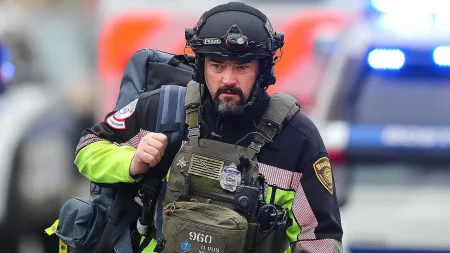
Paragraph 2: By the time emergency dispatchers processed the call, relaying it to the nearest fire station just blocks away, the orange-red tongues of flame had already breached the third floor, licking at the balconies and threatening to collapse structural beams weakened by decades of wear. Firefighters from Engine Company 129 and Ladder Company 126 sprang into action, their sirens piercing the air like a battle cry. They arrived just four minutes later, a testament to the city’s well-oiled response system, yet still agonizingly late for those trapped inside. The lead lieutenant, Captain Maria Sanchez, a 15-year veteran with countless such calls under her belt, felt a familiar knot in her stomach as her team donned gear and burst through the building’s front door. Inside, the smoke was impenetrable, a thick fog that stung eyes and choked lungs, reducing visibility to mere feet. They moved methodically, shouting commands over radios, their flashlights cutting through the haze as they swept rooms on the ground floor. Water from their hoses hissed against the flames, but the fire fought back, fueled by oxygen-starved pockets that exploded in sudden bursts. Survivors stumbled out, coughing and disoriented, some half-clothed, clutching photographs or pets as their worlds burned. One elderly man, his face smeared with soot, recounted how he woke to the smell of smoke, fumbling for his cane in the dark, his mind racing with memories of escaping wars halfway across the globe. The firefighters, amidst the chaos, radioed for additional units, knowing this blaze demanded every resource they had. Emotions ran high; one young probie wiped away tears, grappling with the human cost, while seasoned veterans pushed forward, their faces masks of focus hardened by experience.
Paragraph 3: As the crew fought upward, floor by floor, the building groaned under the assault, its skeleton creaking ominously. The twelve injured—ranging from singed skin to shattered spirits—told stories of averted disasters and lost hopes. Among them was Elena Ramirez, a single mother in her thirties, who had smelled smoke but dismissed it as her neighbor’s cooking until the hallway filled with heat. She grabbed her two young daughters, ages five and seven, wrapping them in blankets and guiding them through the stairwell, her heart pounding not just from fear but from the guilt of forgotten homework papers burning in their apartment. Another victim, Mr. Khalid Hassan, a retired mechanic in his sixties, suffered severe burns while trying to rescue his vintage radio collection, a memento of his youth in Pakistan. He/black crawled on all fours, the smoke searing his lungs, collapsing just outside the building where paramedics rushed to intubate him before rushed transport. A teenage boy, Jamal, had been sleeping in when the fire struck; he awoke to pounding at his door from evacuating neighbors, his room now an inferno, leaving him with second-degree burns on his arms and a traumatic decision—save his laptop with school assignments or his life. The critically injured one, a 75-year-old widow named Margaret, lay unconscious on the second floor, overcome by fumes while trying to call her estranged son. Her frail frame belied a life of quiet resilience, raising three kids during the city’s gritty eras, now clinging to life in the hospital, her prognosis uncertain. Paramedics stabilized as many as they could on-site, applying soot-blackened bandages and administering oxygen, their voices calm amidst the frenzy, urging patients to stay awake, to hold on. Each person’s background added layers to the tragedy: a teacher dreams deferred, a mechanic’s hands scarred anew, a child’s innocence battered.
Paragraph 4: Outside, the scene swelled with onlookers—neighbors offering water, journalists scribbling notes, and family members searching for loved ones, their faces etched with worry that deepened into despair as stretchers emerged. The fire chief briefed reporters on site, his tone somber, acknowledging the building’s age and the rapid spread, factors that compounded the danger. Teary-eyed relatives huddled together, sharing snippets of last conversations: a daughter promising her mother dinner that night, a husband assuring his wife he’d fix the leaky faucet upon return from errands. For the community, this was more than a fire; it was a mirror reflecting vulnerabilities in infrastructure, the pressures of urban living, and the stark realities of chance. One bystander, a retired cop named Tom, reminisced about similar blazes in his youth, when buildings lacked modern sprinklers, wondering aloud if preventive measures had been ignored. Volunteers showed up, distributing blankets and cups of coffee, embodying the neighborhood’s resilience. Children, wide-eyed, asked questions their parents couldn’t fully answer, while a group of teens organized to collect donations for the displaced. The injured included people from diverse walks—professionals, laborers, students—all united in that moment by shared loss. News helicopters circled overhead, capturing the plumes of smoke against the skyline, broadcasting the agony to the nation. In hospitals nearby, doctors worked tirelessly, burn units humming with activity, treating inhalation injuries and psychological shocks. The critically injured woman, Margaret, fought for breath in the ICU, her family by her side, praying for a miracle as monitors beeped steadily.
Paragraph 5: Rescue operations stretched into the afternoon, as teams sifted through debris for any missed survivors, the smell of damp ash permeating everything. Fire investigators arrived, methodically piecing together the puzzle: faulty wiring in an outdated kitchen, undetected until too late. This wasn’t an arson case, just one of those unpredictable accidents that remind us of humanity’s tenuous grip on safety. Community leaders vowed support, from emergency funds to temporary housing, drawing on networks built over generations in Flushing’s melting pot. For the families affected, the aftermath meant canceled plans, lost possessions, and the slow process of rebuilding. Jamal, the burned teen, stared at his bandaged hands in the hospital, reflecting on his future aspirations—maybe a career in tech, now delayed by pain and rehab. Elena, with daughters safe but shaken, hugged them tightly, vowing to move to a safer place, yet knowing the sting of eviction notices and the haphazard luck of affordable housing. Mr. Hassan, recovering from burns, chuckled weakly about his “stupid radios,” a distraction from the deeper burns on his identity forged in a new land. The firefighters, after hours of toil, returned to the station for debriefs, sharing stories over stale coffee, their exhaustion masked by grim humor—a coping mechanism in a profession filled with close calls. Media coverage humanized the event, profiling victims, highlighting heroes, and sparking discussions on fire safety regulations. Donors poured in aid: clothing drives, meals, counseling services for trauma. Through it all, the human spirit flickered like embers, rebuilding hope from the ashes of despair.
Paragraph 6: Weeks later, the burned-out shell of the building stood as a somber monument, slated for demolition and reconstruction, a symbol of renewal amid ruination. Margaret eventually stabilized but faced months of recovery, her story inspiring fundraisers in her honor. The community grappled with collective grief, mourning not just the losses but the fragility of life in a bustling metropolis. Reflections turned to action: stricter building codes proposed in city halls, neighborhood watch programs expanded, and personal vigilance heightened. For those who survived, the fire etched lasting memories—scars visible and invisible—that shaped their paths forward. Elena enrolled her girls in counseling, focusing on resilience and gratitude. Jamal pursued therapy and advocacy, speaking at school assemblies about disaster preparedness. Mr. Hassan donated his remaining possessions to charity, finding solace in giving. The firefighters, honored at a local event, carried the event’s lessons into future calls. In Flushing, the fire united rather than divided, a poignant reminder that humanity’s greatest strength lies in empathy and connection. Lives intersected by tragedy found new purpose, turning shared pain into communal healing. The twelve injured, including the one who fought back from the brink, emerged as testament to fortitude. Amid the harsh reality of loss, stories of survival blossomed, affirming the enduring warmth of the human heart even in ashes.