





Dramatic Escape and Capture: Three Georgia Inmates’ Harrowing Journey to Florida
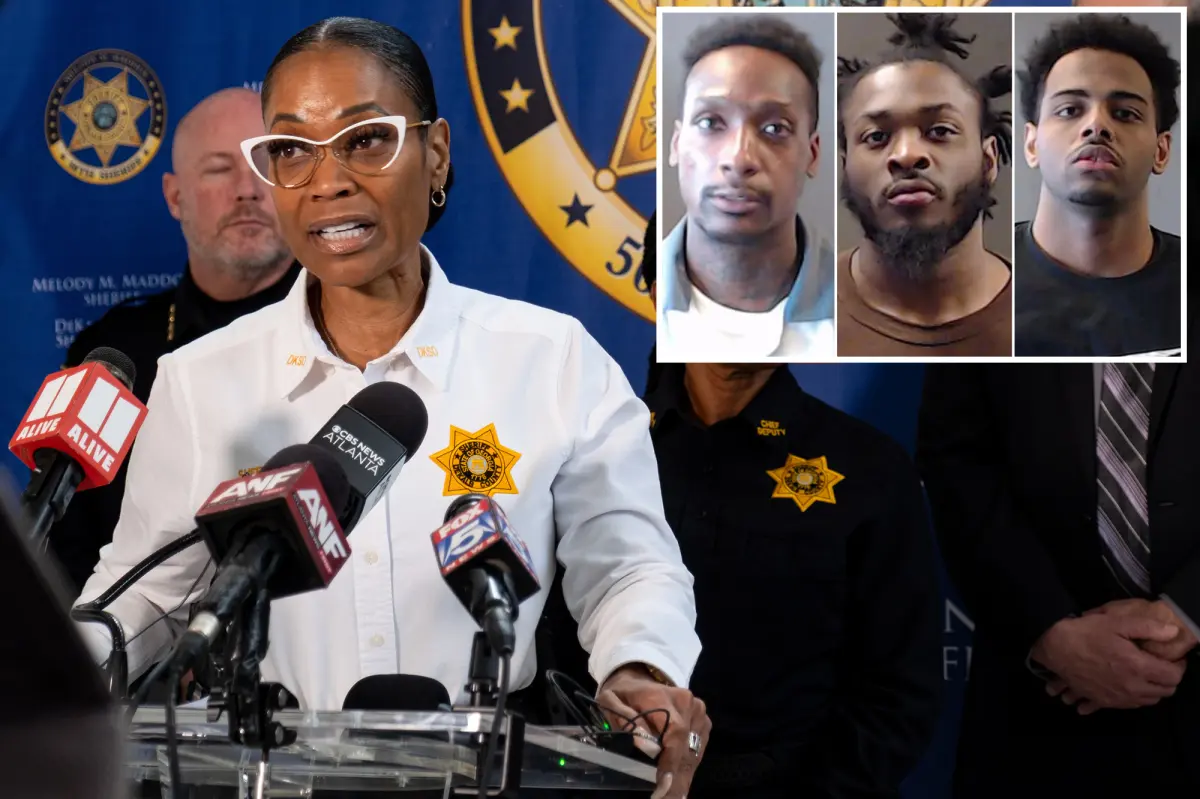
In an alarming sequence of events that reads like a crime thriller, three inmates who escaped from the DeKalb County Jail in Georgia embarked on a dangerous interstate journey that culminated in their recapture in Florida. Yusuf Minor, 31, Noad Yohannes, 25, and Stevenson Charles, 24 – all incarcerated for violent offenses – broke out early Monday morning, though jail officials only discovered their absence during a routine security check later that day. What followed was not just a prison break but a terrifying ordeal for an innocent Lyft driver who became an unwitting hostage in their desperate bid for freedom. The incident highlights both the audacity of the escapees and the resilience of their victim, while raising serious questions about jail security and the safety protocols of rideshare services.
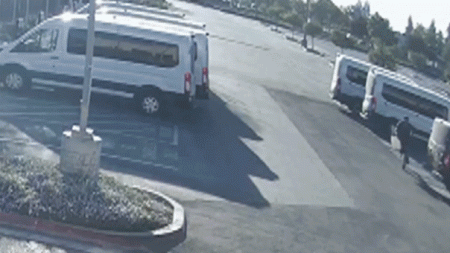
The escape plan began to unfold when the trio managed to break out of the DeKalb County facility and were picked up by a waiting vehicle. According to court documents, they made their way to Minor’s girlfriend’s residence, where she allegedly ordered a Lyft for them – a decision that would soon put an unsuspecting driver in grave danger. When the female Lyft driver arrived and took them to their requested Atlanta location, the situation took a violent turn. The men allegedly strangled her with a rope, bound her, and forced her into the back seat of her own vehicle. What should have been a routine rideshare trip transformed into a kidnapping as the three fugitives took control of her car and began their journey southward. Throughout this ordeal, the driver remained tied up in the back seat, enduring repeated threats as the escapees drove toward Florida. In one heart-wrenching detail from the court documents, the woman attempted to escape during a stop in Florida but failed, after which the threats against her reportedly became even more violent.
The backgrounds of these three men paint a disturbing picture of individuals with violent tendencies. Charles was in custody on charges of murder and attempted robbery – the most serious offenses among the group. Minor was facing charges of armed robbery and possession of a firearm during the commission of a felony, while Yohannes had been incarcerated for simple assault, arson, and committing unlawful acts of violence while in a penal institution. Their criminal histories make the ordeal of the kidnapped Lyft driver all the more terrifying, as she was trapped with three men known to be capable of significant violence. After what must have felt like an eternity to the victim, the fugitives arrived in Miramar, Florida, where they reportedly used the driver’s credit cards to secure a short-term rental home. This financial transaction would prove to be a crucial misstep in their escape plan, creating an electronic trail that authorities could follow.
The breakthrough in capturing the escapees came when authorities flagged the unauthorized charges on the Lyft driver’s credit cards. This, combined with license plate reader technology that connected the victim’s vehicle to both the kidnapping and the jail break, gave law enforcement the leads they needed. When Florida police attempted to conduct a felony traffic stop, the vehicle fled, setting off a chase. At this point, only Charles and Yohannes were in the car – they eventually abandoned the vehicle and attempted to escape on foot. According to court documents, Charles somehow acquired a loaded 9mm handgun during this phase of their flight, adding another dangerous element to an already volatile situation. Despite their efforts, both men were apprehended, narrowing the search to finding Minor and, most importantly, the kidnapped Lyft driver.
The final act of this dramatic escape played out at the rental property where police had tracked the suspects. Initially, officers received no response when attempting to contact anyone inside. Eventually, they established communication with Minor through an open window and instructed him to exit the residence. In a moment of intense relief for everyone involved in the search, the kidnapped Lyft driver emerged from the property unharmed, with Minor surrendering immediately behind her. An official commented on the aftermath, noting that “As you can imagine, the Lyft driver is very traumatized by this” – an understatement considering the ordeal she had endured. The woman’s physical safety, while paramount, is just one aspect of her recovery; the psychological impact of being kidnapped and threatened for hours by violent fugitives will likely remain with her long after the physical experience ended.
The three escaped inmates were subsequently booked into the Broward County Jail in Florida, with holds placed on them by the U.S. Marshals’ Office. They now face the prospect of additional charges related to their escape, kidnapping, and other crimes committed during their flight. While court documents don’t specify when they might be extradited back to Georgia, their capture brings closure to a dangerous situation that spanned multiple states and put many lives at risk. The case raises important questions about jail security protocols that allowed three violent offenders to escape undetected, as well as potential safety measures for rideshare drivers who can find themselves in vulnerable situations. For now, law enforcement officials can be credited with a successful resolution to a potentially tragic situation, while the Lyft driver’s ordeal serves as a sobering reminder of how quickly ordinary circumstances can turn extraordinary and dangerous.