

Midtown Shooting Leaves Young Man in Critical Condition
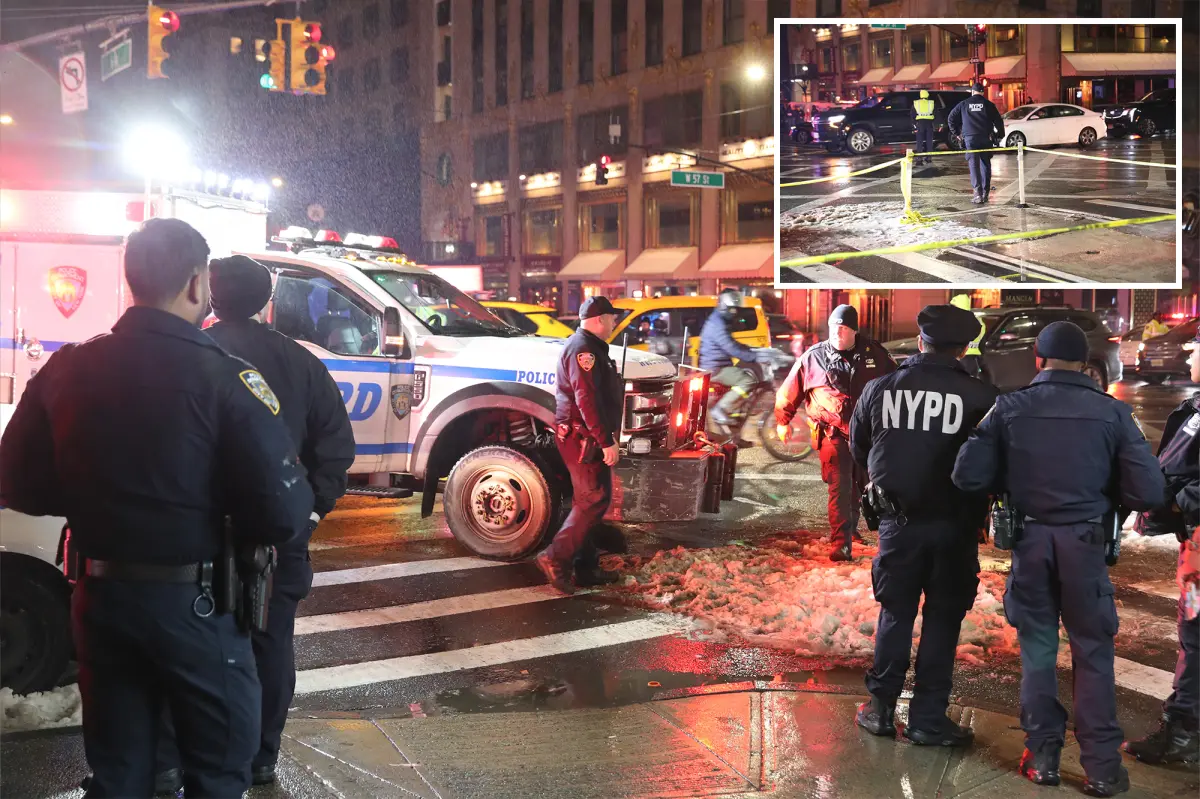
In the heart of New York City, where the lights never dim and the streets never sleep, a violent incident disrupted the usual Sunday night bustle. A 27-year-old man was shot in the chest at the intersection of 57th Street and Sixth Avenue in Midtown Manhattan around 10:13 p.m., according to the New York Police Department. The victim, whose identity has not been released to the public, now fights for his life in a hospital bed while police search for the perpetrator who vanished into the city’s sprawling landscape after pulling the trigger.
The shooting occurred at one of Manhattan’s busiest crossroads, an area typically filled with tourists, theatergoers, and locals even on a Sunday evening. This intersection, just blocks from Central Park and surrounded by high-end shopping destinations, restaurants, and corporate towers, is not commonly associated with violent crime, making this incident particularly jarring for residents and visitors alike. As the gunshot echoed through the canyon of buildings, the normal rhythm of city life momentarily froze before erupting into chaos and confusion.
In a testament to the quick response of New York’s finest, responding officers made the split-second decision to transport the critically wounded man to Mount Sinai West hospital in an NYPD vehicle, rather than waiting for an ambulance. This rapid action may have given the young victim his best chance at survival, though he remains in critical condition. Medical professionals at Mount Sinai West, a facility accustomed to treating trauma victims, are now working tirelessly to stabilize the man whose ordinary Sunday night turned into a fight for survival in an instant.
The shooting has left the community with more questions than answers. Authorities have not yet revealed what circumstances led to the violent confrontation, whether the victim was the intended target, or if this was a random act of violence. The area where the shooting occurred is typically under heavy surveillance, with security cameras mounted on nearly every corner, leading investigators to hope that footage might provide crucial clues about the shooter’s identity and the events leading up to the gunfire. Meanwhile, detectives are canvassing the area, interviewing potential witnesses, and piecing together the fragmented story of what transpired.
As news of the shooting spreads throughout the city, it serves as a stark reminder of how quickly violence can erupt even in areas considered relatively safe. For many New Yorkers, incidents like these resurrect concerns about public safety that have ebbed and flowed throughout the city’s history. Community leaders and residents alike are likely to demand increased police presence in the area, while city officials may face renewed pressure to address gun violence that occasionally pierces the veneer of New York’s renaissance as a safe major metropolis. The shooting stands in contrast to the significant overall reduction in violent crime the city has experienced in recent decades.
The hunt for the shooter continues as detectives follow leads and analyze evidence. The perpetrator’s ability to disappear into the night speaks to the challenges law enforcement faces in a dense urban environment, even with modern technology and surveillance. As the victim receives medical care, his family – who have not been identified in reports – likely gather at his bedside, their lives irrevocably changed by a moment of violence. Meanwhile, New Yorkers will do what they’ve always done in the face of such incidents: remain vigilant while refusing to let fear dictate their daily lives in a city that, despite occasional tragedies, continues to represent opportunity, diversity, and resilience to millions who call it home.