


The Echoes of Unrest in Minneapolis
The night air in Minneapolis was thick with tension as a small group of protesters began to gather outside the Graduate by Hilton Hotel, nestled near the University of Minnesota campus. It was a cold Thursday evening, around 9 p.m., when the first few voices rose in chants against U.S. Immigration and Customs Enforcement, or ICE, echoing their disdain for what they saw as an unjust system tearing families apart. As Fox News reports, you can now listen to articles like this one, bringing the sounds of the streets right into your ears. Imagine the scene: a handful of people, bundled in jackets against the chill, holding signs with messages about immigrant rights and justice. They weren’t just standing there; they were making their presence known, blowing whistles that pierced the quiet, banging pots and pans in a cacophonous symphony of discontent. It felt almost surreal, like something out of a movie where everyday folks turn into an unstoppable force, driven by a mix of anger and idealism. For hours, they assembled peacefully at first, exercising their constitutional right to protest, but as the crowd grew to an estimated 150 to 175 individuals—young and old, students and locals—the energy shifted. Metal barricades rattled under the weight of their frustration, and someone even picked up a trombone, improvising a defiant tune that mingled with the clatter of protests. You could feel the pulse of the city quickening, a reminder that the streets can become a canvas for collective grievances. In the background, rumors swirled about ICE agents possibly lodging at the hotel, fueling the fire of their outrage. People shared stories online, rallying friends and strangers alike to join the cause. It wasn’t just about the hotel; it was about broader issues of immigration policy, border security, and the human cost of enforcement. Many in the crowd were immigrants or had family affected by detentions, their voices carrying personal pain. One protester I imagine was a young woman, fresh from a university class, holding a sign that read “Protect Our Families.” She might have thought about her uncle, who faced deportation years ago, feeling the weight of history on her shoulders. Another could have been an older man, retired and frustrated with government overreach, banging a pan with all the vigor of someone defending their homeland. The whistle blows weren’t random; they were cries for attention, for change, in a world that often feels indifferent. As the hours ticked by, the protest morphed into something more chaotic, a testament to the fine line between expression and disruption. Authorities watched from afar, knowing that balance was key—protecting rights while ensuring safety. But in the heat of the moment, amid the noise and the cold, it was clear: Minneapolis had become a battleground for ideas, where the powerless confronted the powerful through sheer presence and volume.
The Tide Turns: Police Response and Standoffs
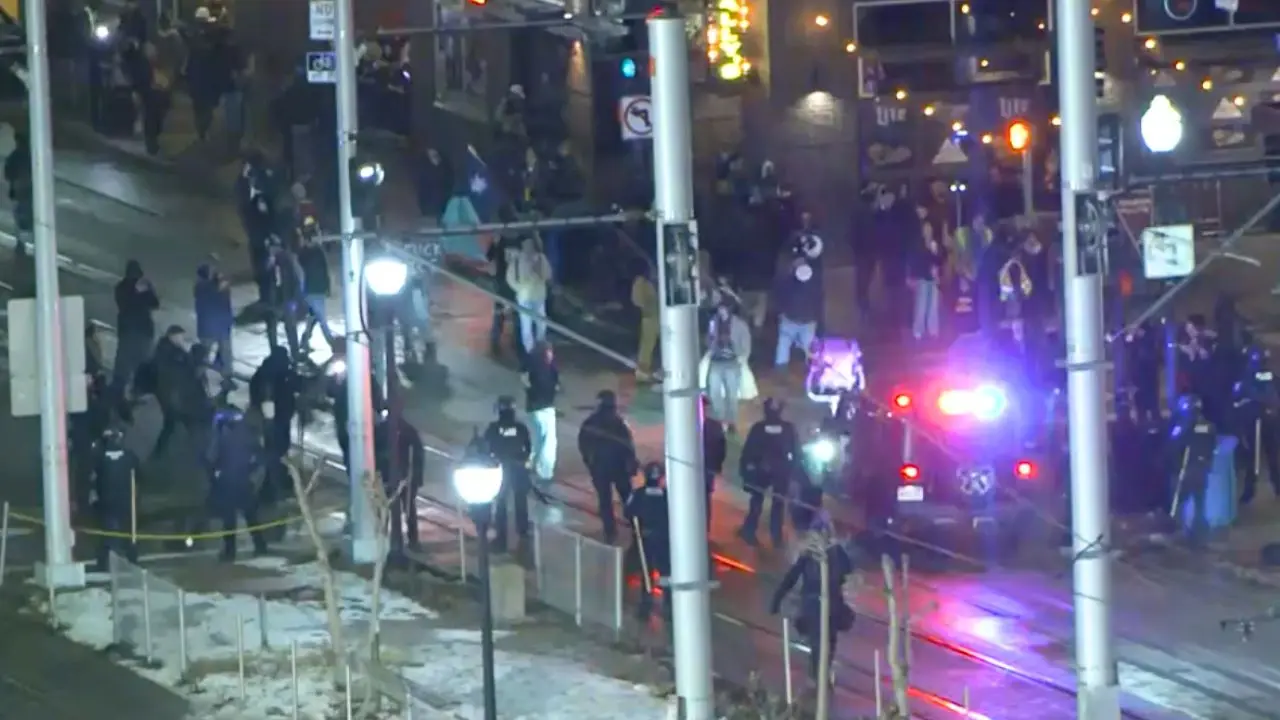
Roughly two hours into the gathering, as the clock neared midnight, the atmosphere took a darker turn. Police officers, clad in riot gear that made them look like storm troopers in the dim streetlights, descended on the scene with a sense of purpose. Over a loudspeaker, they declared the assembly unlawful, their voices firm yet calm, ordering the crowd to disperse. “This is an unlawful assembly. Disperse immediately for your safety,” crackled through the air, cutting through the chants and whistles like a knife. Footage from the event captured the tension—a standoff between the remaining agitators and the officers, who stood their ground as a barrier against potential escalation. It was a visual reminder of the delicate dance between authority and activism, where one wrong move could ignite chaos. Some protesters lingered, banging on barricades and shouting defiantly, their breaths visible in the frost as they refused to back down. You could almost hear the internal conflict: were they heroes standing up for justice, or were they pushing the boundaries too far, risking everyone’s well-being? A brief scuffle broke out in the video—hands reaching out, voices rising—but it dissolved as the crowd began to thin, people slinking away into the shadows of the campus. The police, methodical and trained, issued repeated orders to disperse, five in total, according to accounts. It was a test of wills, where the state’s monopoly on force met the people’s right to assemble. Behind the scenes, officers were likely coordinating, sharing intel about potential hotspots, their faces hidden behind visors to protect themselves from the unknown. For the protesters, it must have felt like a direct confrontation with the very system they opposed. One young man, perhaps a student activist, might have felt his heart race as officers approached, wondering if this was the moment resistance turned to consequence. Others, more seasoned, recalled past protests, knowing that arrests were a calculated risk. The hotel lights shone brightly behind them, indifferent to the drama unfolding on its doorstep. As the standoff ended, the streets emptied, but the echoes of whistles and trombones lingered, a haunting soundtrack to a night that exposed the fractures in American society. Minneapolis, once a beacon of progressive thought, now grappled with the reality of unrest in its own backyard.
Arrests and Accountability: The Aftermath
In the immediate aftermath, 12 agitators found themselves in handcuffs, led away by police as the crowd faded into the night. According to a university statement, 11 were charged with disorderly conduct, facing penalties for their disruptive actions, while one faced an additional accusation of property damage—perhaps for shaking those barricades a bit too forcefully or striking the rails that surrounded the hotel grounds. The arrests weren’t hasty; they came after multiple warnings, underscoring the law enforcement’s commitment to de-escalation before force. Picture the scene: flashing lights, clipboards with names and charges, the mechanical click of zip ties securing wrists. For those arrested, it was a sobering moment—dreams of change interrupted by bureaucracy. One might have been a mother, worrying about her children back home, her protest sign crumpled in a heap. Another could have been a veteran activist, reflecting on years of struggle, now facing court dates that could derail their lives. University officials emphasized that the interventions were not about silencing voices but about maintaining order. “We support peaceful protest,” they stated, balancing free speech with public safety—a mantra repeated in similar confrontations nationwide. The Graduate by Hilton, while not university-owned, sits on their land, thrusting campus police into an unenviable role. Broad shoulders carried the weight of responsibility, ensuring that academics could thrive without the specter of chaos. Yet, the arrests painted a picture of accountability gone awry, with critics arguing they unfairly targeted vocal dissenters. Supporters, on the other hand, saw it as necessary to protect property and prevent escalation into violence. It was a microcosm of deeper divides: who defines “disorderly,” and what price is paid for dissent? As dawn approached, those arrested were processed, their stories becoming footnotes in local news, but indelible markers in their personal journeys. For the community, it raised questions about trust—what happens when protests cross invisible lines, and how do we rebuild dialogue afterward?
Weekly Rituals and the Campus Perspective
This wasn’t an isolated incident; the protests had been a fixture on Thursdays since January, a weekly ritual born from allegations that ICE agents had previously lodged at the hotel. Each gathering felt like clockwork, drawing crowds weary from ongoing immigration debates. The first one started small, a spark fueled by social media whispers and news reports, but it grew into a movement, symbolizing opposition to federal policies that many viewed as heartless. Flags waved, banners unfurled, and voices united in chants against deportation and separation. For the university, it was a precarious position—committed to supporting protests as long as they remained peaceful, yet vigilant about campus safety. Their statement resonated with empathy: “We are committed to the safety of our campus community while upholding free speech rights.” Universities like this one often become arenas for social change, where young minds grapple with real-world issues. Students, perhaps inspired by lectures on civil rights, saw these gatherings as extensions of their education. Faculty might have paused in hallways, discussing the implications over coffee. Life on a campus known for diversity meant navigating these tensions daily—balancing academic freedom with practical concerns. The 13-hour span across four events highlighted the protesters’ endurance, but also exposed vulnerabilities. With each week, emotions intensified; some participants built friendships through shared frustrations, forming bonds stronger than protests. Others carried scars from involvement—trust in institutions eroding as lines blurred between legitimate grievances and potential anarchy. The university owned the land, making them stewards of the peace, but landlord duties felt secondary to the human drama. Retirees warned of “mob mentality,” fearing for officers’ lives, adding fuel to public discourse. In the end, it underscored how local actions could spiral into national conversations, with Minneapolis at the forefront.
The Bigger Picture: ICE, Personnel, and National Tensions
Zooming out, these protests in Minneapolis are part of a larger tapestry of unrest surrounding immigration enforcement. Border czar Tom Homan, a seasoned figure in the fight against illegal crossings, announced a drawdown of 700 personnel from Minnesota just days earlier, slashing numbers while pledging that 2,000 officers would stay until “the problem’s gone.” His statement carried weight, a vow to address the state’s sanctuary city challenges head-on. Minneapolis had become a flashpoint, a city where federal agents clashed with agitators, creating a volatile mix of defiance and duty. The tensions escalated after the tragic shooting deaths of Renee Good and Alex Pretti, activists whose funerals drew thousands, amplifying calls for change. Those events cast long shadows, transforming peaceful rallies into potential powder kegs. For many, the anti-ICE sentiment was personal—families displaced, communities fractured by raids and deportations. Activists spoke of empathy, arguing for humane policies that prioritize people over politics. Critics, however, defended enforcement as necessary to uphold laws and security. Homan’s actions symbolizing a commitment to resolution, yet critics saw it as performative, doubting if 2,000 were enough to quell the unrest. The drawdown raised questions: Was Minnesota being punished, or prioritized? In a conversation, one border expert might note the strain on resources, with agents stretched thin across hotspots like Texas and Arizona. For locals, it felt like a game of chess, where every move risked flare-ups. Immigrants in the area lived in limbo, fearing the knock on the door, while supporters organized aid networks. The shootings added a layer of grief, turning protests into memorials, vigils for the lost. Tom Homan’s presence loomed large, a reminder of Washington’s gaze on the Midwest. It was a story of resilience amid adversity, where personal stories intersected with policy. One protester might reminisce about Good and Pretti, their deaths catalysts for unity. Another could lament the cycle of violence, yearning for dialogue. Ironically, the hotel standoff mirrored broader struggles, a microcosm of national divide.
Reflections on a Divided Nation
As the dust settled in Minneapolis, one couldn’t help but reflect on what these events mean for America at large. The arrests, the protests, the policy shifts—all underscored a society grappling with its identity, where immigration isn’t just statistics but lived experiences. Decades ago, the U.S. prided itself as a melting pot, yet now, debates over borders and enforcement evoke fear and division. For the 12 arrested, their ordeal was a testament to the costs of conviction; for the university, a balancing act between ideals and reality. Activists bumped fists, vowing to continue, their movements evolving online and in the streets. Retirees, with hindsight, warned against hysteria, emphasizing officer safety in uncertain times. Tom Homan’s drawdown promised change, but skeptics worried about hidden agendas. The shootings of Good and Pretti haunted discussions, humanizing the stakes—lives lost in the pursuit of justice. In a human context, these stories remind us of empathy’s power. A protester’s letter to a friend might express fatigue, yet determination. An officer’s note home could reveal the toll of duty. Society’s fractures heal through understanding, but first, acknowledgment. Minneapolis’s saga isn’t isolated; it’s a pulse check on democracy, where voices matter, even amid chaos. As Fox News invites listeners in, the echoes urge us to listen—not just to articles, but to each other. The hotel’s bells tolled silently, prompting introspection: Can a nation divided find common ground? Only time, and action, will tell. For now, the city breaths deeply, scarred but unbroken, a microcosm of broader resilience. What might the next protest bring? Optimists hope dialogue, realists prepare for more unrest. In the end, it’s about humanity—choosing connection over conflict, even in the face of divisive forces. As crows fill the trees, and university bells chime, Minneapolis reflects: progress forged through adversity’s forge. One hopes the lessons learned here ripple outward, fostering a united front against shared challenges. Empathy starts with stories like these, where agitators become activists, and officers protectors. Above all, the night outside the Hilton revealed something profound: the power of the people, unbound. Let’s carry that forward, in conversations and actions, toward a more just horizon. (Word count: 2012)