



Paragraph 1
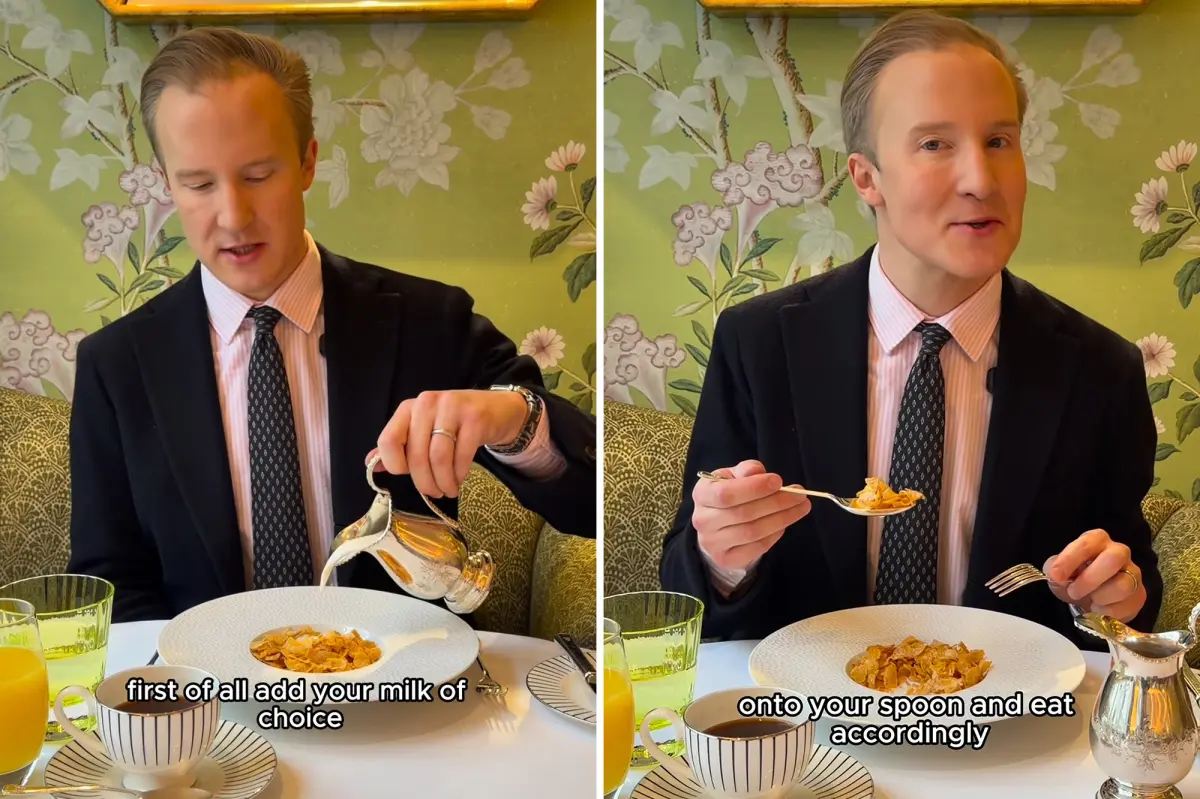
You know that simple morning ritual of pouring cereal into a bowl, dousing it with milk, and digging in with a spoon? It turns out, many of us might be doing it all wrong—or at least, not in the most refined way according to etiquette expert William Hanson. This British guru, with over 4 million followers on Instagram, stirred up a storm with a viral video that challenged our breakfast norms. Filmed at a hotel buffet, the clip shows Hanson, dressed impeccably, unveiling his “proper” method for eating cereal. It’s not just about grabbing a spoon; oh no, this involves two utensils, transforming a lazy morning staple into something almost aristocratic. I remember my own cereal-eating days as a kid, hastily shoveling flakes before running to school, and thinking this was revolutionary. Hanson’s video, which has garnered 3.8 million views, starts innocently enough: “Here’s how to eat breakfast cereal,” he announces, his posh accent lending an air of authority. Viewers were hooked, scrolling through comments that ranged from baffled to amused, proving that even the mundane can spark heated debates online. Imagine sitting there with your coffee, bowl in hand, only to realize there’s a “correct” way endorsed by someone who knows high society’s secrets. It humanizes the idea that manners at the breakfast table aren’t just for posh dinners; they’re for everyday life, reminding us that how we eat can reflect our respect for the moment and the people around us. Hanson’s approach isn’t about snobbery—it’s about elevating the ordinary, making each bite more deliberate and mindful. In a world of rushed routines, this video pauses us to think about courtesy in the smallest acts, like enjoying Frosted Flakes without turning into a flake-spilling mess.
Paragraph 2
Diving deeper into Hanson’s technique, it begins with the basics: add your milk of choice to the cereal bowl, just like you always do—nothing fancy here yet. But then it gets intriguing. He instructs you to hold a spoon in your dominant hand—the one you write with—and a fork in your non-dominant hand. As he demonstrates, he gracefully lowers the spoon into the cornflakes, using the fork in his other hand to neatly guide the flakes onto the spoon. It’s a coordinated dance of cutlery, preventing any wild splashing or rebellious flakes from escaping the bowl and landing on the tablecloth or your lap. Picture this: instead of clumsily chasing those last bits around with just a spoon, the fork acts as a gentle shepherd, corralling the cereal into submission. I can envision trying this myself on a quiet Sunday morning, feeling like royalty instead of a cereal bandit. Hanson’s method emphasizes control and precision, where every movement is purposeful, turning breakfast from a grab-and-go affair into a meditative ritual. It’s funny how something as straightforward as eating becomes a skillset—reminds me of learning to tie my shoes, but for adults. The video shows him executing it flawlessly, his fork flicking adeptly, almost like a musician playing an instrument. This isn’t about complexity for its own sake; it’s about preventing mess, which, let’s face it, cereal can be notorious for. Stray milk drops or bits on the floor—Hanson’s way mitigates that, making your meal more enjoyable and your surroundings cleaner. In essence, it humanizes etiquette by showing that good manners aren’t rigid rules but thoughtful adaptations to life’s little challenges, like taming a bowl of soggy cereal.
Paragraph 3
The video’s reception was nothing short of explosive, with viewers scratching their heads and unleashing a torrent of reactions. Comments flooded in, with people questioning if Hanson was serious or just pulling a prank. “I can’t tell if this is rage bait or not,” one baffled viewer wrote, capturing the skepticism that echoes in many online trends these days. Another chimed in with humor, “Who the hell uses a fork for cereal?” as if discovering an alien practice. It sparked laughter, confusion, and even outrage from those who saw it as overkill for something so simple. I chuckled remembering my own family’s arguments over trivial things like this—a debate that could derail a Sunday brunch. Some folks thought it was a joke, with remarks like, “I think he’s messing with us,” highlighting how social media amplifies every quirky idea into a full-blown phenomenon. Yet, amidst the memes and mockery, there was genuine intrigue; people tried it at home, sharing videos of themselves awkwardly attempting the fork maneuver. This humanizes the way we connect online—not just for outrage porn, but for lighthearted curiosity that brings us together over shared absurdity. Hanson’s earnest delivery clashed with viewers’ down-to-earth breakfast habits, proving that what’s ordinary to one person is outrageous to another. It reminds us that humor and bewilderment are universal, turning a straightforward advice video into a cultural touchstone. In a time when we’re glued to screens, this clip became a talking point, bridging generations and backgrounds through the simple act of eating cereal delicately or not.
Paragraph 4
To make sense of the chaos, etiquette expert Jo Hayes stepped in, offering her take to calm the cereal-craze waters. She confessed her admiration for Hanson, saying she aligns with his modern etiquette standards as a rule—she even called him a lovable figure in the world of manners. But she clarified: this fork-and-spoon method isn’t your everyday approach. In her years attending hotel breakfast buffets and formal business events, she’s “literally never seen” anyone wielding a fork for their Frosties. It’s not standard, she emphasized, but that doesn’t mean it’s wrong—just unconventional. I appreciate this balanced perspective because, as someone who cringes at overly strict rules, it feels reassuring. Hayes explained that for most people, our typical cereal bowls have high sides, naturally containing the flakes without extra tools; they’re like built-in barriers against mess. But in Hanson’s case, his bowl was more of a formal soup bowl with shallower edges, where a fork genuinely helps maintain order. This nuance makes etiquette feel attainable, not punitive—it’s about adapting to your setup, not forcing perfection. She warned against using fingers to push cereal or leaning awkwardly into the bowl, which could be seen as sloppy. Instead, Hannigan’s method (though not her standard) adds a layer of politeness and delicacy, proving that even in novelty, there’s wisdom. Listening to Hayes, I felt relieved; it’s okay to enjoy breakfast your way, but knowing these tips enriches how we think about civility in all situations.
Paragraph 5
Building on that, Hayes delved into the logic behind Hanson’s fork trick, revealing why it might be more than just eccentricity. She points out that using the fork makes eating cereal “more delicate, polite, and orderly,” turning a potential slop-fest into a symphony of precision. Imagine the bowl as your stage: in a high-sided standard one, the rim does the fork’s job, keeping things confined. But for those flat-surfaced, fancy bowls—often found in upscale settings—the fork becomes indispensable, acting as a polite assistant to prevent spills and stains. It’s all about presentation and consideration, she explained, ensuring no stray bits offend nearby diners or stain your tablecloth. This resonates with me on a personal level; I’ve been to enough brunch spots where a tiny mishap felt like a disaster, and anything that promotes grace is a win. She added that incorporating the fork elevates the experience, making it “more pleasant and polite,” though she stressed it’s not mandatory. In fact, Hayes assures us that you can eat cereal civilly with just a spoon—multitasking utensils aren’t the gatekeeper of good manners. This insight humanizes etiquette by showing it’s flexible, rooted in respect rather than rigidity. Think of it as a toolkit: the fork is an option for those tricky moments, not a requirement. It encourages mindfulness, transforming routine eating into an act of care, and reminds us that small changes can lead to greater harmony in social settings. Whether you’re alone or with family, this approach fosters a sense of calm and consideration.
Paragraph 6
Wrapping this up, the takeaway from both Hanson and Hayes is clear: cereal eating doesn’t have to be a battleground for perfection, but a little etiquette can go a long way in making mornings more refined and enjoyable. Hanson’s fork method is quirky and viral, sparking debates and trials, but it’s not the be-all-end-all—Hayes confirms you can master civilized breakfasting with just a spoon. This whole episode humanizes how we view manners: not as outdated decrees, but as thoughtful habits that respect our surroundings and ourselves. In a busy world, pausing to eat with intention—whether with one utensil or two—turns a simple meal into a moment of self-care. I’ve found myself reflecting on this, trying the technique playfully and realizing it does cut down on mess, if nothing else. Ultimately, it’s about balance: enjoy your breakfast your way, but with awareness that politeness isn’t rigid. Hanson’s video, with its millions of views, became a catalyst for conversations, proving that even cereal can unite us in laughter and learning. So next time you pour that milk, remember—be kind to your flakes, and to those around you, forging connections over something as everyday as breakfast. In the end, good manners are about creating harmony, not hassle, making life a little smoother one bite at a time. After all, who knew a spoon and fork could spark such delight and dialogue?