





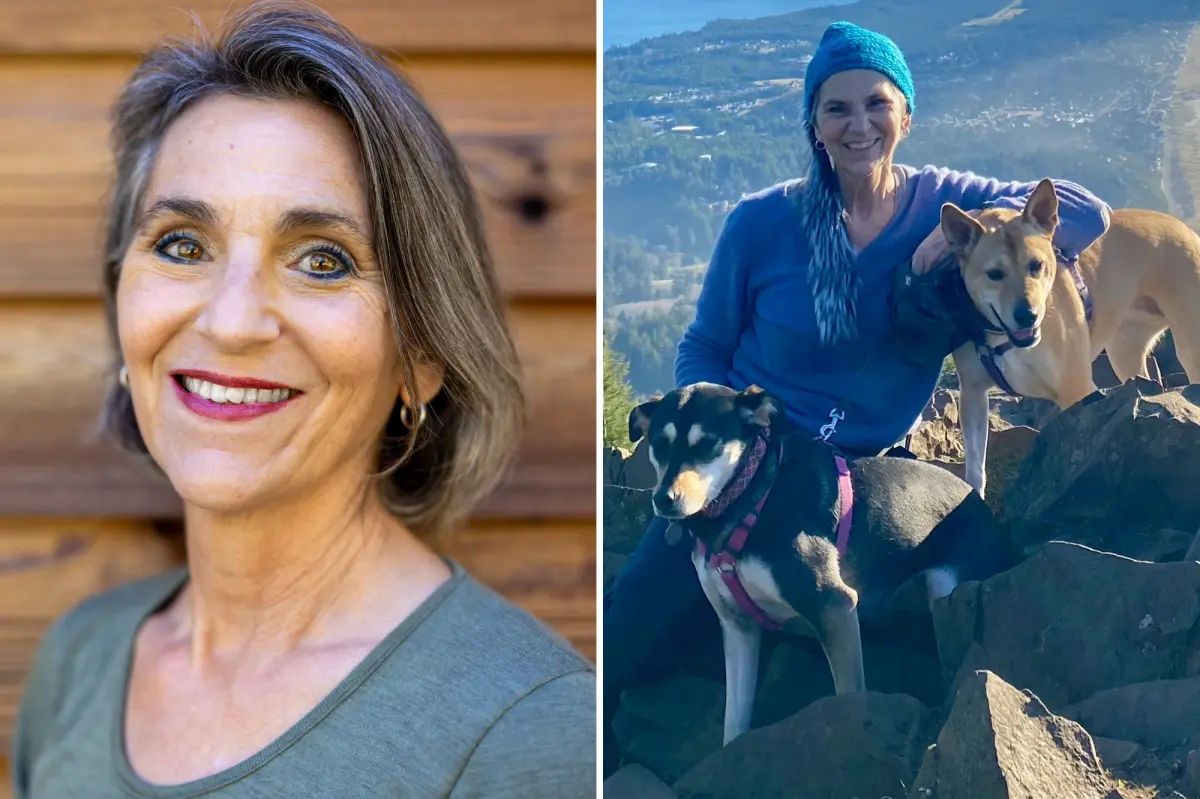
Louisa Peck’s story reads like something out of a thriller movie, where the ordinary suddenly collides with the extraordinary, forcing a lifelong shift in perspective. Born and raised in Oregon, Louisa was the quintessential city girl in her early 20s, drawn to the pulsing nightlife of New York City. She partied hard, embracing the freedom of the era with drinks flowing unchecked and substances that promised escape but delivered danger. Nights blurred into days as she danced in crowded clubs, laughing with strangers and chasing thrills that masked deeper voids. But one fateful evening, everything changed. A laced drug—something she thought was just another high—pushed her over the edge. Her body seized in a grand mal fit right on the club floor, her heart stopped, and she slipped into a coma-like state. Surrounded by flashing lights and pounding music, her friends panicked, calling for help, but Louisa was already worlds away, embarking on a journey no amount of nightlife could have prepared her for.
In that eerie, death-like realm, Louisa felt her spirit detach, shooting upward like a cartoon character yanked into the sky by an invisible force. The club below faded into nothing as she soared, weightless and filled with a sense of wonder. She landed in what she describes as a lush, otherworldly place—a serene landscape where her physical form dissolved, replaced by pure consciousness. There, she could fly effortlessly, gliding through ethereal spaces and reconnecting with generations past. Her ancestors greeted her with an outpouring of joy, their spirits warm and inviting, honoring her arrival as if she’d come home. It was a reunion steeped in love and acceptance, contrasting sharply with her earthly indifference toward her family’s history. Louisa recalls feeling honored, even though she’d never bothered to learn about them before—her life was too consumed by the present. This blissful encounter, timeless and profound, defied the boundaries of logic, imprinting itself as something undeniably real, not a fevered hallucination caused by her overdose.
Eventually, a stern voice pierced the tranquility, pulling her back to reality with the words, “You can’t stay; you’re not done yet.” Louisa awoke gasping, the club’s bartender pressing down on her chest with CPR, sweat on his brow as he saved her life. Disoriented and shaken, she waved off the ambulance that arrived, stubborn and defiant even in fragility. Clutching her dignity, she flagged down a taxi and stumbled home, determined to bury the memory. It was easier to pretend it was nothing—a blackout from too much partying than to confront the monumental shift it represented. Her spirit, she says, had been altered forever, like a circuit board fried and rewired. Friends chalked it up to exhaustion, but Louisa sensed something deeper brewing. Days turned to weeks, and normalcy shattered when eerie sensations began surfacing, subtle at first, then overwhelmingly vivid. It was as if her brush with death had unlocked a hidden door in her mind, flooding her with abilities she never asked for and couldn’t ignore.
The changes manifested in haunting ways, starting with sightings that chilled her to the core. While walking a beach in Oregon shortly after her NDE, Louisa spotted the ghost of an elderly man emerging from a misty swamp, his translucent form trudging as if reliving his final moments. Wide-eyed and terrified, she tried to rationalize it away, but the encounter left her questioning everything. Then came the predictions—a gut-wrenching intuition that unfolded tragically. She foresaw her unborn nephew’s fate, sensing with heartbreaking certainty that he wouldn’t survive full term. Her premonition proved right, deepening her isolation as she grappled with knowledge others dismissed as superstition. Strangers’ names popped into her head before introductions, secrets whispered to her about people she’d just met. It was spooky, empowering, and utterly bewildering for a woman who had always scoffed at anything mystical. As an ardent atheist and materialist, Louisa despised “woo-woo” nonsense, churchgoers, and vague spiritual talk. She prided herself on logic, science, and the tangible world—yet here were these undeniable glimpses into another realm, proving her skepticism wrong through personal evidence.
This internal tug-of-war raged for years, as Louisa tried to suppress her newfound sensitivities, fearing judgment or worse, her own sanity. The paranormal intrusions intruded at inconvenient times: dreams that foretold accidents, voices that guided her away from danger, or the faint outlines of spirits in everyday places like grocery stores or parks. Each event chipped away at her defenses, forcing her to confront the duality of existence. It wasn’t the NDE itself that shattered her worldview, she reflects, but its lingering echoes—the “aftereffects” that eternally linked her to an unseen spiritual plane. Initially resistant, Louisa began journaling these experiences, piecing together a narrative that blended science and soul. She dove into research, seeking explanations from quantum physics to ancient religions, all the while feeling isolated in a world that viewed her story as fringe. Yet, these powers also brought purpose; she used them quietly to help others, offering comfort to grieving families or nudging people toward safer paths. Emotionally, it was exhausting—a constant negotiation between denial and acceptance—and she often wondered if trading her old life for this was worth the trade.
Now, at 65, Louisa Peck looks back with a mix of humility and gratitude, her youthful recklessness a distant memory overshadowed by profound wisdom. She attributes this transformation not to punishment for her partying days, but to a cosmic redirection, showing her that intelligence and love are intertwined forces permeating the universe. Life, death, and everything in between are interconnected threads in a grand tapestry, she believes, where spirits linger to guide the living. No longer fighting her gifts, she’s embraced them, channeling her journey into advocacy for those who’ve had similar awakenings. Her book, “Die-Hard Atheist: From NDE Denier to Full-on Woo-Woo,” chronicles this evolution in vivid detail, inviting readers to challenge their own beliefs. For Louisa, the overdose was a catalyst, but the real gift is the deepened empathy it instilled—understanding that our stories, like hers, are bridges between the seen and unseen worlds. She encourages others questioning their paths to lean into the mystery, reminding us that near-death can birth a life richer than imagined. Through trials and triumphs, Louisa’s human journey from skeptic to seer exemplifies resilience, proving that even in the face of the inexplicable, we can find meaning, connection, and a renewed sense of purpose.