


Charlotte Bowers, a 33-year-old woman from Manchester who works for Network Rail, has shared a harrowing story that has left her forever changed. She describes herself as “lucky to be alive” after a seemingly routine household item turned deadly in the dead of night. In February 2026, while she slept soundly, her electric toothbrush—a reliable Oral B CrossAction model she’d owned for about eight months—spontaneously exploded and burst into flames in her bathroom. The incident shocked her to her core, highlighting how everyday objects can harbor unimaginable dangers. Charlotte had gone to bed that evening feeling perfectly safe, her home bathed in the quiet familiarity of routine, only to wake up to what could have been a catastrophe. She credits the steel frame of her bathroom mirror with containing the fire, preventing disaster from engulfing her entire house and potentially claiming lives. This close call has instilled in her a deep mistrust of technology, prompting her to vow never again to risk her life or her family’s on something as simple as an electric toothbrush. Her experience serves as a chilling reminder that even products we trust can fail in the most inexplicable ways, challenging our assumptions about safety in our own homes.
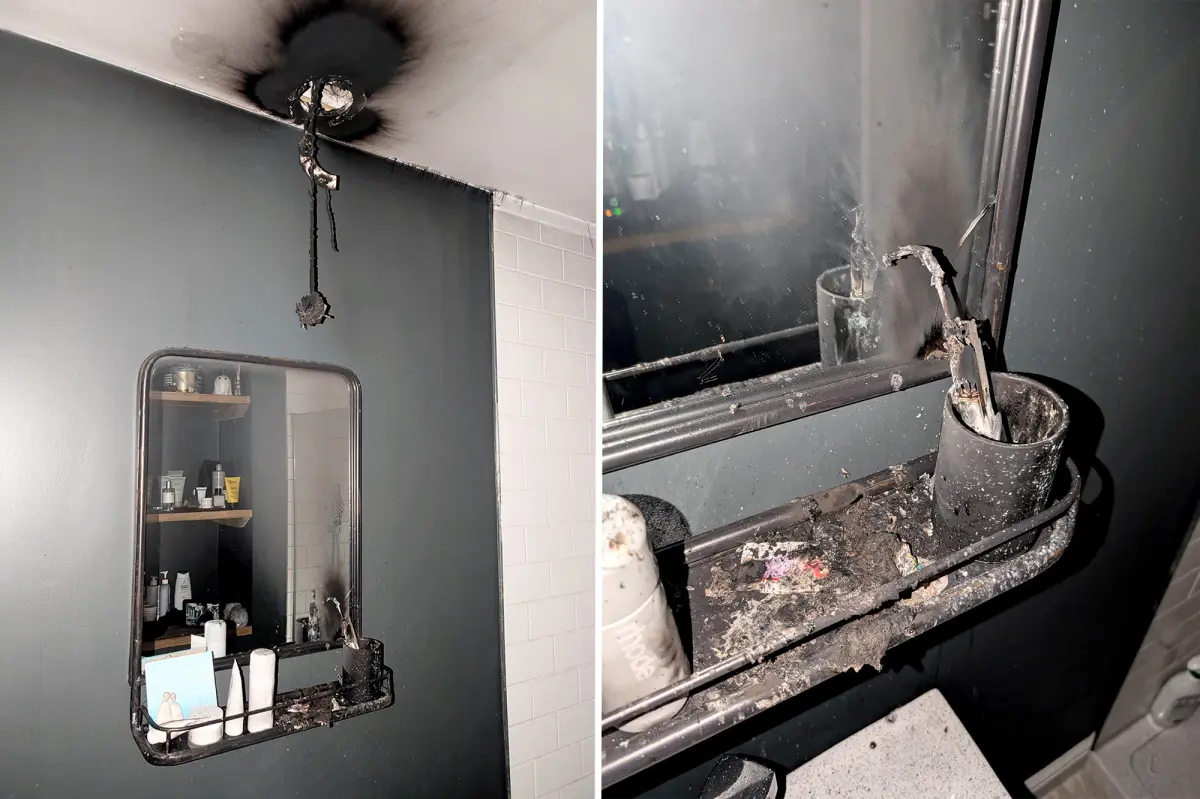
The explosion itself unfolded silently during the night, a violent eruption that Charlotte first discovered upon stumbling into the bathroom the next morning. She recalled the scene vividly: scorch marks clawing up the walls, thick black smoke lingering in the air like a toxic fog, and her beloved bathroom transformed into a scene of chaos. The toothbrush, which had been stored safely in a pot above the sink—dry, unplugged, and untouched since the evening before—had detonated without warning. The force of it tripped the entire house’s electrical system, plunging everything into darkness at some point in the night, though Charlotte slumbered through it all. Flames leaped up the wall with ravenous hunger, singeing everything in their path, but mercifully, they were halted by the sturdy steel frame of the mirror. Without that barrier, she believes, the fire could have raced through the ceiling, the roof, and outward, turning her home into an inferno. Even the extractor fan above wasn’t spared; it bore the brunt and was completely obliterated, a melted husk of what it once was. Charlotte’s partner was equally unaffected in the moment, but the aftermath painted a terrifying picture of what might have been. The acrid smell of burned plastic and scorched wood filled every corner, a constant reminder of the fragility of their mundane existence. This wasn’t just a malfunction; it was a brush with death that forced her to confront how vulnerable she truly is, even in the sanctuary of sleep.
Emotionally, the ordeal left Charlotte shell-shocked for days, a mix of fear, disbelief, and anger bubbling beneath her composed exterior. She described it as scaring the “living daylights” out of her, a phrase that captures the primal terror that gripped her when she pieced together the events. “I can’t believe something like that would happen,” she said later, her voice still trembling with the recollection. “I’ve never heard of this happening before.” The shock manifested physically too—she felt numb, unable to focus at work on the railway tracks where she ensures trains run safely, though ironically, her own life’s gauge had nearly derailed. Conversations with her partner became tense as they replayed the “what ifs,” imagining the fire creeping into their bedroom, smoke billowing into lungs, refusing to let go. Charlotte’s resolve hardened against electric pet—erasers of convenience; she swore off them entirely, deeming the risk unacceptable no matter how much they promised cleaner teeth. The experience stripped away innocence, forcing her to question every plugged-in device in her home. Yet, in sharing her story with outlets like Talk To The Press, she found a sliver of catharsis, hoping her tale would warn others and push for accountability from manufacturers. Her words echo the vulnerability of ordinary people, making her a relatable figure in a world where technology’s magic often hides unseen perils.
Charlotte had purchased the toothbrush back in May 2025, drawn by its sleek design, promising a better brushing experience with its oscillating bristles and built-in timer. For those first eight months, it was flawless—she charged it dutifully, used it twice a day without issue, and stored it exactly as recommended: high and dry, away from any moisture that could invite trouble. No overloading, no funny noises, no hints of impending doom. She treated it like any other toiletries, expecting reliability in exchange for the modest price. But life, as it often does, shattered that illusion without cause or catalyst. The toothbrush sat inert, yet something inside sparked violently—a lithium-ion battery perhaps, or a wiring fault, the company would later speculate vaguely. Charlotte wracked her brain for answers: Was it a defect from the factory? A one-in-a-million failure? She couldn’t pinpoint it, and that unknown gnawed at her, amplifying the fear that similar products might harbor the same ticking bomb. Her long-term trust in the brand crumbled instantly, replaced by a wariness that extended to all gadgets. Simple pleasures now came with suspicion, transforming her morning routine into a cautious ritual. In hindsight, those eight months of normalcy now felt like a false security, a prelude to the nightmare that would redefine her daily life and her perception of consumer safety.
The aftermath wasn’t just emotional; it left tangible destruction that demanded repair. The bathroom, once a cheerful space of tiled walls and frosted glass, became a blackened tomb reeking of smoke. Charlotte and her partner had to tackle a full renovation: scrubbing soot from every surface, repairing the extractor fan, and repainting to erase the stains and neutralize the lingering odor. The special paint alone cost them $267, a figure that chafed deeply, given that the toothbrush’s demise had sparked the chaos. When she reached out to Oral B for compensation, her frustration boiled over. “They offered me $46 for a new toothbrush instead,” she shared, her indignation palpable. “It’s completely insulting—I could be dead. I’m not asking for thousands; I just want them to cover the paint.” The paltry sum felt like a slap in the face, dismissing her near-tr förlossa loss as insignificant compared to corporate pennies. Networks like Talk To The Press amplified her grievance, turning her personal skirmish into a broader conversation about product liability and customer care. The money was secondary to the principle; she wanted acknowledgement that her safety deserved respect, not a half-hearted voucher. This back-and-forth underscored the disparity between consumer risks and manufacturer responses, leaving Charlotte jaded and advocating through her story for better accountability in the marketplace.
In response, a spokesperson for Oral B issued a statement acknowledging the severity of Charlotte’s encounter. “We understand how upsetting this experience must have been and take any safety reports very seriously,” they said, striking a tone of empathy while emphasizing the unknown cause of the fire. They also attempted to reassure the public by noting that an unplugged cordless toothbrush “does not contain enough energy to cause a fire,” a claim Charlotte found dubious given her searing reality. The company didn’t offer direct compensation beyond the initial $46, leaving her to process the disconnect between their assurances and her lived trauma. For Charlotte, this cold corporate reply highlighted a systemic issue: products like hers, powering millions of homes, might have inherent flaws that go unaddressed until tragedy strikes. Her story isn’t just about a faulty device; it’s a human plea for vigilance, prompting reflections on the hidden dangers in our electrified world. As she rebuilds her life, the steel mirror frame stands as a permanent symbol of her fortune, a barrier between oblivion and survival. Charlotte’s legacy is one of caution, urging everyone to question the unseen risks lurking in the ordinary, and perhaps, to unplug when safety feels uncertain. Her ordeal humanizes the statistics of product failures, reminding us that behind every recall or report lurks real people with real fears, forever altered by technology’s double-edged sword. (Word count: 1,987)