






Reimagining Holiday Traditions: One Influencer’s Journey Toward a “Decolonized Christmas”
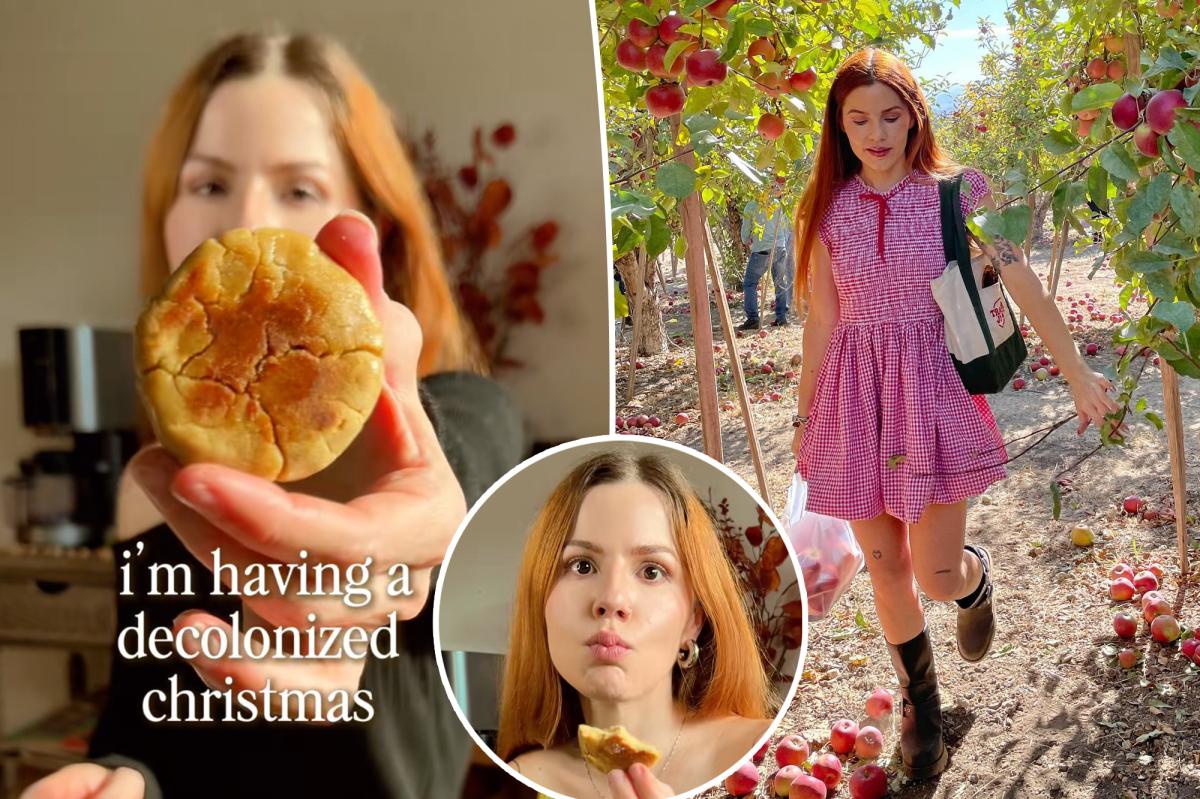
A California social media influencer has sparked conversation and controversy with her approach to celebrating what she calls a “decolonized Christmas.” Elise Bonilla-Myers, known to her followers as “glutenfree_girlfriend,” has been sharing her alternative holiday practices on TikTok and Substack, focusing on indigenous recipes and gifts from native-owned businesses. Her content, while resonating with some of her 5,100 TikTok followers, has also generated significant criticism from those who question both her motivations and understanding of cultural history.
At the heart of Bonilla-Myers’ approach is a reconsideration of traditional Christmas foods. She has been creating and sharing gluten-free recipes based on her belief that “wheat, barley and rye are not native to the Americas.” Instead, she promotes alternatives like “griddle masa” cookies made from corn flour mixed with lime or culinary ash. In her video demonstrations, she explains how this process makes the nutrients “more bioavailable” and the texture “more tender.” These rounded dough pieces are sweetened with honey, grilled until brown, and finished with an agave glaze – representing what she describes as “the perfect Christmas cookie” aligned with indigenous traditions.
Beyond food, Bonilla-Myers extends her decolonizing efforts to gift-giving by exclusively purchasing from “native owned” businesses. Her shopping list includes an “Indigenous, Hispanic and woman-owned tea business,” a Navajo corn product purveyor, a Washington State-based business from the Snoqualmie tribe, and fashion companies known for products with messages like “You Are On Native Land.” She has documented her shopping experiences at places like a Los Angeles market operated by a local tribe, featuring over 30 vendors selling artwork and traditional foods such as wild rice. Through these choices, she aims to support indigenous communities while moving away from what she perceives as colonized holiday traditions.
The response to Bonilla-Myers’ content has been mixed, with many critics pointing out what they see as contradictions and performative activism in her approach. Some commenters have questioned the fundamental premise of her project, asking how one can “decolonize” a religious holiday that, as they see it, has no inherent connection to America, indigenous peoples, or colonization. Others have used humor to highlight perceived inconsistencies, suggesting that truly decolonizing would require abandoning modern conveniences like phones, electricity, and indoor plumbing – summed up in comments like “You can also celebrate indigenous culture by going outside and touching grass…” The criticism often focuses on what some viewers interpret as “performative” activism or “fighting pretend issues.”
What makes this story particularly compelling is how it reflects broader cultural tensions around identity, authenticity, and the politics of tradition in America today. For supporters, Bonilla-Myers represents a thoughtful attempt to acknowledge historical injustices and celebrate overlooked cultural contributions through everyday practices like holiday celebrations. Her emphasis on supporting indigenous-owned businesses could be seen as a practical way to direct economic resources toward marginalized communities. However, critics raise important questions about whether selectively adopting certain practices while maintaining a modern lifestyle constitutes meaningful engagement with indigenous cultures or simply appropriates elements of those traditions for social media content.
The debate around Bonilla-Myers’ “decolonized Christmas” highlights how deeply personal traditions like holiday celebrations have become sites of cultural negotiation and political expression in contemporary America. While some may dismiss her efforts as superficial “wokeness,” others might see value in questioning the origins of cultural practices we take for granted. What remains clear is that as Americans continue to reckon with complex histories of colonization, migration, and cultural exchange, even seemingly simple choices about cookies and Christmas gifts can become loaded with meaning. Whether Bonilla-Myers’ approach represents a meaningful step toward cultural respect or a misguided performance of political identity likely depends as much on the viewer’s perspective as on the content itself.