Understanding Travel Personas: How We Experience the World Differently
In the realm of travel, we’re not all cut from the same cloth. A fascinating new study has revealed that most travelers adopt one of five distinct personas when venturing abroad, each defined by unique preferences and priorities. This research, commissioned by Go City and conducted by Talker Research, surveyed 2,000 American travelers to uncover the patterns in how we experience new destinations. The findings offer intriguing insights into our diverse approaches to exploration, highlighting both our differences and surprising similarities in what makes a memorable journey.
The largest group of travelers—37% of those surveyed—falls into the “Mastermind” category. These methodical explorers find genuine pleasure in the planning process itself. For Masterminds, booking accommodations and transportation isn’t merely a necessity but a source of satisfaction. They’re the friends who create detailed itineraries, research the best hotels, and even secure tickets to local sporting events well in advance. While some might find such preparation tedious, these travelers derive genuine joy from orchestrating every aspect of their journey. Their meticulous planning often results in smooth, well-executed trips that maximize experiences while minimizing unexpected complications. For Masterminds, the anticipation and organization that precedes travel is as fulfilling as the journey itself.
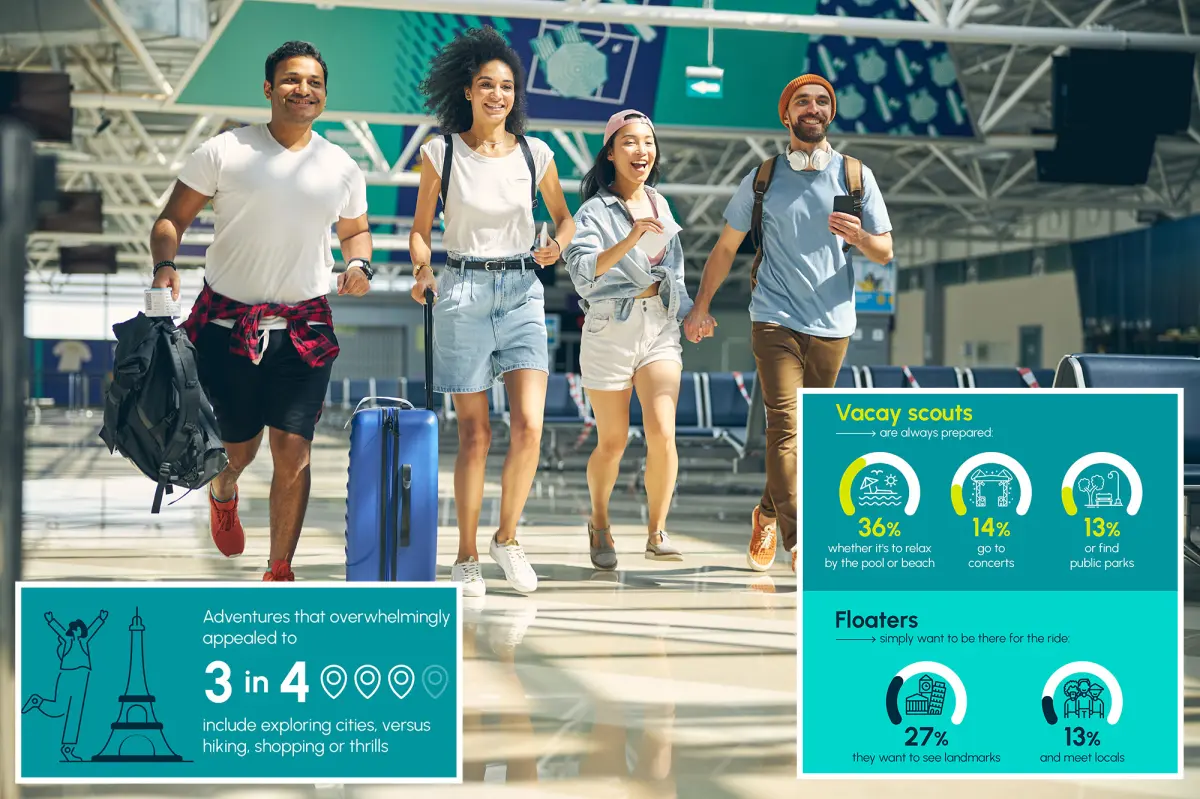
“Thrillseekers,” representing 26% of travelers, approach their journeys with an appetite for adventure and novel experiences. These energetic explorers are drawn to activities that get their adrenaline flowing or satisfy their intellectual curiosity. They’re likely to be found hiking through local environments, taking guided city tours, exploring museums, enjoying amusement parks, or examining historic buildings. Unlike Masterminds, Thrillseekers are less concerned with meticulous planning and more focused on packing their itineraries with stimulating experiences. Similarly, though less common, the “Vacay Scouts” (6% of travelers) maintain a prepared-for-anything attitude. While they value relaxation by the pool or beach, they’re also ready for concerts, public parks, or visits to pop culture landmarks. Scouts embody a balanced approach, combining leisure with curated activities that speak to their personal interests.
The “Floaters,” comprising 14% of travelers, represent the most laid-back travel persona. These easy-going journeyers prefer to minimize planning stress, instead allowing their trips to unfold organically. They’re content to simply be present in a new place, taking in landmarks at their own pace and embracing opportunities to connect with locals. Floaters often discover unexpected treasures precisely because they aren’t bound to rigid schedules. Meanwhile, “Connoisseurs” (16% of travelers) orient their entire travel experience around culinary exploration. For these food-focused travelers, discovering local cuisine isn’t just one aspect of travel—it’s the main attraction. A striking 64% of Connoisseurs prioritize finding exceptional food above all other travel considerations. They’re likely to research restaurants extensively, seek out authentic local dishes, and plan their daily activities around memorable meals.
Despite these distinct approaches to travel, the research revealed several universal preferences that transcend personality types. Regardless of travel persona, the majority of respondents (38%) agreed that exploration should begin immediately upon arrival at a destination. Similarly, food emerged as a unifying passion, with nearly half of all travelers (48%) citing culinary discovery as their favorite travel activity—surpassing local exploration (27%) and museum visits (17%) combined. Urban adventures held broad appeal, with three-quarters of respondents preferring city exploration over other activities like hiking or shopping. The study also highlighted common practical concerns: 80% of travelers consider staying within budget important, and 79% have experienced classic travel mishaps like forgetting essentials, getting lost, or missing transportation. These shared experiences remind us that while we may approach travel differently, certain joys and challenges of discovery remain fundamentally human experiences that connect us all.
As Judy Gauthier, chief commercial officer at Go City, observed: “These five categories of travelers help establish that many of us look forward to different things when we travel. Some prioritize relaxation, while others want to see it all. The end goal, however, is universal: we all want to enjoy our trips.” This insight captures the essence of what makes travel so personally meaningful—regardless of whether we’re meticulously planning each moment or simply going with the flow, we’re all seeking connection, discovery, and enjoyment in our own unique ways. Understanding these different travel personas can help us appreciate the diverse approaches to exploration and perhaps even inspire us to occasionally step outside our comfort zones, adopting elements of other travel styles to enrich our own journeys through this remarkable world.