



From Mascot to Icon: Wendy Thomas Morse’s Journey as the Face of a Fast-Food Empire
Wendy Thomas Morse, the namesake and face of one of America’s most recognizable fast-food chains, lived a uniquely complex life in the spotlight. Now 64, she has opened up about the challenges and unexpected emotional journey of having her childhood face plastered on thousands of restaurant signs worldwide. Despite the initial discomfort that led her to hide her famous identity for years, Morse has come to embrace her legacy as the pigtailed mascot her father created back in 1969. “I mean, there were times I didn’t want people to know because I didn’t want them to have assumptions,” she admitted in a recent PEOPLE interview, reflecting on decades of navigating life as the human behind an iconic logo. “I guess my assumption was that they wouldn’t think I was cool or hip or whatever at the time.”
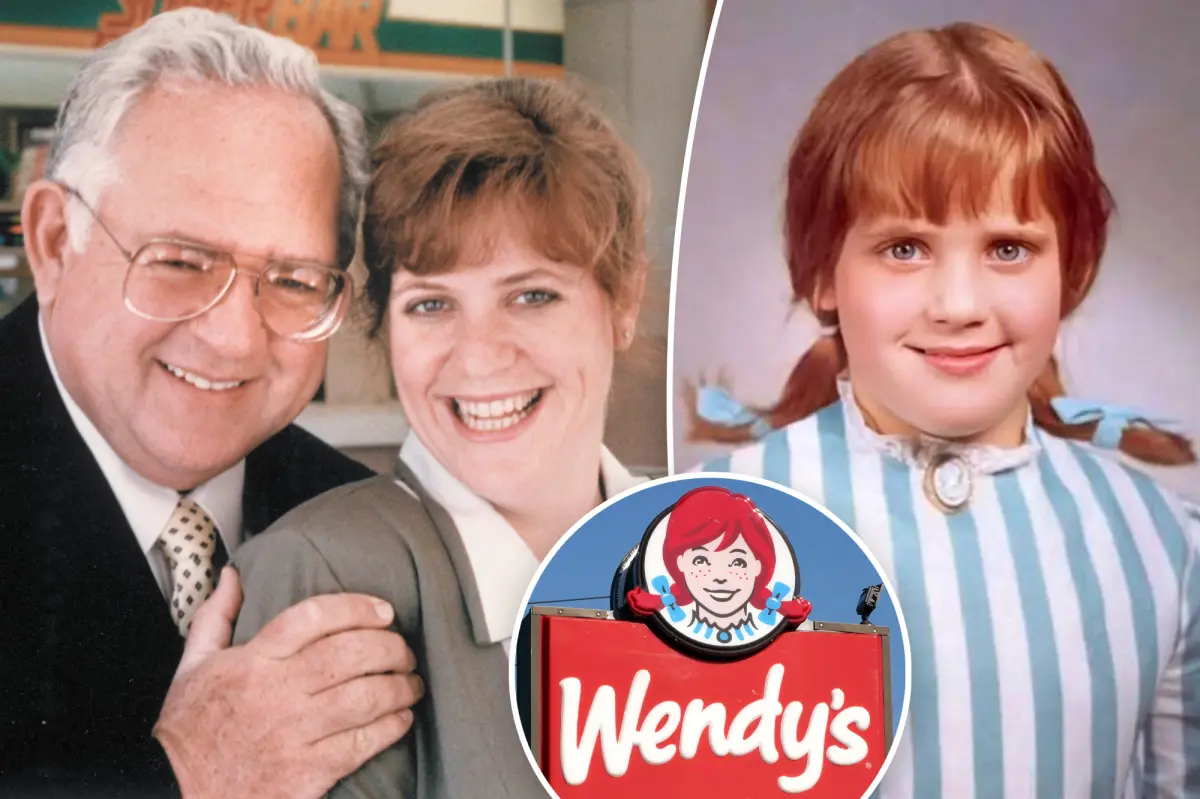
The origin of Wendy’s restaurant chain stems from a simple family moment when Morse was just eight years old. Her father, Dave Thomas, understood the power of creating a relatable character for his new burger business, having previously worked with Colonel Sanders at KFC. One day, he asked young Wendy to pull her hair into pigtails and took photos of her that would eventually inspire the now-famous logo. “He wanted a character, because he knew how much that persona mattered,” she recalled. This impromptu photoshoot led to the 1969 opening of the first Wendy’s Old-Fashioned Hamburgers in Columbus, Ohio. What began as a single restaurant quickly expanded into a fast-food empire, reaching the impressive milestone of 1,000 locations by 1978—faster than any competitor at the time. The chain’s rapid growth meant that Morse’s childhood likeness—complete with freckles, bright red pigtails, and distinctive smile—soon adorned glowing signs on countless street corners across America.
Despite being intimately connected to a household brand, Morse maintained a complicated relationship with her fame. Throughout much of her life, she deliberately kept her connection to the restaurant chain private when meeting new people. “I would never, if I met a lot of new people, I would never tell them who I was,” she explained. “It’s usually someone else that says it. And then it gets awkward and then it gets all better.” This reluctance stemmed from a desire to be known for herself rather than as the human inspiration for a fast-food logo. The burden of representing a major corporation from childhood created a unique pressure few could understand—living simultaneously as both a regular person and a commercial symbol that millions of Americans associated with square hamburger patties and frosty desserts.
Perhaps the most poignant revelation from Morse’s recent interviews was her father’s eventual regret about naming the restaurant after his daughter. Approximately a decade before Dave Thomas passed away in 2002, he offered an unexpected apology to Wendy. “Probably 10 years before my dad passed, we talked about my name and namesake, and he just goes, ‘I’m really sorry I did that to you,'” she remembered. “To hear your father say, ‘Probably should’ve just named it Dave’s and that would have been a lot easier,’ was a lot.” This candid conversation demonstrated Dave Thomas’s awareness of the unique burden he had inadvertently placed on his daughter. While the business had achieved tremendous success, he recognized the personal complications it created for the real Wendy, who had to navigate growing up with her identity tied to a corporate brand. Morse appreciated her father’s empathy, noting it was meaningful that he acknowledged “the pressure and the responsibility of being the namesake of a restaurant.”
Two decades after her father’s passing, Morse has developed a more peaceful relationship with her unusual legacy. What was once a source of discomfort has transformed into a point of pride and a lasting connection to her father’s achievements. The Wendy’s sign, with its stylized version of her childhood face, now serves as a comforting reminder of Dave Thomas and his entrepreneurial journey. “He always just wanted to serve quality hamburgers—fresh, never frozen beef—and just really good products and have customer service be friendly and have a clean restaurant,” she reflected. This evolution in perspective demonstrates how time has helped Morse reconcile the personal and public dimensions of her identity. The awkward feelings of her youth have given way to appreciation for being part of something that meant so much to her father and has become an enduring part of American culture.
Today, Wendy Thomas Morse embraces her unique place in fast-food history, finding meaning in continuing her father’s legacy. “Now when I see the sign, I just think of my dad a lot because he’s there in spirit,” she said. Her journey from reluctant mascot to proud steward of the family business illustrates the complex reality behind corporate symbols. While millions of customers see only a friendly cartoon face on a sign, there exists a real woman who has spent her lifetime navigating the unusual experience of having her childhood likeness immortalized on restaurant signs across the world. Morse’s story reminds us that behind many famous brands are real human experiences—sometimes complicated, sometimes challenging, but ultimately forming a meaningful part of both personal and cultural history. The little girl with the pigtails grew into a woman who found her way to embrace being “Wendy” on her own terms, transforming what could have remained an awkward burden into a cherished connection to her father’s dream.