






Imagine walking into your local Walmart, grabbing a package of chicken that’s supposed to be a hearty 4.66 pounds, costing you $19.20—roughly $4.12 per pound—and feeling that rush of thinking you’re getting a decent deal. After all, we’ve all been there, stretching our dollars amid skyrocketing prices, inflation gnawing at our wallets like a relentless beast. But what if that package, the one meant to feed your family dinner, turned out to be half the weight advertised? That’s exactly what happened to Jimmy Wrigg, a regular guy from Tennessee who’s turned into an unlikely whistleblower, armed with his smartphone and a whole lot of righteous indignation. It started innocently enough—a quick video on TikTok to share his frustration—but it ballooned into a viral sensation, racking up millions of views and stirring a hornet’s nest of public outrage. Jimmy’s story isn’t just about a sneaky retailer; it’s about the everyday struggle of hardworking folks feeling ripped off at every turn, where even something as basic as grocery shopping turns into a battleground for fairness. He calls himself a patron standing up to the “f–kin scammers,” and honestly, who hasn’t felt that pang of betrayal when the trust we place in big chains like Walmart crumbles? It’s like discovering your neighbor’s been borrowing your stuff without asking, but on a massive, corporate scale. As someone who’s spent countless Saturday afternoons pushing a cart through fluorescent-lit aisles, I get it—the hope that what you see is what you get, especially when prices are already stealing the joy from your paycheck. Jimmy’s clips show him not as a hero, but as a relatable everyman, hoodie on, voice cracking with disbelief as he declares, “They’re straight ripping people off.” We’ve all had those moments where we question if we’re the only one noticing something’s amiss, and Jimmy’s bravery in speaking up makes his narrative uncomfortably human, a mirror to our own frustrations with a system that seems designed to profit from our vulnerabilities. It reminds us that in this consumer-driven world, one person’s skepticism can ignite a spark, encouraging others to peek behind the curtain of corporate gloss. If you’re like me, exchanging stories with friends about the latest supermarket outrage, Jimmy’s tale resonates deeply, turning a simple shop into a metaphor for larger battles against deceit. And as he vows to check “every single one” of those protein packages, it’s not just persistence; it’s a quiet rebellion, a way for ordinary people to reclaim their power in a world that’s increasingly out of control. You can feel the exhaustion in his words, the weariness of someone who’s tired of being the punchline in a bad joke, yet still motivated to expose it. Isn’t that what makes stories like this stick? It’s not abstract economics; it’s personal, it’s emotional, it’s the kind of narrative that makes you nod along, thinking, “Yeah, I’ve been there too.”
Diving deeper into the specifics, picture this: Jimmy stands in the meat section, camera rolling, as he holds up that chicken package labeled with a bold 4.66 pounds price tag at $19.20. His eyes widen, and you can almost hear the thud of realization as he lays it on the scale and watches the digital display stop at 2.37 pounds—half the promised weight. That’s not just a mistake; that’s a gut punch, especially when it’s illegal for stores to sell products with inaccurate weights. I remember my own grocery mishaps, like buying what I thought was a full gallon of milk only to find it short—nothing infuriates like that, right? But Jimmy doesn’t stop there; he’s like a detective in aisle seven, unpacking layers of deception with a mix of humor and hurt. He captions his video “a little heavy on the scale,” perhaps to lighten the sting, but the undertone is serious, a cry for accountability. Think about the families relying on that chicken for meal prep, budget tight as it is, only to swipe their card for air and false promise. It’s emblematic of how these discrepancies rob us not just monetarily, but emotionally—eroding that fragile trust in institutions meant to serve us. Jimmy’s indignation bubbles up raw and unfiltered; he’s not polished or rehearsed, just a guy venting the frustrations we’ve all bottled inside. And as he finds meat after meat, the pattern emerges, each discovery amplifying the betrayal. It’s one thing for a store to slip up once, but repeatedly? It forces us to confront whether this is oversight or calculated greed, especially as Jimmy points out how brazen it feels against the backdrop of a nation reeling from economic pressures. You feel for him, this everyday warrior, whose simple act of weighing turns into a expose that captures our collective ire. In a society where we scroll past injustices on our feeds, his story hits home because it’s intimate, rooted in the mundane rituals of consumerism that define our lives. Remember that time you debated calling customer service over a faulty item? Multiply that hesitation by a factor of millions, and you’ve got Jimmy’s videos sparking conversations around kitchen tables and break rooms. It’s not just about chicken; it’s about the illusion of choice in a world where prices inflate faster than our paychecks can keep up. Jimmy humanizes that data point, making the abstract very real, very personal, urging viewers to question: Why should we accept being shortchanged when it’s our hard-earned money at stake?
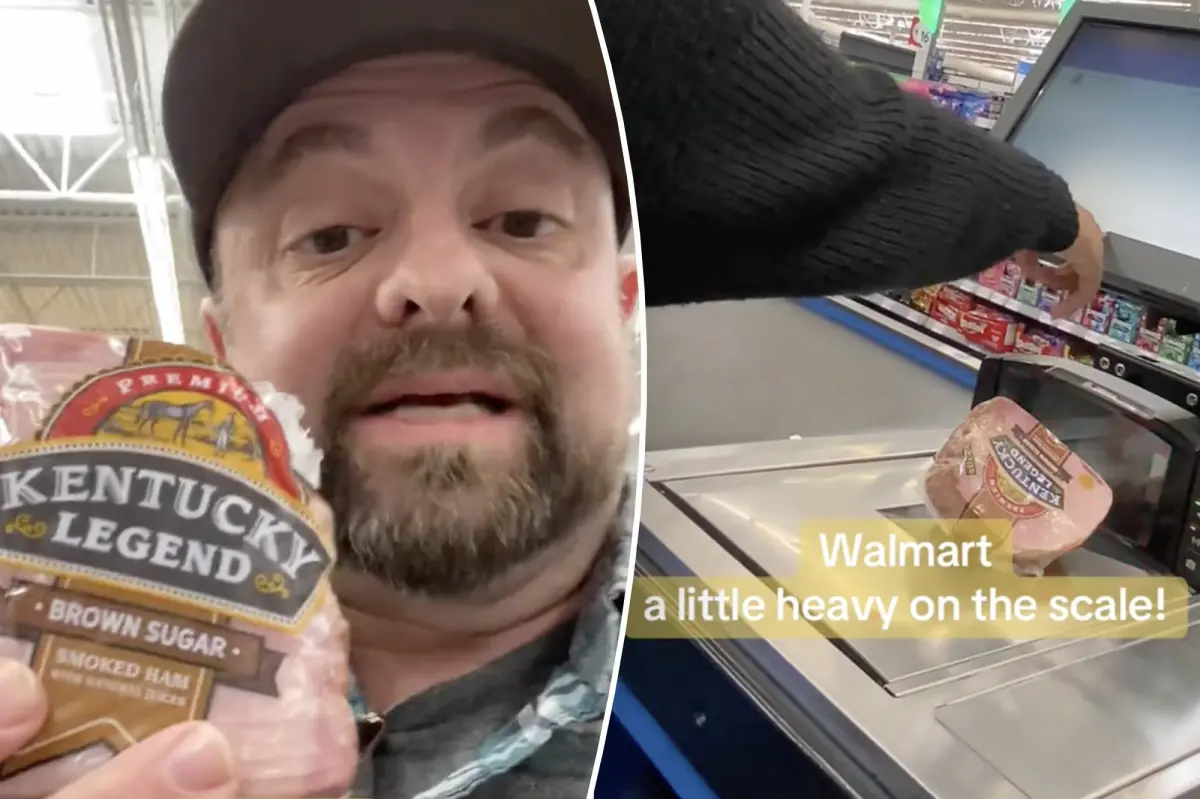
As Jimmy’s investigation unfolds, it morphs into a cross-state crusade, revealing that this “meat scam” as he coins it, isn’t confined to one shelf. He follows up with videos showing a “little bitty” packet of Kentucky Legend Ham marked at 5.34 pounds, but weighing a mere 2.25—like ordering a feast and getting scraps. The motive seems clear to him: Walmart trying to gouge customers for $25.59 on something far lighter, exploiting the fog of fatigue from high grocery bills. It’s disheartening, isn’t it? We’ve all clipped coupons, hunted sales, only to suspect we’re still losers in the game. Jimmy’s methodical checks, scanning aisle after aisle, uncover piles of mislabeled items, turning his TikTok into a mini-documentary of deceit. He claims finding hundreds of dollars in overpriced meat in just 60 seconds across multiple stores, and as a consumer who’s navigated those same chaotic Walmarts, I can envision the scene—the hurried shoppers, the blaring announcements, and Jimmy’s quiet persistence. It’s empowering in a way, watching him flip the script, but also frustrating, highlighting how systemic underhandedness persists despite safeguards. People online echo this, speculating deliberate engineering over accidents, mirroring our own gripes about hidden fees and half-truths. Jimmy’s narrative resonates because it taps into that universal skepticism: when does coincidence become conspiracy? He’s not just reporting; he’s humanizing the numbers, infusing them with his palpable disbelief and calls for vigilance. Think of your own recent purchases—have you ever double-checked a label? Jimmy’s story pushes us to, transforming passive buyers into active checkers, reclaiming agency in a retail landscape that’s often designed to distract and deceive. It’s a reminder that beneath the veneer of everyday errands lies a potential battle for integrity, one that ordinary folks like Jimmy are eager to fight. His journey isn’t polished heroism; it’s flawed, authentic, the kind that inspires nods of understanding rather than cheers of adulation. In sharing his finds, he’s not glorifying himself; he’s amplifying voices, turning isolated irritations into shared outrage. And as he navigates these discoveries, you can’t help but root for him, hoping his efforts tip the scales toward justice for all us overworked, underpaid souls.
Of course, Walmart wasn’t silent in the face of this tornado. They pointed fingers at Kentucky Legend, claiming a labeling error isolated to a brief “5-minute window” on one production date, assuring that affected products were yanked from shelves and processes tightened. A spokesperson even vowed to fortify safeguards for accurate pricing ahead. It’s a classic deflection, isn’t it? We’ve seen companies pivot blame before, spinning crises into reassurances that leave more questions than answers. Jimmy, though, counters with boots-on-the-ground evidence, spotting discrepancies in store after store, proving the issue’s stubborn persistence. Frustrated, he marches a cartload of mislabeled meats to Walmart management, demanding answers in a tense exchange that encapsulates the power imbalance between consumer and corporation. The staffer’s dismissal—that they don’t “weigh them” there—rings hollow, especially when Jimmy reveals scales hidden in plain sight, debunking the claim. It’s infuriating, evoking memories of your own futile service encounters, where bureaucracy shields evasion. Jimmy presses harder, questioning oversight, his voice a mix of disappointment and defiance, pushing for acknowledgment that inaction enables fraud. The manager’s pledge to inform the “home office” and donate the goods feels performative, a band-aid on a systemic wound, leaving Jimmy unconvinced and viewers wary. This clash isn’t just transactional; it’s deeply personal, underscoring how everyday grievances can escalate into broader confrontations. Walmart’s response, while apologetic on the surface, fails to quell the storm, as Jimmy’s evidence suggests patterns beyond isolated flukes. In retelling this, we see the human cost—emotional toll on challengers like Jimmy, who risk being dismissed as troublemakers. It humanizes the corporate machine, revealing it as susceptible to oversight, yet resilient to change. Jimmy’s frustration culminates in a viral call-out, humanizing our collective fatigue with institutions that prioritize profit over people. His story isn’t isolated; it’s a microcosm of larger conversations about accountability, encouraging us to voice our dissatisfactions rather than swallow them. As he steps away from management, you feel the weight of his skepticism, wondering if his persistence will catalyze real reform or just another half-hearted promise. Ultimately, it’s a profound reminder that one person’s tenacity can challenge giants, transforming personal irritation into public discourse, and in doing so, fostering a sense of community among those who’ve ever felt shortchanged by the system.
Reflecting on the upswell of viewer responses, it’s clear Jimmy’s revelations struck a nerve, turning his videos into a rallying cry amid widespread exasperation. Comments flood in—”This is horrible,” and “You KNOW Walmart knows about this,” capturing the raw anger and suspicion that simmers beneath the surface of consumer culture. Many accuse the “errors” of being deliberate profiteering, not accidents, echoing the doubts we’ve harbored after bad experiences. One pledges to “weigh my meats before I buy” from now on, a vow that feels empowering yet exhausting, like adding another chore to an already overburdened routine. It’s relatable, right? We’ve all shifted from naive trust to guarded scrutiny, driven by stories like Jimmy’s that unveil the unsettling truths behind glossy facades. His audience isn’t just observers; they’re participants, sharing similar tales of deception that make his exposé feel like collective catharsis. In the face of a system that “scams at every turn,” as Jimmy labels it, these reactions highlight the emotional toll—the indignation, the helplessness—that defines modern consumerism. He’s tapped into a zeitgeist of fatigue, where every transaction risks betrayal, and his human touch—raw, unscripted emotion—makes it resonate. Viewers aren’t just appalled; they’re inspired to act, pledging boycotts or personal audits, turning isolation into solidarity. Jimmy’s story amplifies this, serving as a mirror for those who’ve muttered complaints alone in checkout lines. It’s not just about meat; it’s about dignity, about feeling valued rather than exploited. As controversies simmer, like Walmart’s 2024 settlement for overpriced produce, his narrative fuels ongoing debates about corporate ethics. Embracing the finality yet persistence of deceit, we see how public outcry can pressure change, though the weariness remains. Jimmy embodies that spirit, humanizing outrage into action, reminding us that amid scams, our voices matter. His videos aren’t fuel for cynicism; they’re beacons for engagement, transforming personal slights into broader movements. In a world where “nothing left for us” feels apt, his tale rekindles hope that accountability isn’t abdicated entirely. It’s a poignant blend of frustration and fortitude, inviting us to ponder our complicity in silent acquiescence and the power of speaking out. Ultimately, Jimmy’s viewers validate his journey, affirming that his skepticism isn’t outlier thought but shared truth, urging a recalibration of trust in tattered times.
Driven to action, Jimmy escalates by emailing the Georgia Department of Agriculture’s food inspector, promising updates and urging viewers to join in freelance investigations against Walmart’s alleged “meat fraud.” It’s a logical next step for someone burned out on scams, seeking institutional intervention where personal pleas fell flat. As he pledges follow-through, you sense the mixture of hope and despair—the optimism that justice might prevail, tempered by cynicism from past letdowns. We’ve all been there, right? Filing complaints that seem to vanish into bureaucratic voids, hoping for vindication that rarely comes. Yet, Jimmy’s proactivity empowers us, modeling resilience against apathy. His declaration—”We are sick and tired of being scammed”—captures the collective exasperation of an era where every purchase feels precarious. It humanizes the broader economic squeeze, from inflation to deceptive practices, framing his fight as emblematic of national discontent. By encouraging others to “hold them accountable,” he’s not just venting; he’s building community, turning solitary frustration into collective force. This call to arms resonates deeply, especially as he laments, “It’s the standard operating business procedure,” exposing normalized inequities that rob our peace of mind. In documenting his reports, he democratizes oversight, inviting participation and fostering a sense of shared vigilance. It’s poignant, this blend of vulnerability and determination, reminding us that change often starts with one voice echoing another’s disquiet. As the story concludes, Jimmy’s actions symbolize defiance in defeatism, proving that even amidst systemic flaws, individual agency persists. His broader message—that complicity breeds more scams—challenges us to interrogate our roles, inspiring concerted efforts against exploitation. In humanizing these struggles, Jimmy transforms outrage into optimism, illustrating how personal narratives can catalyze societal shifts. Despite the uncertainties, his journey affirms that persistence, paired with public support, can erode entrenched deceptions. Thus, his legacy isn’t just exposure; it’s empowerment, urging a return to integrity in transactions that define our daily lives. Through this, we learn that in a landscape of shortcuts and shortchanges, our stories weave a tapestry of resistance, hopeful for a future less fraught with betrayal.