



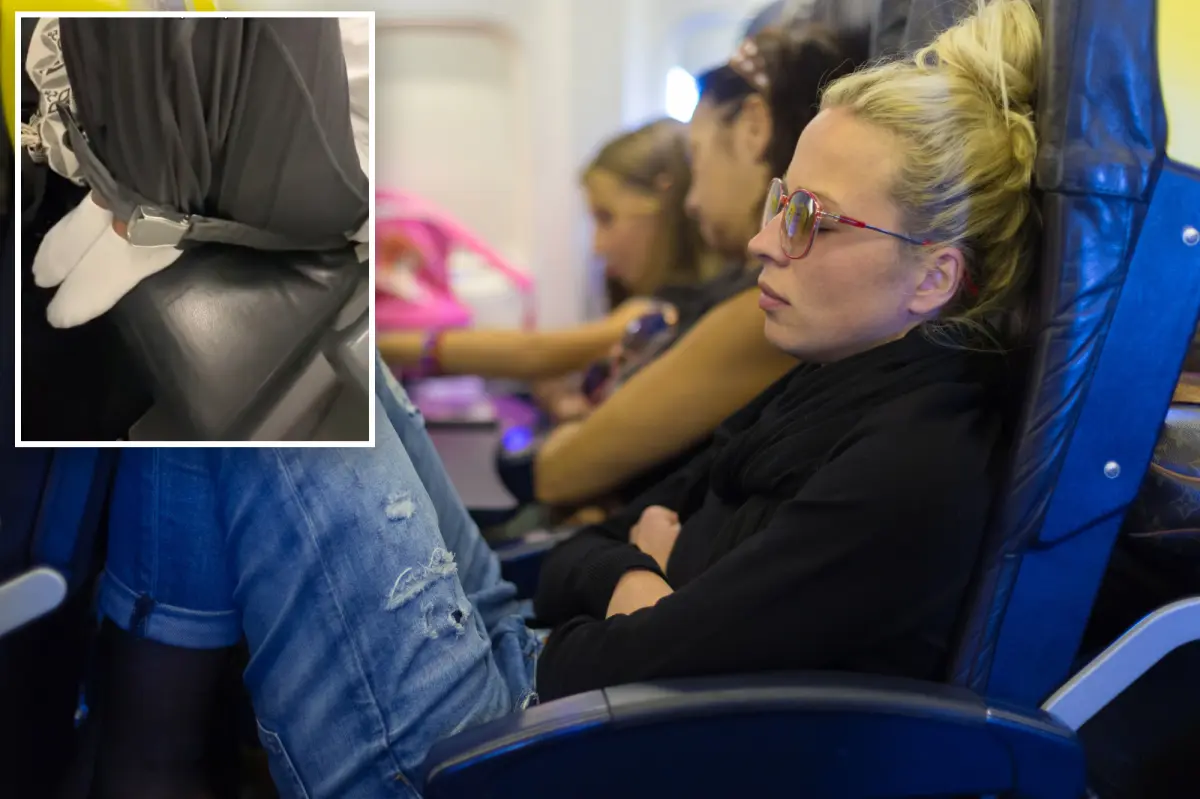
When Sleep Meets Safety: The Controversial Airplane Leg-Belt Trend
A new TikTok trend promising better sleep on airplanes has sparked widespread debate about comfort versus safety in the confined spaces of commercial flights. The technique, which involves passengers pulling their feet onto their seats and securing their legs with seat belts while attempting to sleep, has gone viral across social media platforms. While some travelers desperate for in-flight rest have embraced the method, aviation professionals and health experts are raising serious concerns about potential dangers associated with this unorthodox sleeping position.
The social media response to this trend reveals a mixed reception among travelers. Many commenters have shared that flight attendants quickly intervened when they attempted the position, with one user recounting being “yelled at by a flight attendant” after trying to secure their legs with a seat belt. Even those who managed to test the technique without crew intervention reported significant drawbacks – from legs falling asleep to exacerbated digestive discomfort during flights. This practical feedback suggests that despite the trend’s online popularity, its real-world application comes with considerable limitations that many viral videos fail to acknowledge.
Medical professionals have voiced serious concerns about potential health implications, particularly for passengers on longer flights. Dr. Carole Lieberman, a board-certified psychiatrist with experience in airline passenger mental health, warns that the position “keeps the legs in a tightly compressed position” – potentially increasing the already elevated risk of deep vein thrombosis (DVT) during air travel. The Mayo Clinic confirms that prolonged sitting during flights already raises blood clot risk, with DVT potentially leading to pulmonary embolisms that can be life-threatening. This medical perspective adds significant weight to what might otherwise be dismissed as merely an etiquette concern, framing the trend as a genuine safety issue rather than simply a matter of passenger comfort or preference.
Beyond the medical risks, the practice challenges established norms of airplane etiquette that help maintain harmony in the shared, confined environment of an aircraft cabin. Jacqueline Whitmore, an etiquette expert and former flight attendant, emphasizes that placing feet on airplane seats generally constitutes poor etiquette. While she acknowledges limited circumstances where modified versions of elevated feet positioning might be acceptable – such as wearing clean socks or slippers and covering feet with a jacket or blanket – these concessions still come with conditions. Her recommendation that passengers only consider such positions when no one is seated beside them recognizes the communal nature of air travel and the importance of respecting shared spaces, particularly on crowded flights where personal boundaries are already compressed.
The controversy surrounding this trend highlights the constant tension between passenger comfort and safety protocols in commercial aviation. While airlines prioritize safety above all else – including preventing positions that could impede rapid evacuation or cause injury during turbulence – passengers increasingly seek creative solutions to make long flights more bearable. This particular trend emerges from a genuine human need for rest during travel, especially on overnight or long-haul flights where quality sleep remains elusive for many travelers. The popularity of these videos reflects a broader frustration with the physical constraints of economy class seating, where limited recline and minimal legroom make comfortable sleeping positions nearly impossible to achieve.
As airlines face mounting pressure to balance safety requirements with passenger comfort needs, this trend serves as a reminder of how social media can quickly popularize practices that haven’t been properly vetted for safety. The absence of airline comments on the specific practice suggests companies may be hesitant to publicly address every viral travel hack that emerges online. However, the intervention of flight attendants when passengers attempt the position indicates that crew members recognize potential safety issues even when formal policies might not explicitly address novel passenger behaviors. For travelers seeking better rest during flights, safer alternatives like proper neck pillows, compression socks, regular movement, and staying hydrated represent more prudent approaches to in-flight comfort that don’t compromise safety or social etiquette. As one flight attendant might summarize: sometimes the most viral travel hack isn’t necessarily the safest or most considerate choice in the shared experience of air travel.