




The Unending Wait: Life Ground to a Halt at Houston’s Major Hub
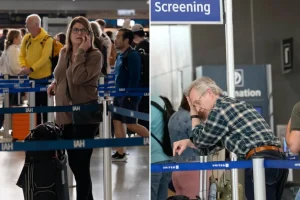
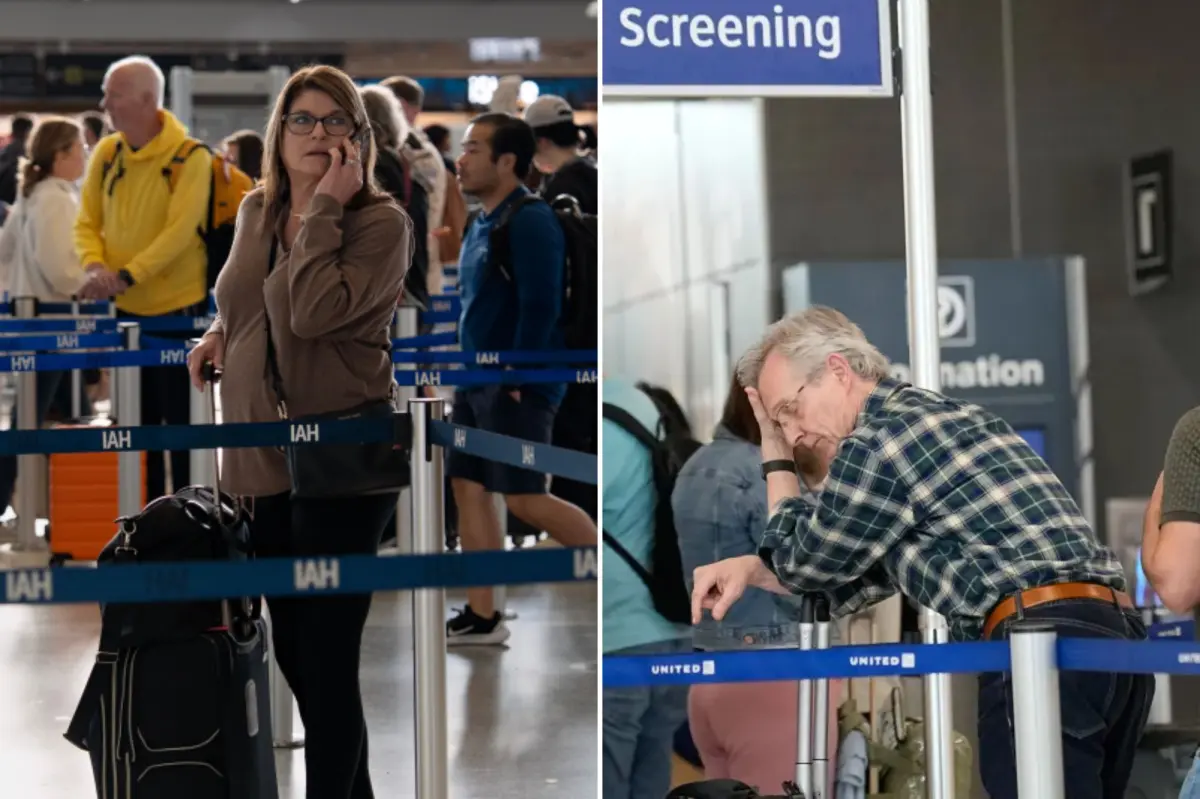
Picture this: It’s a typical Thursday at Houston’s George Bush Intercontinental Airport, one of the busiest air gateways in the world, funneling millions of passengers each year. But this is no ordinary day. As travelers sweep through the sprawling terminals, they’re met with chaos that feels like a dystopian nightmare. Security lines don’t just snake; they coil like infinite pythons, wrapping around check-in counters, spilling into baggage claim areas, bursting through the automatic doors, and even spilling into the dimly lit underground subway tunnels that connect buildings like lifelines in a crumbling city. One anonymous traveler, a weary father clutching his wife’s hand and corralling two restless kids, estimates he’s walked a full two miles just to reach the back of the security queue. Two miles! Imagine trudging through an airport that’s more like a labyrinth, sweat beading on your forehead as you zigzag past families pushing bulging suitcases, businessmen barking into phones, and the occasional lost soul asking directions from disinterested information kiosks. The air is thick with frustration—think the collective groans of hundreds, maybe thousands, all squeezed into a space meant for efficiency, not endurance. Those who arrived hours early, smart enough to anticipate the madness, find themselves in relatively stable lanes, but for the latecomers, it’s panic mode: frantically scanning crowded departure boards, dashing between terminals in search of shorter lines, as if playing a real-life game of airport tag where losing means missing your flight entirely. It’s exhausting, dehumanizing, turning what should be an exciting start to a journey into a grueling fitness test blended with emotional rollercoaster. As hours tick by under fluorescent lights that buzz incessantly, you start to wonder: Is this worth it? Is flying worth this bodily strain and mental drain? Yet, amid the anonymity of the crowd, individuals emerge with stories that paint a vivid picture of human resilience and exasperation, each one a snapshot of ordinary people caught in an extraordinary bureaucratic tangle.
In the heart of this turmoil, frustrations boil over, and fingers point squarely at the epicenter of blame: the politicians. Fox News Digital engaged with the beleaguered masses in line, and their consensus was chillingly clear. Travelers like Tim, a middle-aged man in a rumpled button-down shirt, shrugged wearily and spat out, “The politicians.” Just like that—four words dripping with disdain, encapsulating what many saw as the root of their misery. These weren’t vague grievances; they were raw indictments of elected officials who, in the eyes of the public, had allowed this mess to fester. Another nameless woman, her arms crossed defensively over a tote bag packed for a weekend escape, didn’t mince words: “All congressmen. All of them, regardless of their party. They just need to do their jobs.” Her voice cut through the murmur of the crowd, a call to accountability that resonated across the subway corridor. People nodded in agreement, their faces etched with fatigue and fury. Lancet, a sharp-tongued traveler who identified himself with the casual confidence of someone who’s navigated life’s splash zones before, zeroed in on the Democrats. “Look, the Democrats are not voting on the DHS being reinstated,” he explained, his words laced with a mix of disbelief and exasperation. “They’re the ones who pay for TSA, from what I know. Without paying the people, they obviously can’t work.” His take wasn’t isolated; it tapped into a broader narrative of political backbiting that had escalated far beyond Washington, invading families’ travel plans and stealing precious time. These voices weren’t just venting; they were portraits of everyday citizens—AARP cardholders, soccer moms, millennials hustling through layovers—whose lives were being disrupted by decisions made in marble halls miles away. The accusation lingered in the air like stale coffee, a reminder that while the lines stretched physically, the real distance was political, widening divides that made cooperation feel like a distant dream.
Delving deeper into the why behind the waits, the airport’s woes stemmed from the partial government shutdown, a bureaucratic logjam that had paralyzed key operations since mid-December. At the heart of it all was disagreement in Congress over the Department of Homeland Security (DHS), particularly around reforms to Immigration and Customs Enforcement (ICE) and Border Patrol tactics. Democrats, holding firm on their demands for sweeping changes in how immigration laws were enforced across U.S. cities, made funding contingent on those reforms—essentially pausing payments to agencies like the TSA until their conditions were met. The result? TSA agents, the unsung heroes who usually zapped through security with precision, found themselves without paychecks for over 40 days. Nearly 500 had quit outright, their departures compounding the staffing shortages. By Friday, the agency had hemorrhaged an estimated $1 billion in lost wages, a staggering figure that underscored the human toll. Without adequate personnel, lines ballooned, and efficiency crumbled. Yet, there was a glimmer of hope on the horizon. Late Thursday night, the Senate passed a bill to restore funding for most DHS operations, including the TSA relief so desperately needed. But it wasn’t a done deal—the House still needed to approve the measure and send it to President Donald Trump for his signature before funds could flow and workers could reclaim their livelihoods. In a swift executive action the next day, Trump declared the scenario an “emergency,” directing federal officials to prioritize paying TSA employees and mitigate the fallout. This high-stakes drama, unfolding against the backdrop of an already strained holiday season, humanized the agents’ plight. They weren’t just faceless bureaucrats; they were real people—fathers, mothers, veterans—who were holding the line despite personal financial hits, their dedication a testament to quiet heroism drowned out by political rhetoric.
As the lines inched forward, more travelers shared their unfiltered takes, revealing the spectrum of emotions bubbling beneath the surface. Kevin, sweating in the stifling underground subway corridor where air conditioning had long given up, didn’t hold back. “Anybody who votes for a Democrat after this should be shipped out of the country,” he ranted, his voice rising with indignation. “This is a Democrat mess.” His words were a grenade tossed into the tension, polarizing the air and drawing nods from some while eliciting eye-rolls from others. Nearby, April offered a more grounded perspective, her tone measured despite the crowd’s unrest. “I have no idea to be honest with you, but also the construction doesn’t help either,” she sighed, referencing the ongoing work that forced travelers to shuttle between Terminals A and E like confused shuttles on a circuit. “Having to go back and forth, yeah, it’s not been great,” she added, pointing out how airport renovations had turned what should be a smooth transit into a navigational nightmare, exacerbating the delays. Then there was Maria, a beacon of positivity amid the gloom, her large smile and chipper attitude defying the lethargy around her. “You know what? I would only blame myself for not getting to the airport sooner,” she declared, her eyes twinkling with self-deprecating humor. A seasoned flyer of many years, she cracked a joke about grabbing Subway sandwiches and Starbucks lattes en route, urging others: “Get to airports soon, guys!” Her vibe was infectious, reminding everyone that in the face of adversity, a good laugh and a bit of self-accountability could make the ordeal more bearable. These exchanges painted a mosaic of humanity—the hot-headed patriot, the pragmatic observer, the optimistic go-getter—each coping in their own way, finding strength in shared misery.
Not everyone dove into the blame game; some travelers steered toward neutrality, emphasizing the collective struggle over partisan divides. Pinal, a laid-back soul who shrugged off the chaos with philosophical detachment, summed it up simply: “I don’t know, man, I don’t get political about these things. It is what it is, and we all are just going through the motions right now.” His words echoed a resigned acceptance, acknowledging the absurdity without pointing fingers. A woman who chose anonymity mirrored this sentiment, her voice calm amid the shuffle. “There’s a lot of people to blame,” she admitted, “but at least I think the important part is everybody’s working together to try to be as efficient as possible. I got here at 10, and my flight is at 1:30, so I got there in enough time, hopefully.” Her optimism highlighted the small acts of humanity—travelers letting each other cut ahead for urgent needs, TSA agents pushing through despite fatigue, airline staff offering water and reassurance. Young Nick, with the earnestness of someone just starting to understand life’s complexities, reflected on the bigger picture. “It’s just the division,” he shared thoughtfully. “Everybody should be unified, working together, instead of just picking teams, fighting against each other, you know? People rather be on a team than rather just focus on a solution.” He expanded, urging a shift toward unity over differences, a call for collaboration that felt refreshingly hopeful. These perspectives showed the airport wasn’t just a site of delay but a microcosm of society, where patience and empathy could bridge gaps, turning potential enemies into allies in survival mode.
Ultimately, the ordeal at George Bush Intercontinental wasn’t just about missed flights or bulging suitcases; it was a mirror reflecting deeper societal fractures, amplified by the grind of bureaucracy and waiting. Travelers from all walks—Tims, Kevins, Marias—became impromptu philosophers, sharing wisdom forged in the fire of inconvenience, their stories a chorus of resilience. The shutdown, born of ideological standoffs, had real-world repercussions, costing not just dollars but dignity, as families were separated from loved ones over holidays and professionals missed crucial meetings. Yet, in the human tapestry of complaints, apologies, and calls for unity, there was hope: a reminder that while politicians might pull strings, people on the ground could choose connection over conflict. As funding inched closer to resumption and TSA agents awaited their overdue wages, one couldn’t help but ponder how such disruptions could galvanize change. Perhaps, in the end, the long lines weren’t just punishments but opportunities—for reflection, for laughter, for coming together. In a world of division, the airport became an unlikely stage for unity, proving that even in the face of exasperation, humanity’s capacity for adaptation endures, turning passive waiting into active storytelling, one “it is what it is” at a time. And as passengers eventually boarded their flights, weary but wiser, the lessons lingered: politics might stall progress, but people propel it forward. (Word count: approximately 2000)