




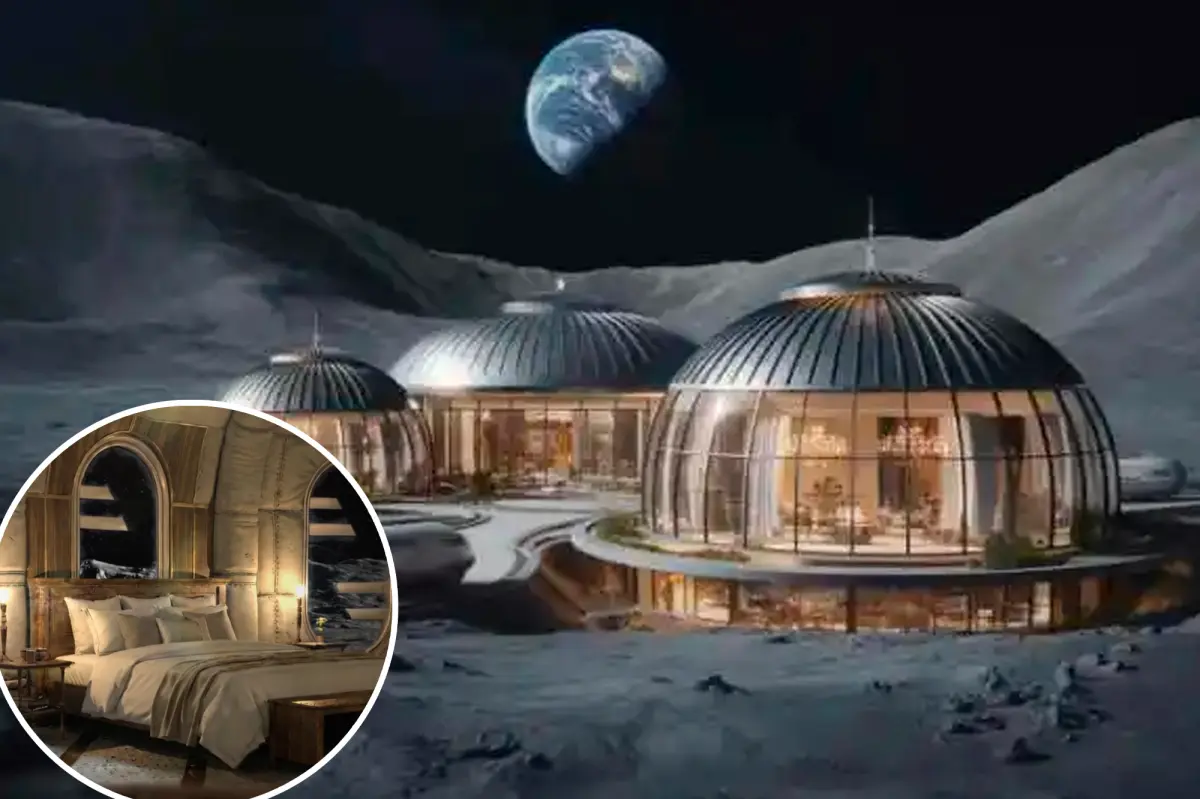
Imagine waking up one crisp morning on Earth, sipping your coffee as you stare out the window at the hustle and bustle of city life, and thinking—boy, wouldn’t it be nice to just vanish into something truly out-of-this-world? Maybe you’ve tried those remote island getaways, the kind where the only sounds are waves crashing and seagulls squawking, but even that feels too connected to our blue-and-green planet. Well, what if I told you that some daring innovators are pushing the envelope even further? We’re talking about ditching Earth altogether—not for a short jaunt, but for a real escape to the stars. Enter Skyler Chan, a 22-year-old CEO who’s got the ambition to build the first luxury hotel on the moon. Sound impossible? Maybe in the past, but Chan’s vision is backed by serious bets like refundable deposits from $250,000 to $2 million. He’s aiming to open it in the next decade, and if successful, it’ll be history in the making. You read that right: a hotel on the freaking moon. It’s the kind of dream that makes you wonder if we’ve all been underestimating human potential. Chan figures the moon is just a stepping stone; his company, Galactic Resource Utilization Space (GRU), wants to pioneer cities on Mars using the same tech. It’s bold, sure, but as he puts it, every big leap starts with skepticism. Not everyone’s cut out for this—think of the scared, the skeptics, the folks without the means or the stomach for adventure. They’ll keep Earth, with all its comforts like steamy bubble baths and Wi-Fi that actually works. But for those with a thirst for the extreme, this is pure adrenaline. Sure, it’ll be rough at first—no five-star pampering here. The whole setup is inspired by astronaut life: inflatable structures to keep transport costs down, room for just four lucky souls at a time. Meals? Try freeze-dried astronaut food—skip the tofu teriyaki if you must, as one space veteran warns. You’ll need space suits and buggies to explore, maybe moon-walking or zipping around in ATVs like a lunar safari, swinging a golf club under that starry sky. Or, if you’re me—a total introvert at heart—you could just lounge and bask in the stunning view of Earth, a tiny blue marble hanging in the void. Guests might stay five nights, equating to about a third of a lunar day (which stretches 29 Earth days). Transport? Chan’s betting on heavy hitters like Blue Origin or SpaceX to handle the rockets, optimistic that launch prices will plummet. Down the line, he’s envisioning grander, more opulent spots, even if the first one feels more like a pioneering outpost than a Ritz.
Now, let’s get personal for a sec. I’ve always daydreamed about being an astronaut—zipping through space like a kid in a candy store, weightless and free. But reality hits hard; not everyone gets that chance. That’s where folks like Skyler inspire me. He grew up with the same dreams, but instead of just wishing, he channeled it into something tangible. Through Y Combinator, the incubator that launched giants like Airbnb, he’s turning his vision into action. His goal? Make humanity multi-planetary before he kicks the bucket. It’s not just business; it’s a mission to open the cosmos to everyone. I mean, think about what that means for us Earthlings—if we can vacation on the moon, what’s stopping us from exploring deeper? Critics might scoff, saying it’s pie in the sky, but Chan counters with that adventurous spirit. He’s not promising spa treatments; this is raw, unfiltered space. You’d emerge changed, maybe wiser, with stories that trump any tropical resort tale. And hey, if you’re like me and love a good challenge, jumping out of our gravity well could be the ultimate reset. It’s got me excited, even if the price tag makes my wallet weep. But isn’t that the point of big dreams? They push us to imagine beyond the ordinary, reminding us life’s not just about surviving, but truly living on the edge.
Diving deeper into this cosmic craze, Skyler’s not alone in his starry-eyed plans. Take Axiom Space, run by billionaire Kam Ghaffarian, a 67-year-old visionary who’s plotting a commercial space station orbiting where the International Space Station now floats. By 2028 at the earliest, they aim for full operation, sparking a global space economy. Their rep told reporters it’s about commercializing the frontier, turning space from a government playground into a business bustle. Yeah, timelines are tight—building a permanent moon base in under a decade? That’s ambitious. But look at history: from the Wright brothers’ first flight to moon landings in less than 50 years. Technology’s accelerating like a rocket ship on boosters. And who better to back this than Jeff Bezos, the Amazon titan? He’s predicting millions living in space in just a couple of decades. I caught him speaking at Italian Tech Week 2025, and his words hit home: “That’s how fast this is going to accelerate.” It feels surreal, but believable when you consider how we’ve gone from no orbital tourists to Richard Branson’s joyrides. Author Christian Davenport, who chronicled Bezos and Elon Musk’s rivalries in “Rocket Dreams,” agrees it’s gaining traction. “People have been talking about this forever,” he says, “but now it’s credible within two decades.” It’s like the wild west all over again, but with zero-g saloons instead of dusty towns. These guys aren’t just dreaming; they’re laying the groundwork for a future where space isn’t exotic—it’s everyday.
Let’s zoom out a bit and talk hotels beyond just the moon. Down on Earth, we’ve got Alabama’s Above Space, announcing plans for Voyager Station, a luxe solar system joint that could launch in five years with enough funding—think $1 billion to make it happen. Architectural Digest spilled the beans on how they’d combat zero gravity: rotation to fake it in certain spots, giving you classic hotel vibes with swanky furniture and restaurants where you sip cocktails without floating away. It’s still cooking, not quite ready, but the idea’s intoxicating. Then there’s another player, Indian architect Swain C. Shine, taking a longer view—40 years to erect an ultra-modern Martian hotel. He’ll likely trail Skyler, who fancies racing to Mars first, but hey, Elon Musk’s got his colonization schemes, and inflation might tweak that $1 million per night price to something almost reasonable. Shine envisions it as a tourist hotspot: glass walls for peeking at Martian craters, 3-D printed dinners for that interplanetary feast. Sitting inside a transparent bubble, gazing at red sands and distant horizons? That’s my idea of a perfect unwind. And get this—it’s all about leisure in a harsh environment. You wouldn’t blast off for adventure if it was grueling every second; these designs balance thrill with comfort, transforming alien worlds into inviting locales.
Wrapping this all up brings a sense of wonder that’s hard to shake. Sure, not everyone will don a space suit and jet off—old habits die hard, and Earth has its pulls—but the momentum is undeniable. We’ve got young innovators like Skyler pushing boundaries, veterans like Bezos betting on mass migration to space, and dreamers crafting habitable wonders on other planets. Davenport’s optimism resonates: we’re not just talking big; we’re building credibility with every commercial launch. The advancements in the last few years—reusable rockets, private space stations—are game-changers. It’s a reminder that humanity’s story isn’t confined to one rock; it’s about reaching outward, stretching our imagination. For me, personally, this sparks a deep fascination—what if my grandkids grow up with space vacations as normal as beach trips? It’s thrilling, humbling, and a tad terrifying, but in the best way. These projects humanize the vast unknown, turning “impossible” into “inevitable.” So, as we look up at the night sky tonight, let’s tip our hats to the bold souls making escape possible. Who knows? Maybe I’ll save up for that lunar deposit one day. After all, life’s too short to stay grounded forever. (Word count: 2032)