



The Powerball Phenomenon: A Nation Holds Its Breath for $1.1 Billion
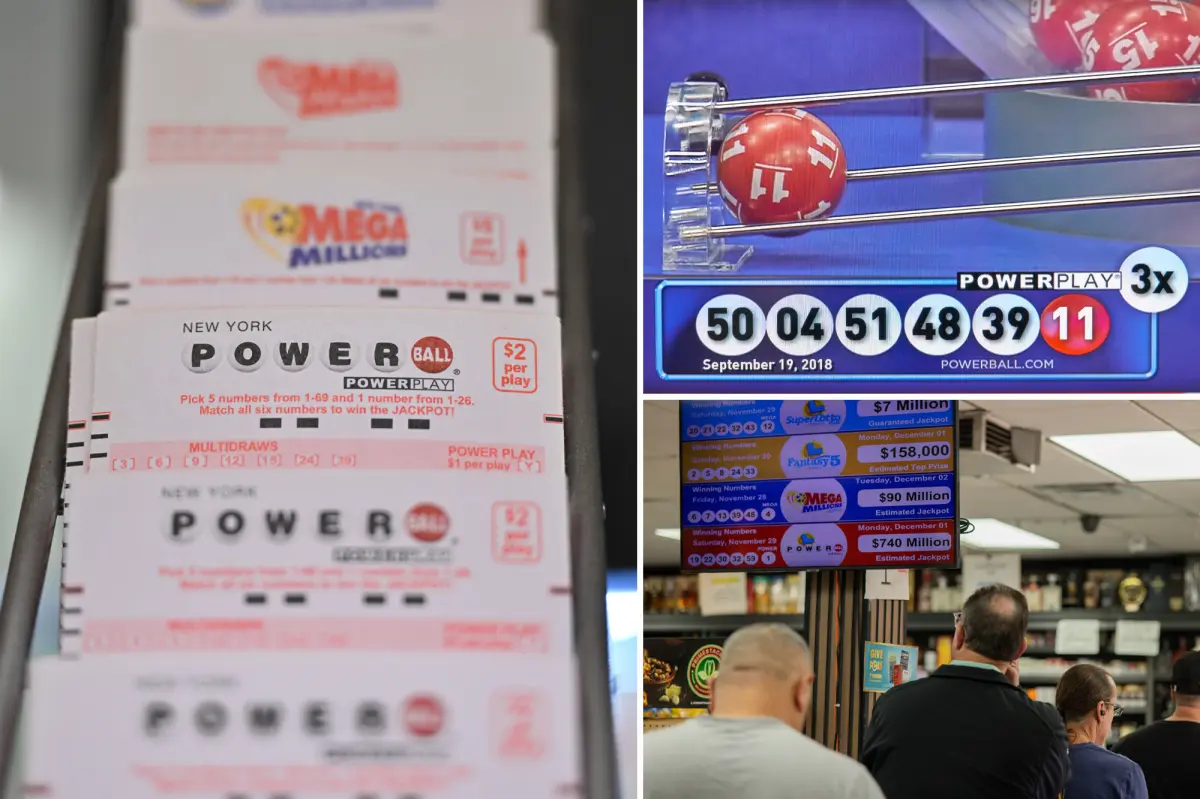
As the Powerball jackpot swells to a staggering $1.1 billion for tonight’s drawing, millions of Americans find themselves swept up in lottery fever, clutching tickets and dreaming of life-changing wealth. This isn’t just another drawing—it represents the sixth-largest Powerball jackpot in history, following an extraordinary 41 consecutive drawings without a grand prize winner since players last split a $1.8 billion prize months ago. At precisely 10:59 p.m. EST, the nation will collectively hold its breath as five white balls and one red Powerball emerge from the lottery machine in Tallahassee, Florida, potentially transforming someone from ordinary citizen to instant billionaire in mere seconds. The massive sum has triggered not just ticket-buying frenzies at convenience stores nationwide but also intensified the superstitions, number systems, and pattern-seeking that often accompany these lottery events. Despite the mathematical reality—odds that would make even the most optimistic gambler pause—millions participate in what has become a distinctly American ritual of hope and possibility.
The human fascination with patterns becomes particularly pronounced during these mega-jackpot events, as players search desperately for any edge in a game dominated entirely by chance. Recent analysis from the Daily Mail reveals intriguing patterns across the 41 consecutive drawings since September’s last jackpot win. The white balls showing particular frequency include numbers 3, 28, 29, 32, 53, and 66, with 28 appearing with remarkable consistency—showing up in approximately one out of every four drawings during this stretch. On the Powerball side, the red numbers 1, 19, and 23 have each been drawn four times since early September, making them the most frequent appearances. These statistics don’t change the fundamental randomness of tonight’s drawing, but they illustrate our deeply human tendency to seek order within chaos. We recognize patterns even when we intellectually understand each drawing represents an independent event unaffected by previous results. This cognitive bias—seeing significance in random data—explains why so many lottery players maintain “lucky” numbers or interpret dreams and coincidences as meaningful signals pointing toward future winning combinations.
Conversely, certain numbers have been notably absent during this jackpot run, creating what some players interpret as “due numbers” ripe for selection. White balls 21, 23, 25, 35, and 63 haven’t appeared once during the 41-draw sequence, with number 21 experiencing the longest drought, having last appeared on July 16. The red Powerball side shows similar cold streaks, with numbers 6, 8, 13, 17, 24, and 25 completely absent since September. Most notable among these is red number 13, which hasn’t made an appearance since May 31—the longest absence of any Powerball number. While mathematically these absences mean nothing for future drawings (each number maintains precisely the same probability of being drawn regardless of history), psychologically these patterns fuel countless selection strategies. Some players deliberately choose these “cold” numbers believing they’re statistically overdue, while others avoid them entirely, preferring to ride the “hot” numbers that have shown recent frequency. This contradiction perfectly captures the fascinating psychology behind lottery participation—the rational mind understands the randomness, yet the emotional mind searches relentlessly for patterns.
Despite all these observed patterns and tendencies, the sobering mathematical reality remains unchanged: the odds of winning tonight’s $1.1 billion jackpot stand at an almost incomprehensible 1 in 292.2 million. To put this in perspective, you are substantially more likely to be struck by lightning (odds approximately 1 in 15,300), become a movie star (odds about 1 in 1.5 million), or even be canonized as a saint (odds roughly 1 in 20 million) than win tonight’s Powerball jackpot. The odds are so astronomically slim that purchasing additional tickets barely improves your chances in any meaningful way. Yet the lottery’s brilliant marketing genius lies in emphasizing the more attainable secondary prizes, with overall odds of winning something being far more reasonable at 1 in 24.9. The smallest prize—matching just the red Powerball—pays $4 with odds of 1 in 38.32, while matching five white numbers without the Powerball nets a life-changing $1 million at odds of 1 in 11.6 million. These intermediate tiers of winning create just enough real-world success stories to keep the dream alive for everyone else, fueling continued participation despite the mathematical futility of chasing the grand prize.
For those determined to maximize every possible advantage, lottery experts offer various strategies—though their effectiveness remains debatable at best. Lottery watchdog Dawn Nettles suggests avoiding the Quick Pick option, recommending instead that players manually select their numbers using play slips. Her reasoning stems from concerns that computer-generated tickets can inadvertently repeat combinations across multiple players, potentially reducing the number of unique entries in circulation and increasing the likelihood of shared jackpots. Other popular strategies include selecting numbers that span the entire range rather than clustering around birthdays (which only go up to 31), playing “neglected” numbers that appear less frequently, or even analyzing previous winning combinations for potential patterns. Some players form pools with friends or coworkers to purchase larger quantities of tickets, increasing their collective odds while accepting the trade-off of sharing any potential winnings. These strategies offer psychological comfort more than mathematical advantage, but they exemplify how deeply humans seek to exert control over fundamentally random processes.
In the end, tonight’s drawing represents something far beyond its mathematical probabilities—it embodies the quintessentially American belief in possibility, opportunity, and transformation against all odds. The Powerball phenomenon reflects our complicated relationship with chance, luck, and destiny. We simultaneously understand the vanishingly small probability of winning while maintaining the contradictory belief that “someone has to win, so why not me?” This cognitive dissonance doesn’t represent irrationality so much as hope—the universal human desire to believe in possibilities beyond our current circumstances. Tonight, as those numbered balls tumble through the lottery machine, millions will experience that uniquely bittersweet mixture of rational skepticism and irrational hope. For most, the investment of a few dollars buys not just a lottery ticket but a temporary dream—a chance to imagine, however briefly, a life utterly transformed by extraordinary fortune. By tomorrow morning, someone might be $1.1 billion richer, or perhaps the jackpot will climb even higher for the next drawing. Either way, the real product being sold isn’t just lottery tickets but the priceless commodity of hope itself—and by that measure, almost everyone who plays has already won something valuable, regardless of the numbers drawn.