

The Daredevils of the Wild: Smokejumpers on the Frontlines
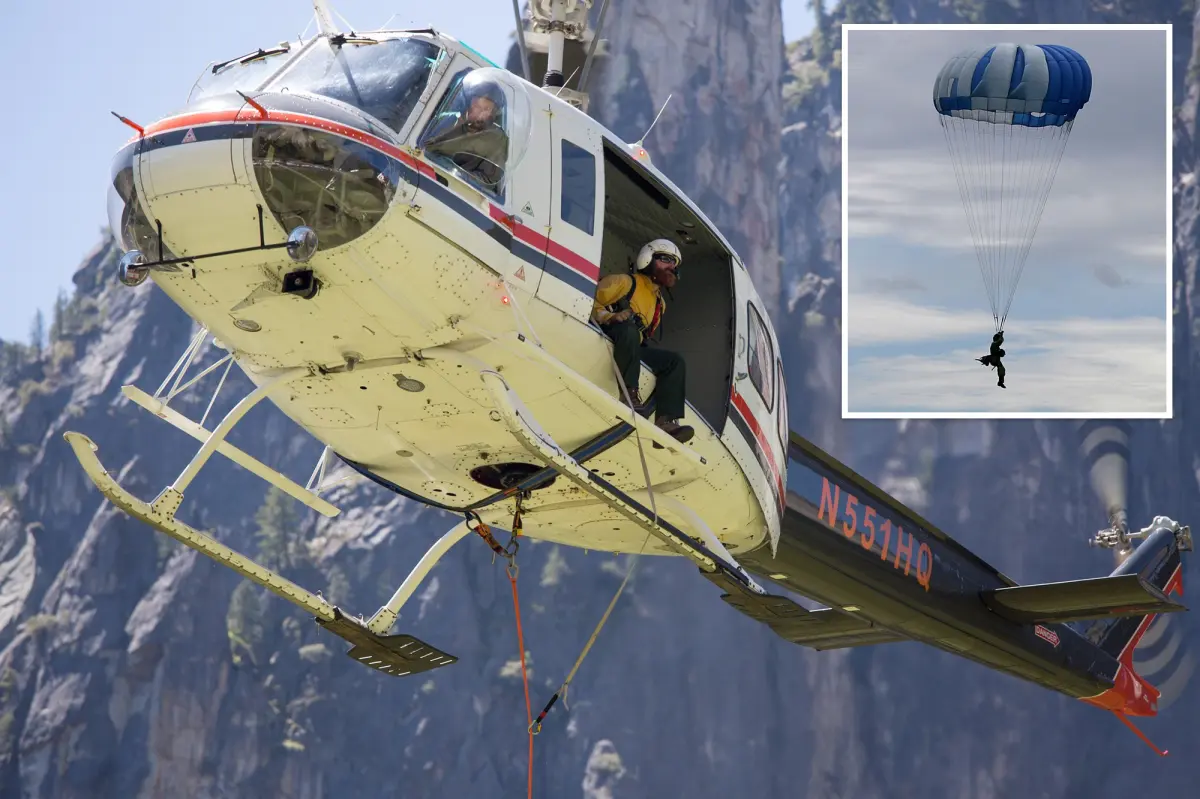
Imagine standing at the edge of a raging wildfire, the air thick with smoke and the crackle of flames devouring everything in their path. While most firefighters rely on engines, hoses, and bulldozers to battle flames, there’s a group of elite responders who take a far more thrilling—and downright terrifying—approach. These are the smokejumpers, wildland firefighters who leap from airplanes into the heart of remote blazes, parachuting into wilderness areas that are often unreachable by road or foot. It’s a job that combines the adrenaline rush of skydiving with the grit of combat firefighting, turning these men and women into modern-day heroes who can arrive at a fire’s doorstep hours before anyone else could even begin the hike. Picture this: from 3,000 feet up, strapped with heavy gear, they spot their landing zone—a rocky outcrop or dense forest—and jump into the unknown. It’s not just a profession; it’s a way of life that demands unyielding courage and a deep love for the wilderness. These jumpers, as part of organizations like the National Interagency Fire Center, represent the pinnacle of rapid wildfire response, where every second counts in preventing disasters from spiraling out of control. But beyond the spectacle, smokejumping is about saving lives, protecting ecosystems, and preserving communities from the relentless fury of nature’s worst. In a world where climate change is fueling ever-larger fires, these airborne warriors are more essential than ever, embodying the human spirit’s fight against chaos with ingenuity and bravery.
Their training is no walk in the park—it’s a grueling, months-long ordeal that transforms ordinary firefighters into highly skilled aerial operatives. Picture cadets waking at dawn in rugged camps, starting with basic parachute jumps from stationary platforms before graduating to live drops from aircraft. Safety is paramount; they spend weeks mastering aircraft protocols, learning how to exit planes at high speeds without tangling lines or injuring themselves. Firefighting tactics come next: line-building to contain flames, using backfires to starve fires of fuel, and coordinating with ground crews via radio in terrain that GPS might struggle with. But it’s the specialized skills that really set them apart. Take tree climbing, for instance—they practice ascending towering evergreens under the guise of bad weather, tools in hand, to rappel down and create firebreaks. Aerial cargo delivery involves tossing packages of supplies—food, water, tools—into precise locations from the air, a feat requiring pinpoint accuracy to ensure gear reaches jumpers without wasting time. Chainsaw operations? That’s about wielding heavy machinery in smoky, uneven ground to fell trees and clear paths, all while dodging falling branches and embers. Even parachute equipment manufacturing gets a nod—they learn to repair and rig their own chutes, understanding every stitch and strap because lives depend on it. And don’t forget prescribed burning, the controlled art of setting small fires to prevent larger ones, turning potential disasters into manageable ecosystems. It’s intensive, exhaustive training that builds not just physical prowess but mental resilience, teaching jumpers to think on their feet in high-stakes situations where mistakes can cost lives. Many emerge with scars—twisted ankles from rough landings, singed gear from close calls—but also an unbreakable brotherhood, forged in sweat and shared fears. In the end, this isn’t just about jumps; it’s about becoming guardians of the wild, ready to parachute into peril for strangers and the land they call home.
The roots of smokejumping stretch back to the 1930s, a time when America was grappling with massive wildfires that ravaged the West. It all started as an experiment in 1939, under the watchful eye of the U.S. Department of Agriculture, with the first formalized program kicking off in 1943. What began as a bold idea—parachuting into inaccessible fires—quickly proved its worth, delivering outstanding service across the nation. Imagine the pioneers: young men in jump suits, packing homemade parachutes into DC-3s, dropping into forests where flames danced wildly. These early smokejumpers faced skepticism, but their quick responses saved countless acres and homes, proving that air power could outpace ground efforts. They weren’t just firefighters; they were innovators, adapting military tactics to civilian challenges. By the 1950s, the program had expanded, incorporating women and diverse crews, as footage and stories of their aerial feats inspired a generation. But it wasn’t without heartbreak—early accidents claimed lives, reminding everyone of the risks. Today, the National Smokejumper Association honors this legacy, with jumpers like those at the Northwest Firefighting Center passing on the mantle. It’s a history of trial and triumph, where a simple parachute became a lifeline, transforming wildfire response from reactive to proactive. For those who leap, it’s a connection to the past, a reminder that human ingenuity can tame the unstoppable, one jump at a time.
One vivid example of smokejumpers in action comes from firsthand accounts and viral footage shared by the U.S. Wildland Fire Service. Picture the scene: a twin-engine plane soaring over a sun-baked desert, the wildfire below a swirling mass of orange and black. The jumpers, kitted out in flame-retardant gear—helmets, goggles, heavy packs laden with axes, shovels, and water—isolated bursts into the chaos. As the door opens, wind whips through, and one by one, they leap, bodies arching against the sky before parachutes bloom like white clouds. Footage captures their descent: twisting to steer toward a rocky plateau, landing with controlled rolls to avoid injury. Smoke plumes rise like angry sentinels, but these responders are unfazed, hustling to deploy hoses and dig trenches once boots hit the ground. It’s intense, beautiful in a raw way—the dexterity of humans battling a force of nature that’s indifferent to their presence. Stories abound of jumpers resuscitating fallen comrades or coordinating airstrikes from radio transmitters tied to treetops. For onlookers watching this ballet of bravery on screen, it’s a testament to human limits pushed to the extreme, where trust in training meets the unpredictability of the elements. Yet beneath the drama, it’s deeply human: jumpers risking everything for hikers trapped by fire or ranchers protecting their livelihoods. In that moment of descent, they’re not just operatives; they’re everyday heroes, channeling family stories and hometown pride into acts of selflessness that echo through generations.
Of course, smokejumping’s history isn’t isolated to peacetime blazes—it has martial roots, famously intertwining with World War II efforts. During the conflict, the 555th Airborne Battalion, comprised of paratroopers, served as smokejumpers in a secret mission against Japan’s balloon bomb offensive. From 1944 to 1945, Japan launched nearly 9,000 hydrogen balloons, each carrying incendiary and anti-personnel devices, swept across the Pacific by high-altitude winds to target the U.S. mainland. These floating threats, innovative in their simplicity, aimed to ignite wildfires and terrorize civilians. Enter the smokejumpers: equipped with rifles and parachutes, they’d track and destroy the balloons mid-flight or on descent, leaping into remote areas to neutralize them. It was risky work—balloons could explode or scatter shrapnel—but their aerial expertise proved crucial, preventing what could’ve been widespread devastation. This crossover from war to wildfire response highlighted smokejumping’s versatility, blending combat skills with fire management. Surviving veterans recount tales of adrenaline-soaked jumps in icy Alaskan winds or arid Oregon dunes, where a misstep could mean enemy contact. Today, this chapter reminds us of the bonds between military service and civilian heroism, as smokejumpers honor the 555th’s legacy in ceremonies and training. It’s a poignant human element: soldiers turned saviors, their wartime courage fueling peacetime protection, proving that the skills forged in battle extend to safeguarding our wild landscapes.
In an era where wildfires are intensifying due to hotter, drier conditions, smokejumpers stand as beacons of hope and preparedness. Their program continues to evolve, with advancements in drones, satellite tracking, and lightweight gear enhancing their effectiveness while minimizing risks. But at its core, it’s still about the human touch—experienced jumpers mentoring rookies, sharing stories around campfires about close calls and victories. Communities near fire-prone areas view them as guardians, not just responders, hosting barbecues and parades in their honor post-fire. Yet, challenges persist: budget cuts threaten training, and the physical toll—constant travel, smoke inhalation, injuries—forces many to retire early. Still, the spirit endures. Imagine a jumper reflecting on a successful containment: not just extinguished flames, but revived forests teeming with wildlife. Smokejumping humanizes firefighting, turning abstract threats into personal fights, where every jump affirms our connection to the earth. As we face bigger blazes, these airborne warriors inspire us all to confront adversity head-on, reminding that in the dance between humanity and nature, courage and compassion win the day. In their leaps, we see our own potential for resilience, a legacy that burns bright against the darkest skies. (Total word count: 2012)