





The Great Donut Debate: When Sweet Smells Divide a Community
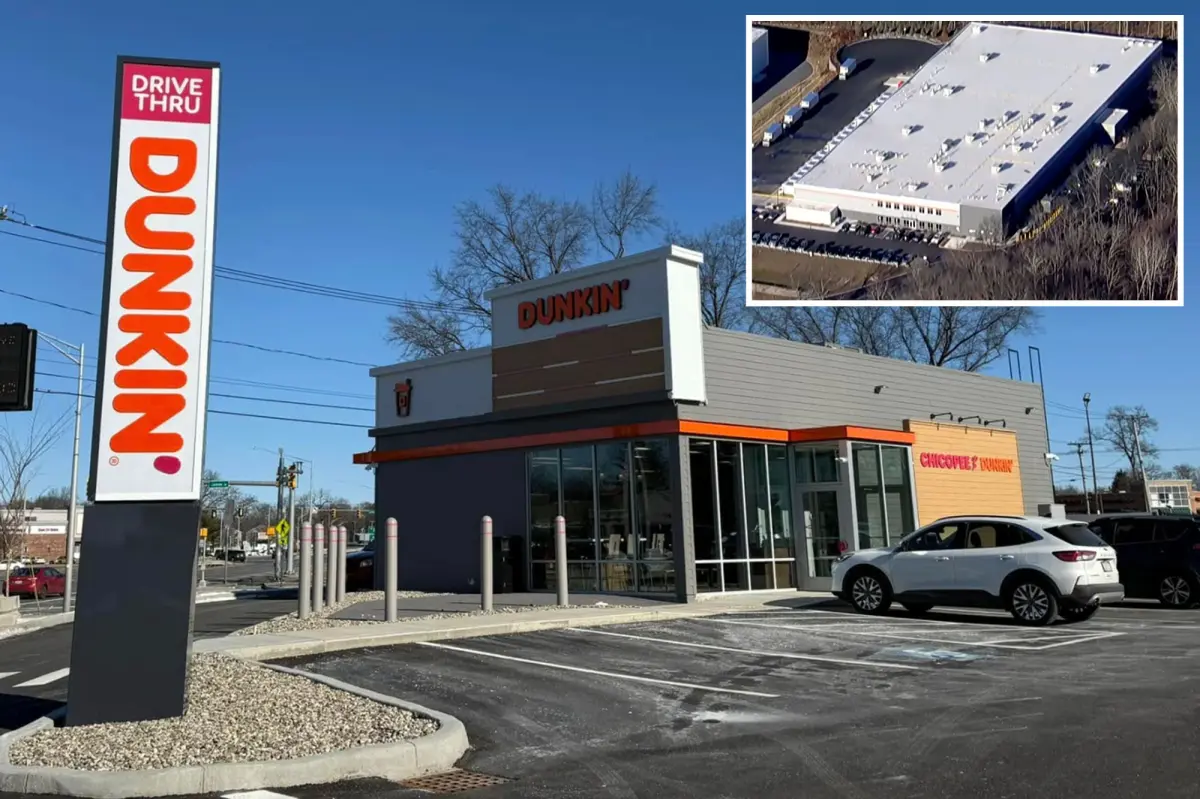
In the charming town of Haverhill, Massachusetts, an unexpected controversy has been rising like yeast in warm dough. The source of contention? A massive Dunkin’ manufacturing facility that produces a staggering one million donuts daily. Built just this year, the 93,500-square-foot factory stands as the largest Dunkin’ bakery in the United States, serving more than 200 stores operated by Cafua Management Company, the nation’s largest Dunkin’ franchisee. What should be a point of local pride has instead created a surprising divide among residents, who find themselves either enchanted or disturbed by the pervasive aroma of freshly baked donuts wafting through their community. The situation has escalated to the point where city council meetings now feature heated debates about the scent of fried dough, revealing how even the sweetest of smells can become too much of a good thing for some.
For residents like Sean Wilson, the constant donut aroma has become an unwelcome houseguest that never leaves. At a December 16 city council meeting, Wilson expressed his frustration in no uncertain terms: “My house smells like donuts all the time, all the time for the last two months. It’s distracting and it’s heavy.” His sentiment has been echoed by other community members who have approached City Councilor Shaun Toohey with similar complaints, describing an overwhelming “carnival smell” reminiscent of fried dough that permeates their homes regardless of whether windows are open or closed. These concerns extend beyond mere annoyance, as some residents have raised questions about potential air quality issues surrounding the manufacturing plant, wondering if there might be more than just aromatic inconvenience at stake.
However, the donut debate has revealed a significant split in public opinion, with many Haverhill residents embracing the sweet-scented air as a delightful addition to their neighborhood atmosphere. Bill MacDougall shared his positive perspective with NBC10 Boston, likening the smell to “a bakery” or “someone’s cooking little cakes.” With a touch of holiday spirit, he added, “It’s Christmas time, we should have smells. Christmas trees, food, joy. Use our other senses.” MacDougall even injected some humor into the situation, suggesting that “maybe Starbucks people” might be the ones taking issue with the aroma – a playful jab at the rivalry between coffee giants. His lighthearted take on the situation reflects a sentiment shared by many who see no reason to complain about such a pleasant olfactory experience.
Fellow resident Ross Heiseler, who lives in close proximity to the facility, provided another positive perspective on the situation. With a laugh, he told local news that he “could imagine a lot worse things to be smelling” and declared that “donuts is not a problem.” This pragmatic view highlights an important context often missing from such debates: industrial facilities typically produce far less pleasant odors than baked goods. The Haverhill controversy raises interesting questions about sensory expectations in residential areas and the subjective nature of smell perception. What constitutes a nuisance to one person might be a comforting, homey atmosphere to another, making it difficult to establish objective standards for what constitutes an olfactory disturbance in a community setting.
Representing Cafua Management Company, JT Couch has defended the facility’s operations, emphasizing that the plant features brand new equipment, adheres to regular cleaning protocols, and meets all regulatory standards. His simple statement at the council meeting – “We make one million donuts a day” – acknowledged the scale of production while implying that some aroma is inevitable with such volume. The situation highlights the complex balance between industrial-scale food production and residential quality of life, a challenge increasingly common as manufacturing facilities and housing developments expand into shared spaces. While food production has always created distinctive smells, the modern expectation of odorless environments creates tension when these worlds overlap, even when the scent in question is traditionally considered pleasant.
As the donut drama continues to unfold in Haverhill, city councilors have scheduled further discussion for their January meeting, and health inspectors will evaluate the plant in the meantime. This local controversy, though centered on something as seemingly innocuous as the smell of donuts, reflects broader questions about community standards, industrial presence in residential areas, and the subjective nature of sensory experiences. The division among residents – with some finding the aroma intrusive and others embracing it as a pleasant part of local character – demonstrates how even the sweetest of smells can become contentious when experienced involuntarily and continuously. As communities across America balance economic development with quality of life concerns, the Haverhill donut debate serves as a reminder that our sensory environments matter deeply to our daily experience, whether we’re running on Dunkin’ or trying to escape its aromatic reach.