




Hidden Treasures in Our Homes: The Unexpected Stories Behind the Walls
In the quiet corners of our homes, history often lies dormant, waiting to be discovered. This was certainly the case for Curtis Smith, a Wyoming homeowner who stumbled upon an unexpected piece of history during what began as a routine renovation project. His story, along with others like it, reminds us that our living spaces are more than just structures – they’re repositories of human stories spanning generations.
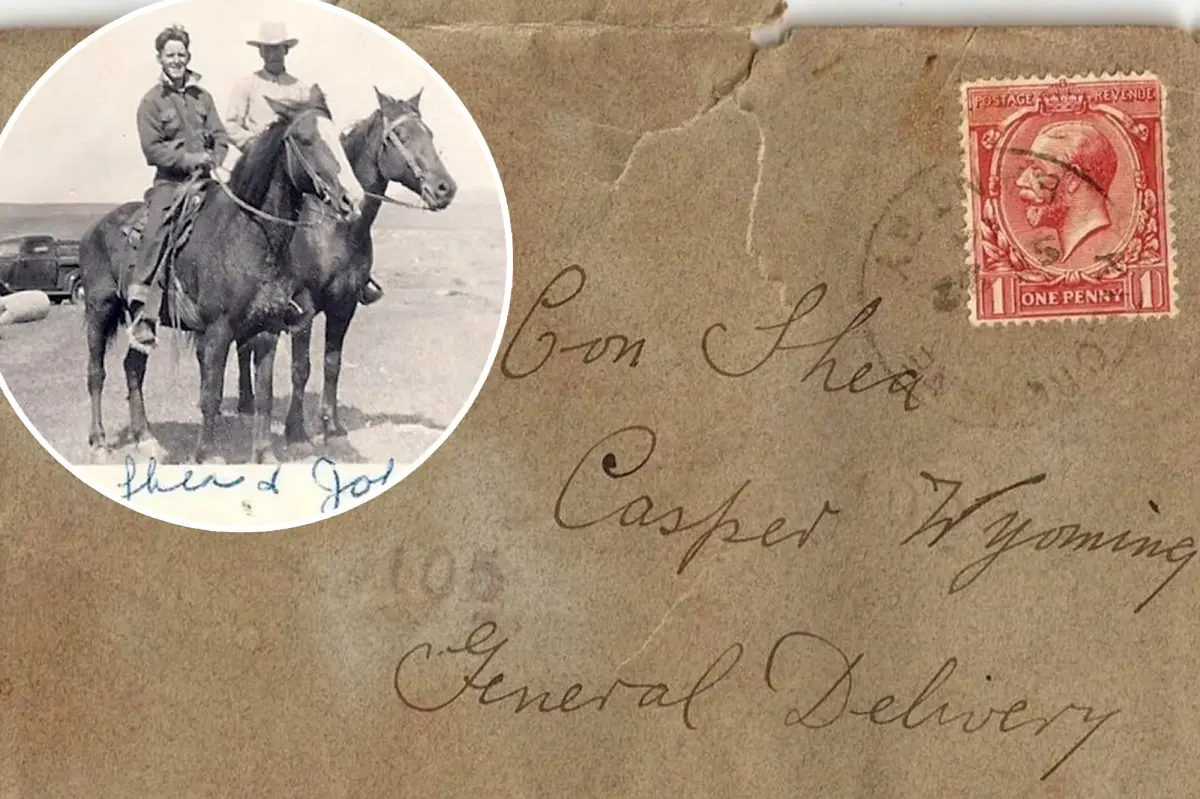
Back in 2002, Smith purchased a century-old home in Casper, Wyoming, with plans to modernize certain features while preserving its historic charm. It wasn’t until he began renovating the bedroom closet to create a new bathroom entry that the past literally came tumbling out of the walls. While cleaning up the debris of plaster and lathe, Smith noticed something unusual among the construction mess – a small blue envelope. This wasn’t just any piece of discarded paper; it was a letter that had likely fallen into the wall cavity during the home’s original construction nearly 100 years earlier. The letter, sent from Bantry, Ireland, was addressed to a man named Con Shea, the original homeowner. In this simple correspondence, a sister thanked her brother for a gift he had sent to his family back in Ireland, sharing updates about life across the ocean. This seemingly ordinary exchange between siblings bridged not just continents, but centuries, connecting Smith to the human story behind his historic home’s walls.
Intrigued by this window into the past, Smith embarked on a journey to learn more about Con Shea, the man who had built and lived in his home. His research revealed that Shea had immigrated to the United States and established himself as a highly successful sheep herder in Wyoming – a common but challenging path for many Irish immigrants seeking new opportunities in America during that era. Smith’s curiosity led him to share his discovery online, posting about the letter on his Flickr account. In a remarkable turn of events, this digital breadcrumb connected him with one of Shea’s distant relatives. The family contact enriched Smith’s understanding of his home’s first owner, sharing newspaper articles and photographs that helped complete the profile of a man who had lived generations ago. In a thoughtful gesture that closed the circle, Smith eventually sent the letter to Boston to reunite it with Shea’s living relatives – “the rightful owners” of this piece of family history.
Smith’s experience is far from unique in the world of unexpected home discoveries. Throughout the country, homeowners renovating older properties regularly uncover time capsules of sorts – whether intentionally placed or accidentally lost. These findings range from old newspapers and photographs to toys, tools, and even currency from bygone eras. Each discovery offers a tangible connection to the past, a reminder of the continuity of human experience despite the passage of time. These objects tell stories not only about the specific individuals who once occupied these spaces but also about the broader historical context in which they lived – economic conditions, social customs, technological advancements, and everyday concerns that may seem both foreign and familiar to modern eyes.
In another heartwarming example of residential archaeological discovery, Illinois resident Kaitlyn Ostolaza found a vintage wedding dress tucked away in the attic of her newly purchased home. As a bride-to-be herself, Ostolaza was immediately drawn to this romantic artifact. She shared her discovery on TikTok, where it quickly went viral with nearly 3 million views, capturing the public’s imagination with its blend of mystery, beauty, and sentiment. Ostolaza noted that the dress did not belong to the previous owners, deepening the mystery of its provenance. The elegant gown, with its impressive train that Ostolaza described as “everything,” represented not just a beautiful garment but a moment of profound importance in someone’s life – a celebration of love that had taken place under the same roof where she would soon begin her own married life. In a touching connection across time, Ostolaza expressed hope to incorporate this found treasure as her “something borrowed” in her upcoming wedding ceremony.
These discoveries remind us that our homes are more than just the spaces we currently inhabit – they are vessels of continuity, linking past, present, and future in ways both tangible and intangible. When we move into a house, we become part of its ongoing story, temporary custodians of a space that has witnessed countless moments of human joy, sorrow, celebration, and ordinary life. The walls that shelter us have sheltered others before, and will likely continue to do so long after we’ve moved on. Finding these hidden artifacts creates a unique form of connection across time – a momentary bridging of the gap between strangers who share nothing except the common experience of having called the same structure “home.” They serve as humbling reminders that our present-day concerns and celebrations echo those of previous generations, even as the specific contexts change.
Perhaps this explains why stories like Smith’s and Ostolaza’s resonate so deeply with us. In a fast-paced world increasingly focused on the new and the next, these discoveries ground us in a longer timeline of human experience. They invite us to consider not only the physical structures we inhabit but the invisible threads of story that run through them. As Smith aptly noted, “You just never know what you will come across” – a sentiment that applies equally to home renovations and to life itself. Whether it’s a letter that traveled across an ocean or a wedding dress that witnessed one of life’s milestone moments, these artifacts remind us that history isn’t just something that happens in textbooks or museums – it’s embedded in the very walls that surround us daily, waiting patiently to be rediscovered and appreciated anew.