


The Shimmering Hazard: When Glitter Turns Deadly
Glitter seems like one of those innocent joys of childhood—those sparkling flecks that make crafts pop and celebrations brighter, evoking memories of messy art projects or festive decorations. But imagine the horror of watching a little one, just three years old, turn pale and struggle for breath after a seemingly harmless accident. In a heartbreaking real-life case from Argentina, a group of doctors faced a nightmare scenario: a child hospitalized for what started as a simple inhalation of glitter dust. It’s a stark reminder that not everything that glitters is harmless; in fact, it can be downright dangerous. This incident, detailed in a medical journal on poisonings, highlights the hidden risks lurking in everyday crafting supplies. Parents and caregivers, think of it this way—if you’ve ever battled to vacuum up stray glitter from your carpet, picturing those same iridescent particles lodged deep in tiny lungs feels like a parent’s worst fear come true. The girl’s story began innocently enough, but it quickly spiraled into a medical emergency that underscores how quickly joy can turn to peril in the hands of curiosity. Glitter, that playful confetti of colors, is anything but trivial when it comes to young kids. It’s not just about the mess; it’s about the potential for severe, life-threatening complications. Doctors have now stepped in with a chilling warning: glitter isn’t just fun—it’s packaged danger. As we delve into this case, it’s easy to humanize the situation. Picture a family gathering around holiday ornaments, the air filled with laughter and the soft crunch of glitter sprinkling from a bottle. A toddler wanders too close, and in a moment of distraction, inhales a cloud of the stuff. Suddenly, what was meant to be festive fun becomes a ordeal that shatters the holiday spirit. The doctors, who treated her, emphasized that this wasn’t an isolated freak event but a symptom of a broader issue with how we perceive everyday products. For many of us, glitter evokes nostalgia—birthday parties, school projects, or even glamorous fashion—but for this child, it became a health crisis. The case report paints a vivid picture of vulnerability, where a simple craft material crosses the line from delight to detriment. It’s a call to awareness, reminding us that innocence can mask malevolence, and that parental vigilance is key in a world full of hidden risks. In retrospect, it forces us to question: how many warnings have we shrugged off, assuming harmlessness? This girl’s ordeal humanizes the statistics, turning a medical anomaly into a deeply personal cautionary tale.
The details of the incident are both harrowing and eye-opening, transforming a typical pediatric emergency into a vivid cautionary tale. According to the case report, the unnamed three-year-old was decorating an ornament with her family when tragedy struck. In an instant, she accidentally inhaled a substantial amount of glitter dust—a seemingly fleeting mistake that proved to have profound consequences. The fine particles didn’t just tickle her nose; they invaded her airways, setting off a cascade of distressing symptoms that escalated rapidly. She arrived at the hospital exhibiting respiratory distress, her breathing labored and frantic, coupled with altered consciousness that left caregivers in sheer panic. It wasn’t just a bad cough; her tiny body was rebelling in ways that highlighted the body’s fragility. On top of the inhalation, glitter dusted her skin, irritated her eyes, and some was ingested, compounding the issue. Doctors noted that initially, she experienced vomiting and sharp abdominal pain, as if her body was purging the invader through every outlet. More alarmingly, patches of her skin began to turn blue—a cyanosis indicative of oxygen deprivation that painted a terrifying picture of internal struggle. Medically, this led to subcutaneous emphysema, a rare and unusual condition where air gets trapped beneath the skin, causing swelling that must feel like a balloon inflating under the surface. Even worse, a pneumothorax developed on the right side of her lung, where air leaked into the space between the lung and chest wall, collapsing the organ and making each breath a battle. It’s hard not to empathize with the family’s despair; what started as a cheerful family activity morphed into a scene straight out of a horror story, where the culprit was something as benign-seeming as glitter. Humans instinctively relate to such tales because we’ve all had those “oops” moments with kids—spills, accidental tastes, or inhaled sneezes—but this took it to exponential extreme. Imagine the helplessness of watching a vibrant child dim, her playful spark extinguished by microscopic invaders. The report underscores how exposure led to oxidative stress from the metals within, which we’ll explore later, but here, it’s about the immediate humanity: a child’s pain magnified by her inability to articulate it, relying on adults to interpret the cries and blue tinges. This case humanizes medical jargon, reminding us that behind every statistic is a family forever changed. It prompts reflection on how we treat seemingly safe products—do we dismiss the “small print” warnings about toys or crafts? The incident also raises questions about product design: why is something so small in particles so readily available? By narrating her symptoms and distress, we see the real toll on a life just beginning, fostering a deeper appreciation for preventive measures and swift medical intervention.
The medical response to this glitter-induced crisis was a lifeline, showcasing the dedication of healthcare professionals in the face of an unconventional emergency. Upon her hospital admission, the team acted swiftly to stabilize the little girl, recognizing that time was critical in countering the compound effects of inhalation, skin contact, and ingestion. Doctors administered antibiotics to combat any potential infections stemming from the compromised respiratory system, while oxygen therapy helped reoxygenate her blood and ease the blue-tinged skin. However, the severity necessitated mechanical ventilation, a machine that breathed for her for a grueling seven days straight—a period that must have felt interminable for her worried family. Think of it as an artificial lung doing the heavy lifting, pumping air in and out while her tiny body fought to heal. After that intense week, she was monitored closely until discharge a few days later, emerging as a survivor but with a roadmap of check-ups ahead. Fast forward three months, and a follow-up revealed bronchiectasis in both lung bases, a scarring condition that could predispose her to recurrent respiratory infections—a lingering shadow over her childhood. It’s stories like these that ground abstract medicine in human emotion; the doctors weren’t just treating a patient, they were nurturing hope. We can picture the relief on the family’s faces as ventilators whirred and alarms subsided, yet anxiety lingers with each new sniffle. Similar interventions in other cases, like bronchoscopy and lavage in a 2022 incident, highlight a pattern: quick action mitigates long-term damage. For the caregivers, this phase is about rebuilding trust in everyday joys, perhaps with newfound caution around sparkles. The girl’s relative stability post-recovery speaks to resilience, but it humanizes the cost—weeks of separation, sleepless nights, and ongoing vigilance. It also amplifies the challenge for doctors, who must innovate for rare scenarios like “glitter aspiration,” turning textbooks into real-world saviors. Parents reading this might feel a mix of gratitude and guilt, spurred to scrutinize household items more closely. Ultimately, this response phase teaches us about the unsung heroes in scrubs, whose tireless work bridges the gap between accident and recovery, reminding us that even in the scariest moments, hope persists.
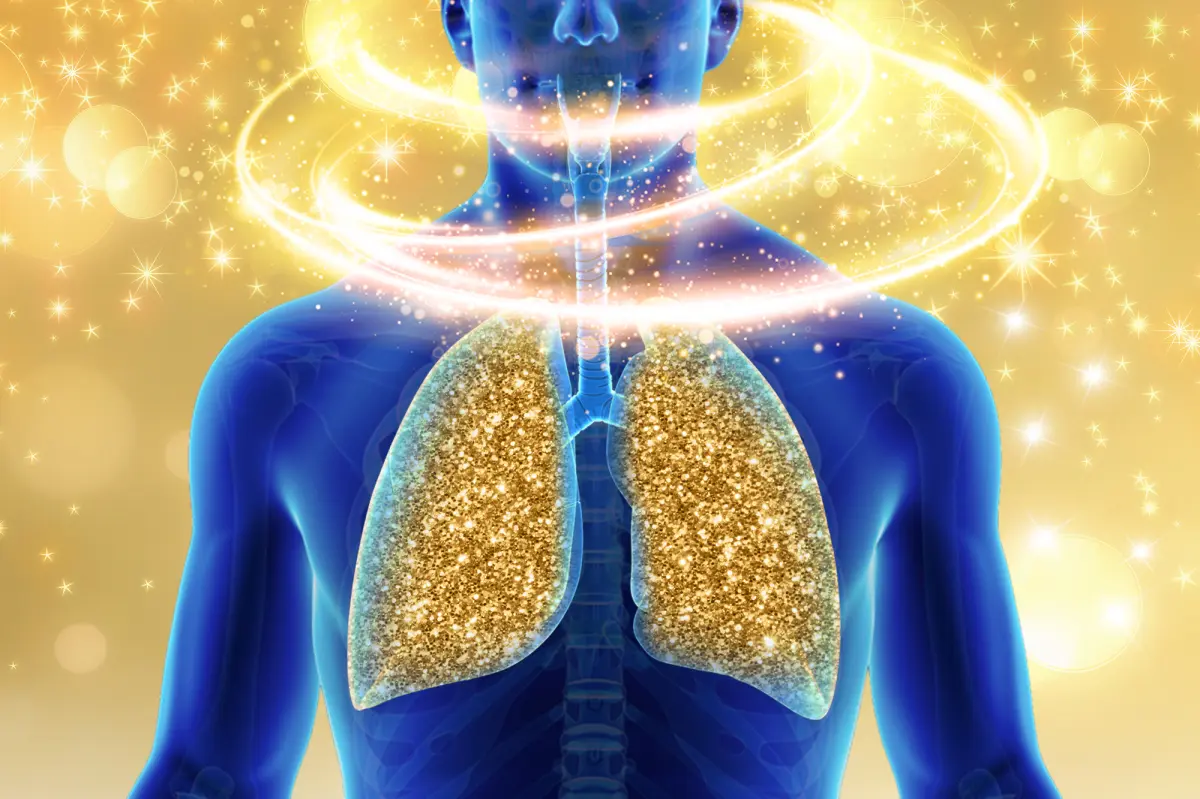
Peeling back the layers of this ordeal reveals that glitter’s danger stems from its composition, a seemingly innocent mix that’s surprisingly toxic under the surface. Most glitter, far from being the magical stuff of fairy tales, is actually crushed bronze—an alloy blending copper and tin—with binders like zinc or stearin holding it together. This isn’t the precious metal; it’s industrial-grade, and in this form, it transforms from helpful minerals into poisons. Copper and zinc are essential nutrients our bodies crave in balanced doses, supporting everything from immune function to enzyme activity, but when ingested or inhaled in large, unregulated amounts, they unleash chaos. Copper, in particular, becomes a villain, generating free radicals that bombard cells with oxidative stress, damaging tissues like a silent storm. The ultra-fine particles, those invisible assassins in craft supplies, paints, and cosmetics, penetrate deep, where coarser glitter might only irritate but not absorb into the bloodstream. It’s like comparing sand to dust mites— one grates externally, the other invades internally. Doctors in the report classify this as “severely toxic,” potentially fatal for children, whose smaller bodies metabolize substances differently. Humanizing this, imagine presenting a child with a shiny toy that outwardly charms but inwardly corrodes; it’s a betrayal of trust. We’ve all encountered copper’s benefits—think pennies or supplements—but this case flips the script, showing how context matters. The 3-year-old’s exposure illustrates oxidative damage in action, from inflamed airways to systemic effects, painting a picture of molecular warfare. Other metals like aluminum adjuvants in vaccines get scrutiny, yet glitter slips under the radar. Here, the science meets emotion: a parent’s love can’t shield against invisible foes, prompting broader questions about manufacturing. Why aren’t labels clearer? It’s a wake-up call for consumers and creators alike, fostering empathy for how a product’s design can echo in health. By explaining the chemistry without jargon overload, we see glitter not as villainous but as a cautionary lesson in duality—beauty masking risk. This knowledge empowers us to advocate for safer alternatives, turning awareness into action.
The glitter incident isn’t isolated; it echoes in a chorus of similar cases that paint a pattern of overlooked risks, amplifying the urgency of reform. In 2024, a four-year-old girl’s attempt to snack on “non-edible but non-toxic” gold cake dust backfired spectacularly, leading to metal pneumonitis—an inflammatory lung condition—and scans showing chronic pulmonary disease four months post-recovery. She ingested what was meant for decoration, defying labels that blurred safety lines, her young body ill-equipped to handle the metallic onslaught. Similarly, a 15-month-old in 2022 battled copper poisoning after swallowing glitter, requiring bronchoscopy—snaking a tube to cleanse airways—and lavage, flushing out toxins with saline. These stories, like the Argentine case, humanize the data: behind each number is a scared child, breathless nights, and lifelong scars. The FDA has chimed in, cautioning against using non-edible glitter on foods, urging edible-specific alternatives. Imagine families rethinking traditions— holiday baking sans sparkle, or crafts with safer glitters—to protect the vulnerable. Satirical outlet The Onion prefigured this in 2005 with “glitter lung” satire, joking about teachers’ afflictions from breaths of sparkle, eerily prophetic for kids where exposure is 100 times riskier. It’s a nudge to laugh through seriousness, reminding us exposure accumulates. Doctors distinguish ultra-fine from large glitter; the former’s absorbability fuels damage, like asbestos in fibers. Personal touches shine here: envision a toddler’s first birthday cake glittering unwittingly, fostering guilt among adults. These parallels build camaraderie in caution, showing global echoes from Argentina to the U.S. The warning extends—occupational hazards for artists, or accidental inhales during play. It fosters empathy, urging support for affected families, and vigilance in our glitter-filled lives. By sharing these narratives, we transform statistics into shared stories, driving home that prevention starts with awareness.
Fueling the clamor for change, the case’s doctors are rallying for regulation, arguing that ultra-fine glitter’s dangers demand tighter controls to shield children from needless harm. They propose age restrictions, perhaps barring sales to those under 14, envisioning craft stores as guardians requiring IDs for sparkly purchases—a humorous yet practical shift from free-for-all. This call, rooted in the 3-year-old’s ordeal, highlights gaps in product oversight; while foods get edible glitter, crafts lack safeguards for inhalation risks. Imagine the outrage if toys were laced with toxins—glitter parallels this, with bioaccumulation in lungs akin to pollutants. It humanizes policy debates: parents petitioning for safer spaces, innovators rethinking formulas with biodegradable shimmer. The Onion’s mockery of “glitter lung” underscores avoidance through laughter, yet the plea is serious—child health at stake. We’ve seen regulations evolve—lead paint bans, toy safety standards—so why not glitter? Creativity flourishes without peril; alternatives like biodegradable options emerge. Doctors urge labels warning of non-toxicity claims’ pitfalls, empowering choices. For families, it’s advocacy in action: sharing stories, pressuring manufacturers. The girl’s recovery inspires hope, but her bronchiectasis warns of futures guarded. In conclusion, this sparkly saga teaches balance—joy tempered by caution. Glitter’s allure persists, but with reform, it can stay magical, not menacing. Let’s champion safer crafts, ensuring kidhoods sparkle safely.