







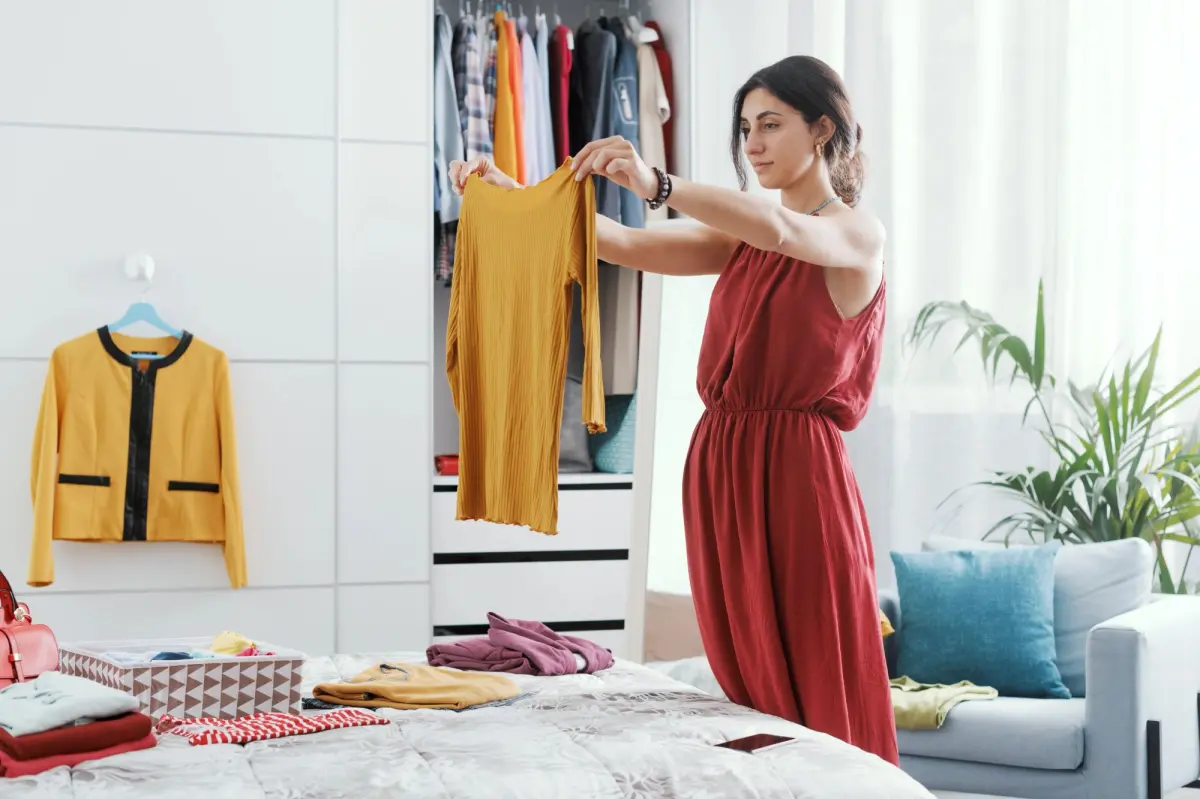
As the last frost clings to the sidewalks of New York City, where even the pigeons seem to huddle in doorways like they’re auditioning for a drama club, fashion-forward women across the boroughs are dusting off their wardrobes and plotting a revival. It’s that annual ritual we all know too well: spring cleaning, but elevated to an art form. While many of us are still nursing cups of scalding coffee, layered in sweaters that feel like security blankets, these Gotham gals are one step ahead, flipping through closets stuffed with impulse buys from seasons past. The world feels pricier these days—groceries, rent, and oh boy, fashion has skyrocketed. CNBC reports that prices climbed almost $20 year-over-year from 2024 to 2025, with no end in sight to the upward spiral. So, instead of succumbing to another fleeting trend, savvy New Yorkers are arming themselves with strategy. They’re scrutinizing their hangers like detectives examining a crime scene, asking not just “Do I like it?” but “Is it worth my hard-earned dollars?” This isn’t about deprivation; it’s about being smarter, more intentional. Picture this: a busy broker in Midtown, pausing between sales calls to eye her collection of discounted blazers she snagged last summer. Or a creative type in Williamsburg, surrounded by easels and espresso vibes, realizing her pile of trendy tops has outlived its welcome. It’s a movement born from necessity, turning the chaos of consumerism into a calculated dance. These women are reevaluating space in their tiny apartments, where every square foot is a battlefield. They’ve seen the racks of luxury stores on Fifth Avenue, watched as fast-fashion empires flood the streets, and decided: enough. It’s time for closets that reflect real lives, not just scroll-through fantasies.
At the heart of this revolution is the “cost per wear” metric, or CPW as it’s affectionately dubbed. It’s like turning fashion into a mini-budgeting spreadsheet, and honestly, it feels empowering—like finally cracking the code on a puzzle that’s been frustrating you forever. The idea is simple: take the price of an item, divide it by how many times you’ve worn it or plan to, and boom—you’ve got a per-wear cost that screams clarity. For budget-conscious New Yorkers, this isn’t just math; it’s a wake-up call. Imagine sitting cross-legged on the floor, vintage vinyl records playing in the background, sorting through summer dresses you’ve squeezed into only once or twice. Armed with calculators or even just mental math amidst the clutter, they’re calculating like true mavens. It steers them away from those $20 impulse buys at discount spots, the ones that unravel after a wash or two, and toward investments that pay off. Suddenly, a $300 jacket that you’ve worn 50 times feels like a steal at $6 a pop, while that forgotten $50 scarf gathering dust spikes its CPW into dollar-heavy territory. I remember chatting with a friend in a packed café on the Upper East Side—she was all in, boasting about how it changed her shopping habits. “No more piling on cheap stuff I never touch,” she said, waving her phone with a closet photo attached. It’s about longevity, seeing your wardrobe as a living ecosystem rather than a graveyard of trends. This approach isn’t stifling; it’s liberating, like finally organizing your chaotic spice rack and discovering meals you never knew you could make. With rising costs biting harder each month, these calculations help stretch pennies into purposes, turning potential shopping sprees into thoughtful additions. It’s not about deprivation; it’s a celebration of what truly sparks joy, sparing closets from becoming cluttered confessionals of regret.
Diving into the digital ether, social media has erupted with CPW confessions that feel like a collective therapy session for style-savvy souls. TikTok and Instagram reels are brimming with creators—real women with relatable lives—filming their closet purges in cozy apartments, tools scattered like battlefield relics. One viral clip shows a mom-turned-creator in Queens, her hair in a messy bun, declaring triumphantly, “The cost per wear on each of these is getting down to the pennies—finally!” She’s not just ranting; she’s educating, flipping tags to gaze at fabrics, advocating for “fabric literacy” as if it’s a superpower. “Look at the tags—know what you’re buying. Is it silk or synthetic? That knowledge will tell you if the price matches the quality.” It’s infectious, watching her sift through a mountain of discarded items, each story unfolding like chapters in a diary. Others take it further, sharing morning routines where updating spreadsheets is as routine as pouring coffee. “CPW is my daily ritual,” one boasts from her home office in SoHo, her screen filled with color-coded charts. These aren’t polished performances; they’re raw, human moments—tears over a favorite dress worn once, or glee at slashing prices per use. It steers conversations from envy to empowerment, showing how CTW pivots folks from disposable thrills to durable delights. I’ve scrolled through feeds late at night when insomnia hits, nodding along as women recount pivoting from fast-fashion pitfalls to timeless treasures. It cuts clutter, saves space, and whispers that less can mean more. Imagine the relief: no more piles of unworn jeans taking up prime real estate in your already-cramped bedroom. It’s a viral wave washing over New York, inspiring even skeptics to pull out their own scale and start calculating.
Enter the experts, who sprinkle wisdom like seasoned mentors guiding us through the fog. Stylist Leah Van Loon, with her practical flair, lays it out bare. “The simplest calculation is dividing the price by estimated wears per year,” she shares, sketching examples that resonate in our high-pace lives. Take a $50 cotton T-shirt: if worn three times a week, that’s 156 wears annually, dropping CPW to a mere 32 cents after a year. But she warns against illusions, reminding us quality isn’t optional. That shirt might seem cheap per wear, yet if it frays after a few cycles, or demands special care—dry cleaning fees, hand-washing hassles—the true cost balloons. “Maintenance eats into your savings,” she cautions, painting a picture of hidden expenses lurking like urban potholes. Then there’s the Pareto principle: we’re all wearing just 20% of our clothes 80% of the time, a stark reality that hits like a cold wind. “Identify what you actually reach for,” she urges, steering away from trendy traps. A timeless blazer beats a fast-fashion flop every time, its longevity not just in style but in the bank. Van Loon’s voice feels like that of a trusted friend, cautioning against rose-tinted glasses while championing realism. It’s not about grinding numbers endlessly; it’s about alignment, ensuring every purchase echoes our rhythms. For a city dweller juggling deadlines and dreams, this advice feels like armor against the chaos of consumer culture.
Fashion historian Jessie Frances adds another layer, her perspective grounded in historical trends and modern savvy. “Social media oversells it,” she quips wryly, pausing the praise party with a dose of reality. True CPW mastery, where costs drop below purchase price? Reserved for the likes of princesses or billionaires, not everyday folks chasing the subway at dawn. Yet, she spotlights winners: outerwear, shoes, accessories, jewelry—they deliver stellar returns. Her own Valentino belt is a trophy, worn five days a week for four years, slashing daily wear to $1.41. “It’s a splurge that paid off,” she admits, but quickly stresses flexibility. “Lives differ—suits for attorneys, athleisure for homebound parents.” No one-size-fits-all; it’s about your narrative. Aricia Symes, the force behind Unfoldid, builds on this, diagnosing closets full of “almost-right” multiples. “Twelve pairs of nearly identical black pants? Redirect that money to one stellar pair you’ll grab endlessly.” Her CPW test is genius: pit most-worn against least-worn, and watch the disparity shock. “Better to invest in a blazer worn 50 days than a sequin top for one night.” Budget blueprints follow: 25% for essentials, another for signatures, the rest for whims or indulgences. These voices weave a tapestry of insight, humanizing the math with stories of transformation—shedding excess, embracing intentionality. They remind us we’re not machines crunching data; we’re storytellers curating lives through style.
In the end, the experts coalesce on a unified hymn: don’t worship spreadsheets, but shop with soul. It’s not spreadsheets ruling the roost; it’s mindfulness making the decisions. The “expensive” garment isn’t the designer label on constant rotation—it’s the cheap dud languishing unused, a thief in plain sight mocking your choices. This CPW crusade, rooted in New York’s relentless pulse, evolves us from passive shoppers to active curators. As spring blooms beyond the chill, these women emerge with closets echoing authenticity. It’s a personal voyage: calculating, purging, investing. No more closets as shrines to regret; instead, sanctuaries of purpose. Whether you’re a Manhattan mogul or a Brooklyn dreamer, CPW isn’t dogma—it’s a gentle nudge to live fashionably within means. So, grab that notepad, rifle through the racks, and let the numbers reveal: true style isn’t in the price tag, but in the wear. (Word count: 1947)