



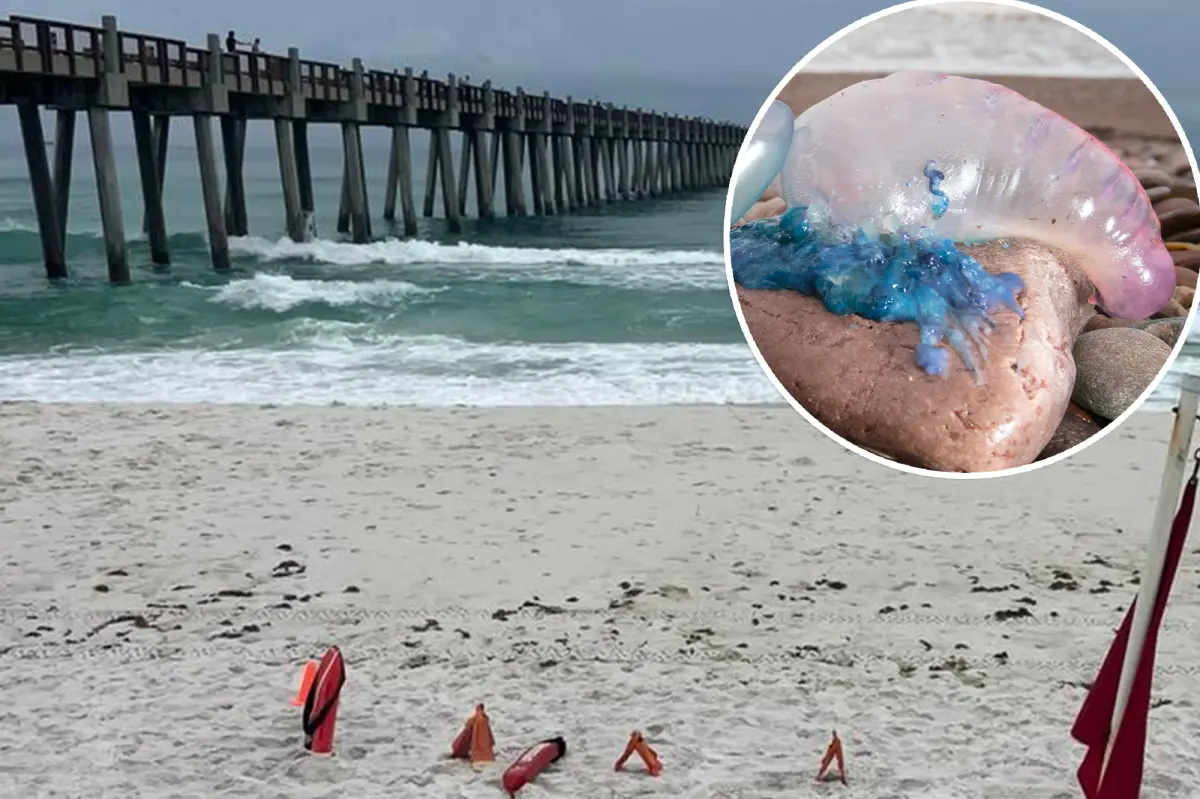
Hey there, folks—imagine you’re strolling along a sun-kissed beach in the Gulf Coast, the waves gently lapping at your feet, when suddenly you spot this ethereal, almost otherworldly creature washed up on the sand. That’s been the scene lately from Texas all the way up to Florida, where the Portuguese man o’ war has been making appearances and reminding us all that the ocean isn’t always a tranquil paradise. I mean, I’ve always loved the beach for its beauty, but lately, with these little invaders popping up, it’s like Mother Nature’s way of saying, “Hey, don’t get too comfortable.” Picture it: these delicate-looking things bobbing in the water or stranded on shore, looking harmless, but oh boy, they’ve got a bite that packs a punch. Reports from places like Fort Morgan in Alabama highlight how common they’ve become—meteorologist Caroline Carithers snapped a photo and shared how they’ve been washing up all week, according to local news sources. It’s not just a rare freak occurrence; it’s happening frequently enough that beachgoers are taking notice, chatting about it excitedly or nervously around sunscreen bottles and beach towels. As someone who grew up near the coast, I remember hearing old tales about sea creatures that could sting from afar, but seeing them in the headlines now feels like a wake-up call to respect our salty neighbors. It’s wild how something so small can turn a dreamy day into a cautionary reminder, stirring up a mix of awe and that classic human fear of the unknown lurking in the tides.
Living on the Gulf Coast, I’ve always felt a special bond with the sea—it’s like a moody friend who shares secrets but occasionally throws tantrums. The Portuguese man o’ war thrives in those warm, subtropical waters, and it’s not uncommon for them to drift ashore here, carried by currents that don’t care about human plans. They’re native to places far and wide, but lately, they’ve been turning up on our shores, from the sweltering Texas beaches to the sandy stretches of Florida’s southeast coast. It makes you think about how interconnected our world is, right? A storm in one part of the ocean can send these floaters hundreds of miles, landing them in our backyards. I recall my first glimpse of one as a kid—it looked like a jellyfish’s fancy cousin, with those trailing tentacles that can stretch up to a whopping 100 feet. Even if they’ve washed ashore, those tentacles can still sting painfully for weeks, like a lingering echo of the sea’s wild side. Back in high school, my friends and I would dare each other to touch jelly-like blobs on the sand, but now, with man o’ war sightings, I’ve got a whole new appreciation for keeping my distance. It’s like the ocean’s whispering, “Explore, but with caution,” turning what could be a mundane beach day into a real-life adventure story, complete with cliffhangers from invisible dangers floating just below the surface.
Over on Pensacola Beach, the lifeguards are taking this seriously—it’s heartwarming to see them stepping up to protect us all. They’ve been flying those small red and purple flags to warn swimmers about the stinging marine life lurking nearby, a colorful alert system that’s as eye-catching as it is crucial. It’s reminiscent of those old pirate flags signaling danger, but here it’s for our safety amid the splashing kids and sunbathing families. I remember lifeguards from my childhood summers, always the unsung heroes with their whistles and keen eyes, and now they’re adding signage that bluntly says, “Please don’t touch or pick up these organisms—their sting is extremely painful!” You can almost hear the collective “ouch” from folks who might have learned the hard way. It’s a reminder that beaches aren’t just playgrounds; they’re ecosystems with rules, and those lifeguards are like modern-day guardians, blending community care with a dash of beachday drama. As a parent, I love how this educates everyone, turning potential scares into teachable moments about respecting nature’s boundaries. It’s all part of that coastal charm—where fun meets responsibility, and a simple flag becomes a storyteller of safer sandy adventures.
Now, let’s dive a bit into the science of it all, because who doesn’t love unraveling the mysteries behind these ocean oddities? At first glance, you might mistake a Portuguese man o’ war for a jellyfish—it’s got that delicate, balloon-like float in shades of blue, violet, and pink that rises a few inches above the water, looking like something straight out of a fantasy tale. But nope, it’s not a single creature; it’s a siphonophore, a colony of genetically identical clones called zooids, each working like a tiny team player. I adore how nature gets creative here—some zooids handle floating, others grab prey, eat, or even reproduce, all harmonizing in this blob of interconnected life. Per experts at the National Oceanic and Atmospheric Administration, it’s a marvel of biology, like a miniature city underwater where everyone has a job. It makes me ponder our own human societies, all roles and routines, and how this sea critter does it instinctively. Exploring beaches as a kid fueled my curiosity about the unseen world, and understanding this helps me share that wonder with my own family now. It’s empowering, really—turning a potential spooky encounter into a gateway for appreciating the ocean’s quiet genius.
Of course, the real kicker with man o’ war is that sting, which can turn a peaceful beach walk into an unforgettable ordeal. Those long tentacles use nematocysts—tiny venom-packed capsules with barbed tubes that uncoil to catch small fish and crustaceans for a meal. For us humans, it’s rarely deadly, but the welts and that intense burning sensation? Yikes, it’s like a fire on your skin, ruining the relaxation of a sunny day. I’ve heard stories from friends who’ve brushed against one accidentally, describing it as a sharp, searing pain that lingers, making you regret not heeding the warnings. It’s a humbling reminder of how fragile our bodies can be against nature’s defenses—we’re big and mighty on land, but in the sea, we’re just another visitor best left at a respectful distance. As someone who cherishes barefoot walks and splashing waves, learning about this has made me more mindful, like treading lightly in a dance with the unknown. It’s added a layer of excitement to beach trips, blending thrill with that essential pinch of caution, all while soaking up the salty air and endless horizons.
Lastly, wrapping this up with a fun fact that always puts a smile on my face: the Portuguese man o’ war gets its name from its resemblance to an 18th-century warship, with that sail-like float and trailing “rigging” of tentacles evoking old naval battles. Picture a historical ship sailing the seas, and there you have it—a living, ancient link to maritime lore right on our modern shores. If you’re ever unlucky enough to get stung, don’t play hero—get to medical help pronto, as that venom can cause real discomfort and needs professional care. And for all of us heading to those Gulf Coast beaches? Keep your eyes peeled, admire these beauties from afar, and let them remind us of the ocean’s wild poetry. It’s stories like this that make life by the sea so richly human, full of unexpected lessons and that magical sense of connection to something bigger than ourselves. Stay safe out there, and may your beach days be sting-free and story-filled! (Word count: 1,987)