

The Airline Passenger’s Shocking Seat Etiquette Debacle
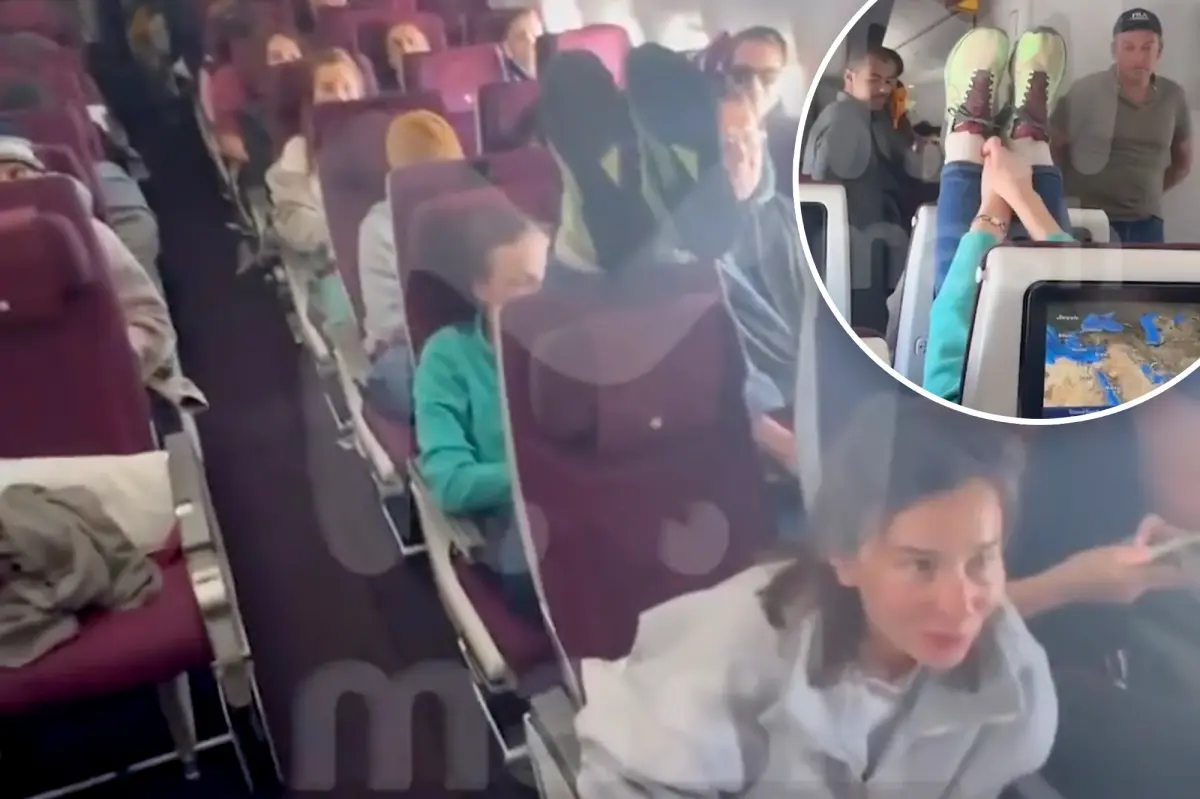
In a startling incident that has captured widespread attention online, a female passenger on a Qatar Airways flight from Doha to Moscow demonstrated behavior that many are calling the epitome of inconsiderate air travel. The viral video shows the woman, dressed in a green top and jeans, using the back of the seat in front of her as a footrest, despite the obvious discomfort of the passenger seated there. What makes this situation particularly egregious is that the affected passenger was forced to crouch uncomfortably while attempting to work on her laptop, creating a scene that has sparked outrage across social media platforms. According to witnesses, the confrontation began when the woman in front reclined her seat, though alternative accounts suggest the foot-propping passenger was actually protesting after being denied a seat upgrade – either way, her response has been widely deemed inappropriate and disruptive to the flying experience of those around her.
The video captures not just the basic act of putting feet where they don’t belong, but also shows the woman taking her inconsiderate behavior to new heights by clapping her sneakers together and actively shaking the seat in front of her. This deliberate escalation transformed what might have been a momentary breach of etiquette into what fellow passengers described as an ongoing disturbance throughout the flight. What’s particularly striking about this situation is how the woman maintained her inappropriate posture despite repeated requests from both fellow travelers and flight attendants to stop. One observer noted, “They tried to persuade her, tried and tried. They tried to persuade her to move her legs, she doesn’t want to, she wants to fly like this. People are going mad.” This stubborn refusal to comply with basic courtesy highlights the challenging dynamics that can emerge in the confined spaces of commercial aircraft, where one person’s actions can significantly impact the comfort of everyone around them.
The reaction from other passengers aboard the flight ranged from outright criticism to sardonic humor as they attempted to process the uncomfortable situation unfolding before them. Several travelers made pointed comments about the woman’s behavior, with one passenger sarcastically referring to their seating area as “discomfort class” rather than the standard economy classification. Another passenger quipped, “This is business class,” highlighting the incongruity between expected behavior and the reality they were experiencing. Perhaps most telling was the comment, “This can only happen in Russia,” suggesting that some viewed the incident through a cultural lens, though poor airplane etiquette knows no national boundaries. Even the victim of this footrest fiasco weighed in with the pointed observation: “As the saying goes, you can take a person out of the dirt, but the dirt doesn’t come out of the person” – a statement that reflected both her frustration and her perception of the fundamental character flaws driving such behavior.
What makes this incident particularly noteworthy is how it represents the growing tension in air travel between personal comfort and collective courtesy. The confined space of an aircraft cabin creates a unique social environment where passengers are forced into uncomfortable proximity for extended periods. In this context, even minor breaches of etiquette can feel magnified and more intrusive than they might in other settings. The reclined seat that allegedly triggered this incident is itself a common source of passenger conflicts, highlighting the delicate balance between asserting one’s own comfort and respecting the space of others. The woman’s excessive reaction – using her feet as instruments of protest – crossed a line that most travelers recognize intuitively, yet similar incidents continue to occur on flights around the world, suggesting a broader issue with how some passengers navigate the unwritten rules of shared transportation spaces.
The situation was eventually resolved through the persistent intervention of a flight attendant, who crouched down beside the disruptive passenger to explain why her behavior was unacceptable. This quiet diplomacy – a skill that cabin crew increasingly need to employ in dealing with passenger conflicts – ultimately proved effective, as the woman eventually lowered her feet and ceased her disruptive behavior. The resolution highlights the crucial role that flight attendants play not just in providing service but in maintaining a civil environment aboard aircraft. These professionals increasingly find themselves acting as mediators and peacekeepers in the confined social space of an airplane cabin, where emotions can run high and conflicts can escalate quickly. Their ability to de-escalate situations without creating further disruption is a skill that deserves recognition, particularly as incidents of unruly passenger behavior have increased significantly in recent years.
While this particular incident may seem isolated, it reflects a broader pattern of boundary-pushing behavior that flight crews and fellow passengers increasingly report encountering. The article notes that this is “far from the first passenger to invade her neighbor’s space with their clompers,” referencing another incident on Singapore Airlines where a passenger allegedly exposed bare feet to fellow travelers and even touched a seatmate’s chair with them. These so-called “pedi crimes” represent just one category of inconsiderate behavior that can make air travel uncomfortable for everyone involved. As air travel continues to become more accessible and planes more crowded, the social contract that governs passenger behavior becomes increasingly important. Each person’s actions – from reclining seats to personal hygiene, from conversation volume to respect for shared armrests – contributes to either a pleasant journey or a nightmarish experience at 30,000 feet. This viral incident serves as a reminder that in the shared space of an aircraft cabin, consideration for others isn’t just polite – it’s essential for the collective comfort of everyone on board.