

Finding Comfort in the Skies: One Traveler’s Unconventional Stretch
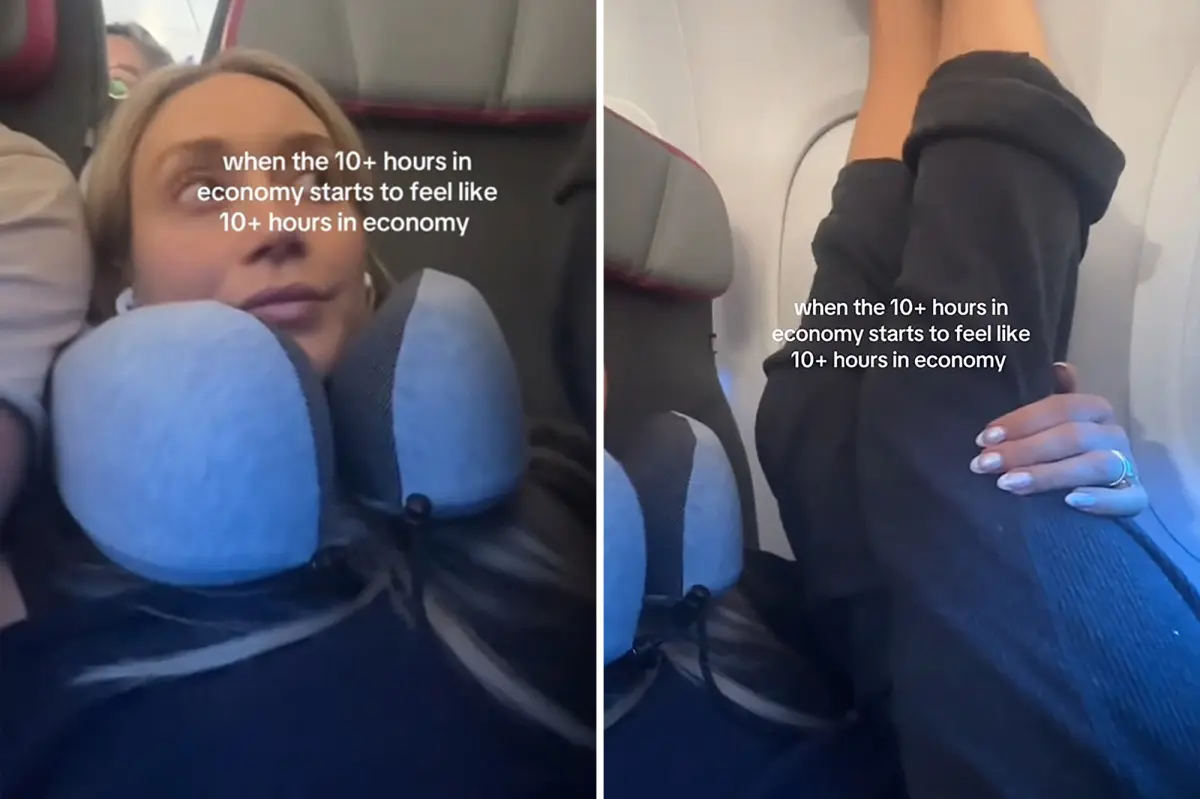
In the cramped confines of economy class, where personal space becomes a precious commodity, passengers often find creative ways to endure long-haul flights. Recently, one traveler’s unorthodox approach to in-flight comfort sparked an internet sensation and raised questions about airplane etiquette. McKailey Fast, a 29-year-old content creator and Pilates instructor, found herself at the center of a viral debate after posting a TikTok video that captured her unusual stretching method during a 12-hour flight from Paris to California. The video, which garnered over a million views, showed Fast with her legs elevated against the airplane wall—a sight that prompted both criticism and support from viewers worldwide. While seated in a window seat beside her husband, Fast explained that her unconventional position was a brief attempt to alleviate tailbone pain and assist with lymphatic drainage, particularly as she had forgotten her compression socks for the long journey. According to Fast, this temporary stretch didn’t disturb fellow passengers, and even received positive acknowledgment from a flight attendant who remarked it “looked like a great idea.” However, the internet’s reaction proved far more divided, with the court of public opinion split between those who found the behavior inappropriate and those who saw it as a harmless attempt to find comfort in an inherently uncomfortable situation.
The video ignited a firestorm of comments that reflected the polarized views on airplane etiquette. Critics expressed their disapproval with comments like “Girl get your feet off the damn wall” and “Our ancestors on boats for months are rolling in their graves,” suggesting that modern travelers should be able to endure temporary discomfort without resorting to such unusual postures. These comments reflect a common sentiment that public transportation spaces come with unwritten rules about maintaining dignity and respect for shared environments. On the other hand, Fast found defenders who saw nothing objectionable about her stretching technique. Supporters argued that long flights are uncomfortable experiences, and passengers should be allowed to seek relief as long as they don’t disturb others. One commenter noted, “As someone who flies all the time this is literally so fine. It’s uncomfy, if you can find a way to bring some comfort I’m happy for you. Y’all need to stop being so afraid of feet.” This perspective highlights how personal comfort sometimes clashes with social expectations, especially in the confined quarters of an airplane cabin where passengers remain in close proximity for extended periods.
Travel experts weigh in on such situations with nuanced perspectives that acknowledge both personal comfort needs and social responsibility. Gary Leff, a respected travel blogger from View From the Wing, suggests that passenger behavior “needs to be within the bounds of odor and disruption.” His guidelines for acceptable in-flight positioning include staying within one’s personal space, avoiding direct contact with shared surfaces where people eat, and keeping stretching sessions brief. In Fast’s case, Leff lightheartedly observed that “If she was bothering anyone it’s her husband and, well, he married her,” suggesting that since Fast occupied a window seat next to her spouse, her actions likely had minimal impact on other passengers. This pragmatic approach recognizes the reality that while certain behaviors might raise eyebrows, their actual impact on others’ flight experiences determines whether they truly cross the line of airplane etiquette. The incident raises interesting questions about where the boundaries lie between personal comfort and communal consideration in shared spaces, particularly when cultural norms and personal expectations vary widely.
Fast’s viral moment reflects a broader trend of passengers seeking relief from the physical discomfort of extended flights. In recent months, social media has featured flight attendants organizing impromptu “airplane yoga” sessions for passengers—structured activities designed to address the health concerns associated with prolonged sitting. These organized stretching opportunities serve multiple purposes: they encourage passengers to clean their seating areas, provide physical relief, and help prevent health issues that can develop during long periods of immobility. Medical professionals support the concept of in-flight movement, with Dr. Karena Wu, a New York City physical therapist, recommending that travelers “stand up every hour to stretch their legs and decompress the spine a bit.” Such expert advice underscores the legitimate physical needs that passengers like Fast are attempting to address, albeit through methods that might sometimes appear unconventional to fellow travelers or internet observers.
The controversy surrounding Fast’s stretching technique speaks to a larger discourse about how we navigate public spaces in an increasingly crowded world. As air travel becomes more accessible and planes more densely packed, the boundaries of acceptable behavior continue to evolve and be contested. What one passenger views as a necessary comfort measure, another might interpret as an invasion of communal space or a breach of unspoken etiquette. These tensions are particularly pronounced in economy class, where limited legroom and personal space intensify the challenges of long-haul travel. Fast’s experience demonstrates how social media can amplify these everyday negotiations, transforming a private moment of seeking comfort into a public referendum on airplane behavior. The passionate responses on both sides suggest that people bring strong preconceptions about proper conduct in shared spaces, influenced by their own travel experiences, cultural backgrounds, and personal comfort thresholds.
In a world where air travel continues to present physical challenges for passengers confined to small spaces for extended periods, finding the balance between personal comfort and respect for others remains an ongoing negotiation. Fast’s viral moment serves as a reminder that while the physical discomforts of long flights are universal, our approaches to managing them—and our judgments of how others cope—vary widely. Health experts agree that movement during flights is essential, with Dr. Wu suggesting that even in tight airplane aisles, “any standing-in-place exercise can be done without bothering your plane mates too much.” She specifically recommends calf raises to help with blood circulation and standing backbends to relieve lower back pressure and open hip flexors. As travelers continue to seek ways to make long flights more bearable, perhaps the most important considerations remain awareness of one’s impact on others and a willingness to find solutions that address personal needs without significantly impacting fellow passengers. Whether stretching against a wall or simply walking the aisle, the common goal is arriving at one’s destination in reasonable physical comfort—preferably without becoming the subject of viral debate in the process.