






Drama Over a Halter Neck Top: When Social Media Expectations Meet Real-World Realities
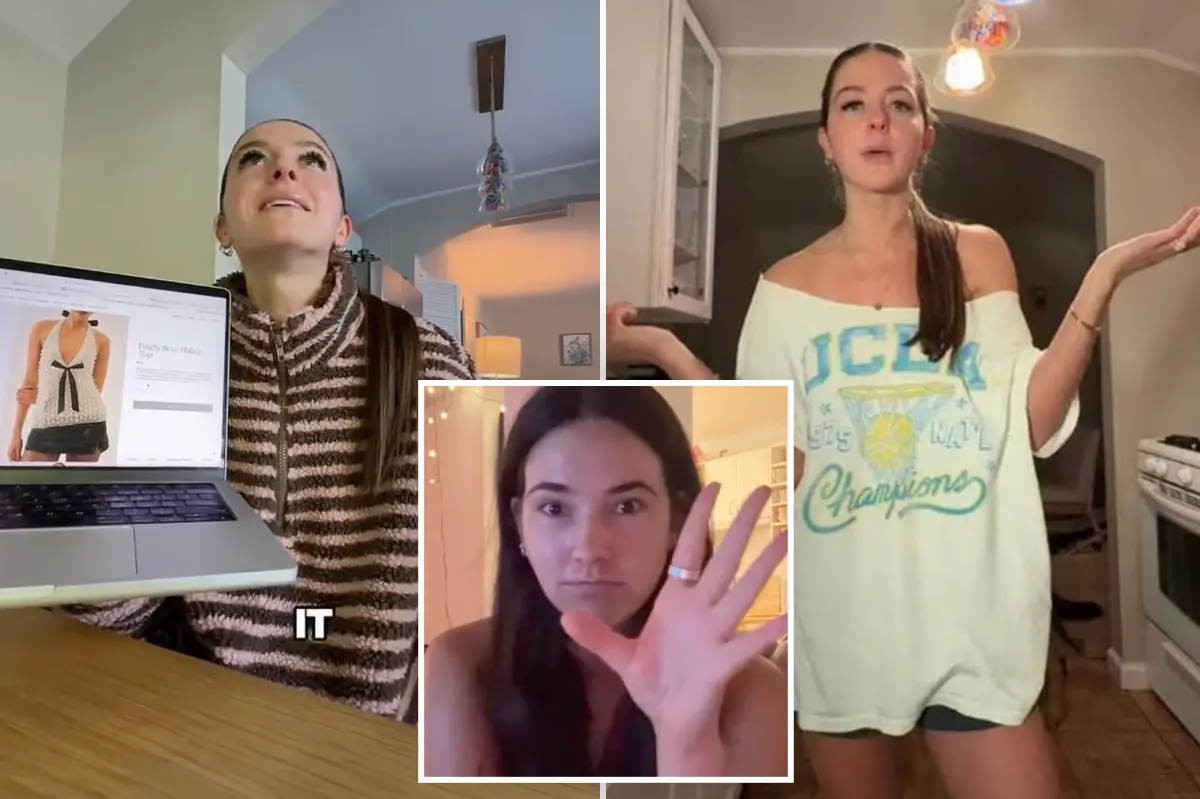
As we step into 2024, it didn’t take long for the first social media controversy to unfold. Just five days into the new year, an influencer named Tara Lynn found herself at the center of a digital firestorm, all because of a halter neck top. The 26-year-old content creator, who boasts five million followers, had reached out to her audience with what seemed like a simple request: help finding a specific sold-out top in her size in Los Angeles for her New Year’s Eve celebration. While some followers offered to sell her the item at marked-up prices, one particular follower stood out by generously offering to lend her the top free of charge. This seemingly kind gesture would soon spiral into a viral controversy that exposed the sometimes problematic dynamics between influencers and their followers, as well as raising questions about entitlement, empathy, and the often blurry boundaries between digital personas and real-world responsibilities.
When the promised top failed to arrive, Lynn’s frustration boiled over into a public TikTok video that quickly garnered record views. In her emotionally charged message, she labeled the helpful follower as “one of my haters” who did “something really fked up to me today.” Lynn explained how she considers her audience to be friends and expressed frustration about being treated disrespectfully because of her influencer status. Her complaint centered on having completely relied on this follower’s promise, causing her to cancel her backup plan of shopping at a mall. “She was playing the long game,” Lynn claimed, suggesting the follower had pretended to be supportive only to deliberately sabotage her plans. “Like she was pretending she loved me so that I wouldn’t go to the mall and find a shirt, and she like ghosted me… If I hated someone that much, I wouldn’t be able to pretend that I loved them for as long as she did. She fked me over real bad… hasn’t answered me in like three hours.” The video portrayed the situation as a calculated act of malice against her, with Lynn positioning herself as the victim of targeted deception.
The story took an unexpected turn when the accused “hater” responded in the video’s comment section, revealing herself to be a nurse who had been caught in an emergency situation at work. “I am so sorry. I am a nurse and there’s so many sicknesses going around and it was SO short staffed and I had to stay overtime, I just got off and it’s 3am,” she explained, adding that she had already apologized to Lynn privately. Despite this reasonable explanation, Lynn remained unsatisfied, responding: “if you knew you were going to be working you couldve told me and we could have worked around that. as a girl, that was really messed up i was completely relying on you.” The nurse then posted screenshots of their conversation as evidence that she had indeed reached out privately to explain the situation. She chose not to show her face, fearing harassment and bullying as a result of Lynn’s public accusations. In her defense, the nurse wrote, “I shouldn’t have to explain myself and it’s genuinely hurtful for ALL healthcare workers that people are completely constantly dismissing the fact we are faced with the worst situations and have to make the best out of it.” She detailed how she had notified Lynn about needing extra time but was asked to stay longer at work due to understaffing. When she finally finished her shift and still intended to fulfill her promise, she opened TikTok only to discover she’d been publicly labeled a “hater.”
The incident quickly transcended the original dispute, sparking a broader conversation about influencer culture and privilege. Commenters widely defended the nurse, criticizing Lynn’s reaction as entitled and out of touch. “One of my haters’, and it’s literally just a girl who’s an ER nurse who was at work,” one commenter pointed out, while another noted, “Expecting an ER NURSE on NYE to prioritise you is wild.” Others tried to bring perspective to the situation with comments like “You’ll be alright. You have more shirts” and “I’m so sick of influencers.” The controversy resonated particularly strongly with healthcare professionals, many of whom felt Lynn’s expectations demonstrated a fundamental misunderstanding of their working conditions, especially during a holiday when hospitals are typically understaffed and dealing with high patient volumes. The incident seemed to highlight a disconnect between the curated reality of social media and the pressing demands of essential frontline work.
The controversy expanded as others joined the conversation, including Australian emergency nurse Ellie Peach, who created her own content explaining the realities of healthcare work. “If a healthcare worker says they’re too busy to get back to you because they’re at work, it’s not like other jobs where they can just look at their phone,” she explained, detailing how healthcare workers often go entire shifts without basic necessities like eating, drinking water, or using the bathroom because of overwhelming workloads. “That is the reality of what happens in our jobs. Sometimes it is so busy you can’t do any of those things, let alone reply to a fking text or a fking message about a shirt.” Peach expressed concern that Lynn’s attitude sends a harmful message about emergency workers and their priorities, adding, “If she was trying to ragebait, it worked… I think it ragebaited every single f**king healthcare worker there is.” The incident sparked an important conversation about respect for essential workers and the sometimes self-centered expectations that can emerge from influencer culture.
Rather than acknowledging the broader concerns or showing empathy for the nurse’s situation, Lynn doubled down in several follow-up posts. In her most recent video, she even questioned the legitimacy of the follower’s identity as a healthcare professional. “I’m only saying this right now, because I’ve seen a few people catching on and saying this, but I’ve been thinking this for days. There ain’t no way that girl is a nurse,” Lynn claimed. This escalation transformed what might have been a minor misunderstanding into a symbolic clash between internet culture and real-world priorities. The incident serves as a reminder of how easily social media can amplify misunderstandings, how quickly online communities can mobilize around perceived injustices, and how the artificial boundaries between digital personas and real human experiences continue to create friction in our increasingly interconnected world. As we navigate 2024, this early controversy highlights the ongoing need for greater empathy, perspective, and understanding between the worlds of online influence and everyday reality.