




When the Stars Shoot Back: Cosmic Rays and Their Impact on Earth
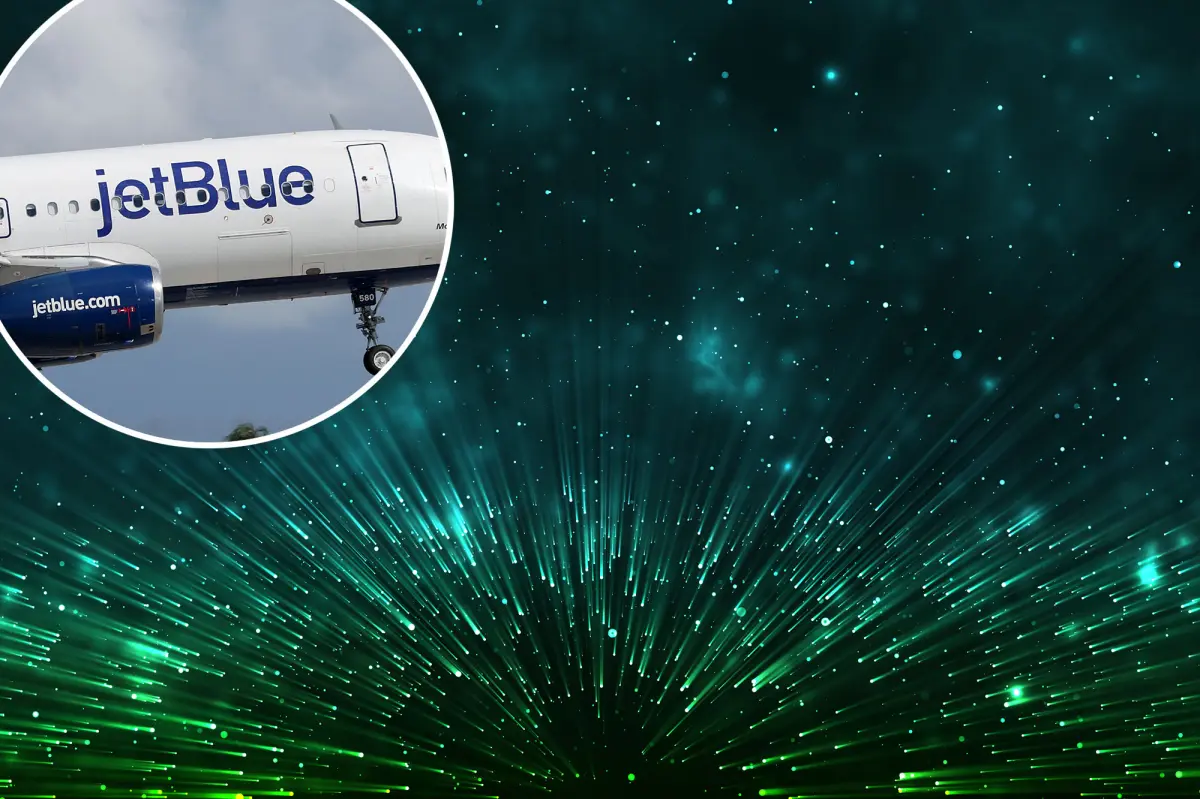
In a universe filled with wonders, we often gaze skyward to admire shooting stars streaking across the night sky. Yet, in an ironic twist, sometimes these cosmic forces shoot back in ways that can directly impact our daily lives. The incident involving a JetBlue flight in October provides a stark reminder of how vulnerable we are to the cosmos, even within the perceived safety of our atmosphere. When this New Jersey-bound aircraft suddenly plunged thousands of feet, sending 15 passengers to the hospital with injuries including bleeding head wounds, it wasn’t mechanical failure or human error to blame—at least according to some experts. The culprit may have been a cosmic ray, an invisible particle that had traveled millions of light-years from a distant supernova, only to intersect with critical aircraft systems at precisely the wrong moment.
Casey Dreier, Chief of Space Policy at The Planetary Society, explains the phenomenon with a mix of scientific precision and humbling perspective: “If a particle strikes a critical circuit in a computer, it can corrupt the computer’s memory, sensor data, or potentially cause other damage.” In the case of the JetBlue flight, this cosmic intrusion may have caused what experts call a “bit flip”—essentially corrupting data in the flight computer and triggering the sudden loss of altitude. While the pilots managed to regain control and make an emergency landing in Tampa, the incident reveals how a single subatomic particle from deep space could potentially endanger hundreds of lives. It’s worth noting, however, that Dreier emphasizes this explanation remains a “hypothesis” rather than an “official conclusion” about what caused the frightening incident.
The reality is both unsettling and fascinating: cosmic rays are everywhere, constantly bombarding our planet. These high-energy particles, often atomic nuclei accelerated to near light speed by distant cosmic events like supernovae, travel vast distances across the universe before reaching Earth. Most are deflected by our planet’s magnetic field or absorbed by the atmosphere, providing a protective shield that makes life possible on our planet’s surface. This natural protection system is why such incidents remain relatively rare in air travel compared to the constant barrage of radiation faced by spacecraft operating beyond our protective bubble. Space agencies have long recognized this threat, which is why most spacecraft utilize specialized hardware designed specifically to shield sensitive components from radiation events that would be catastrophic to standard electronics.
While the thought of invisible cosmic particles potentially interfering with aircraft might seem alarming, Dreier offers some reassurance: “Thankfully, while these particle strikes occur constantly, the odds of one hitting a critical circuit at just the wrong moment are very low.” It’s a statistical reality that brings comfort—with thousands of commercial flights operating daily worldwide, such cosmic ray incidents remain exceptionally rare. However, the risk isn’t entirely static. During periods of high solar activity, our star releases powerful bursts of particles through solar flares, temporarily increasing the radiation environment near Earth. These solar storms represent another cosmic threat entirely, capable of disrupting GPS systems, radio communications, and in extreme cases, even compromising power grids across large regions. A vivid example occurred just this May, when a massive solar storm impacted the daylight side of Earth, triggering global blackouts and disrupting radio signals across Europe, Asia, and the Middle East.
The challenge we face in protecting ourselves against these interstellar threats lies in their unpredictability and the complex engineering required to shield sensitive electronics. “There are both hardware and software improvements that can be made,” Dreier notes, “particularly in error correction algorithms and possibly even deploying better radiation shielding on sensitive electronics.” These solutions, while technically feasible, come with significant costs—expenses that can be difficult to justify given the relative rarity of catastrophic cosmic ray events. It creates a risk management dilemma: how much should we invest in protecting against low-probability events that could nonetheless have devastating consequences? This calculation becomes even more complex when weighed against more immediate safety concerns in aviation and other critical infrastructure.
What makes this cosmic reality particularly humbling is the reminder of our place in the universe. The particles that occasionally disrupt our technology have journeys that began long before human civilization—some originating from stellar explosions that occurred millions of years ago. They travel across unimaginable distances, carrying energy from distant cosmic cataclysms, only to end their journey by interacting with the silicon microchips we’ve created to power our modern world. It’s a collision of cosmic and human timescales that puts our technological achievements in perspective. While we’ve built remarkable systems that carry us through the skies and connect us across continents, we remain subject to forces far older and more powerful than ourselves—invisible messengers from the stars that occasionally remind us of the vast, energetic universe that surrounds our small blue planet.